
Stairs · Treads & Risers · Railings
Stair remodeling in Alpharetta, planned step by step before the saw comes out.
Last updated: July 8, 2026
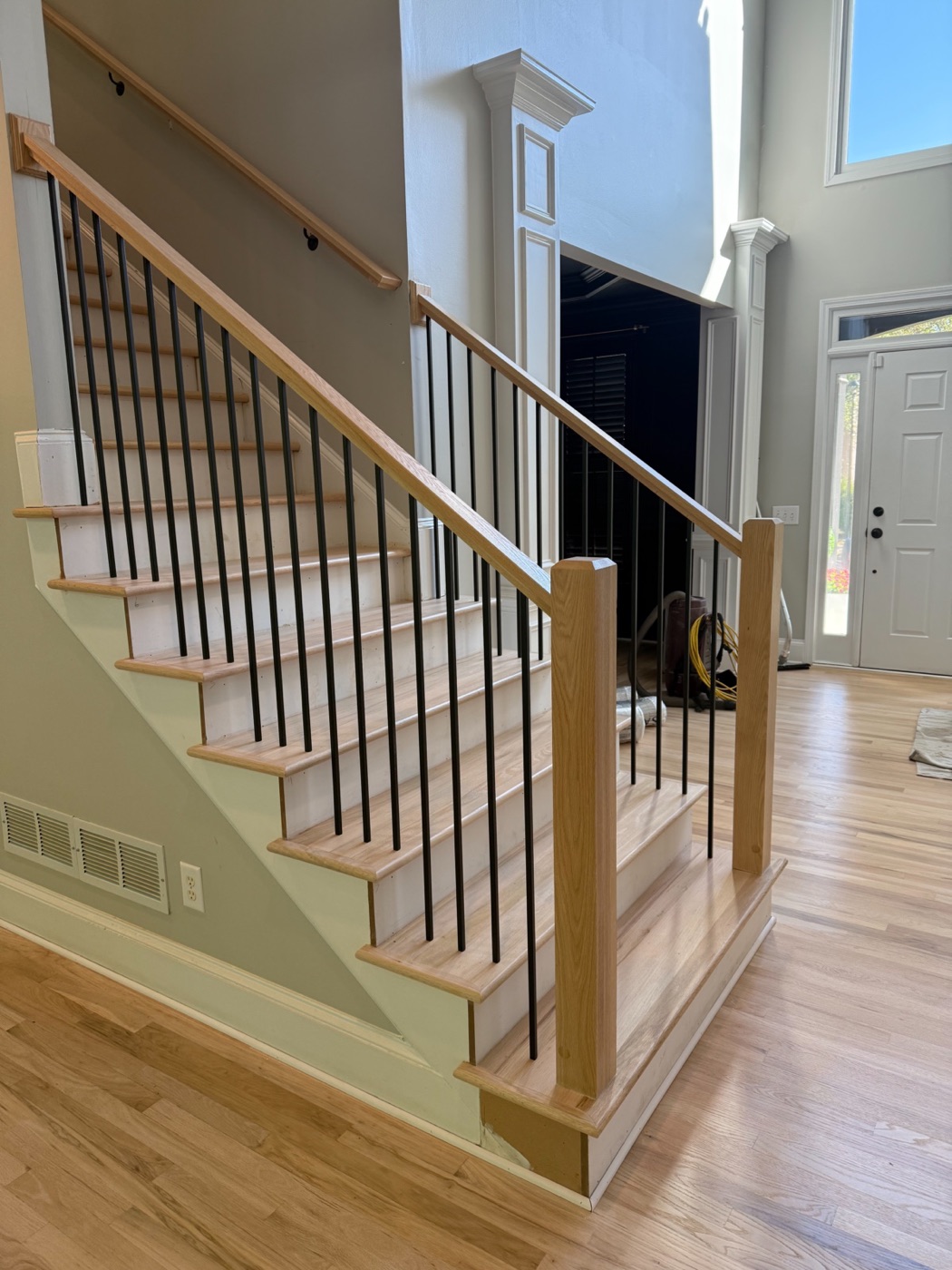
Converting carpeted stairs to hardwood costs $100 to $250 per step here, which puts a typical 12-step staircase at $1,250 to $3,300. Before any of that starts, the tread, riser, and nosing plan gets walked through on your staircase — the detail most stair regrets trace back to.
The money question
How much does it cost to convert carpeted stairs to hardwood in Alpharetta?
Budget $100 to $250 per step installed in 2026, so a standard 12-step staircase runs $1,250 to $3,300 all-in. Three factors decide where inside that range your staircase lands: tread material and finish (site-finished oak versus prefinished treads), the railing scope (keeping the existing rail versus new newel posts and balusters), and what demolition reveals once the carpet and tack strips come off. Landings count as extra steps, and open-sided staircases need returned bullnose treads that cost more to mill and fit. Stairs punch far above their square footage — a staircase is what guests grab, kids slide down, and buyers photograph first — which is why they justify hardwood even in homes going LVP everywhere else. The pricing guide shows the step-by-step math behind these numbers.
Why homeowners call us
What brings Alpharetta staircases to our schedule
The nosing surprise
The most common stair regret online is discovering, mid-project, that inches of nosing were cut off every step without warning. It happens when nobody discusses the overhang before demolition. On our jobs, that conversation happens first — on your stairs, before any cutting.
Carpet’s last holdout
The bedrooms went hardwood, the main level matches, and now the carpeted staircase is the seam between them. A conversion ties both levels into one continuous look — and removes the tread carpet that a decade of kids and dogs has flattened anyway.
The first ten feet of the house
In most North Fulton floor plans, the staircase faces the front door. It is the first surface guests and buyers touch, which is why a $2,000-range stair remodel routinely changes how the entire foyer reads — more than rooms triple its size.
The process
Five stages, each agreed on before the next begins
Measure every step
We count risers, check the stringers and squeaks, and map which sides are open — a free visit, on your staircase.
Choose on real wood
Tread material and stain get tested against your existing floors in your light, so the pairing is approved before ordering.
See every line item
Demo, treads, risers, nosings, and rail work each priced separately — you know what any change adds or removes.
Convert the staircase
Old carpet out, new treads and risers in, finish applied on a day count you were handed in advance.
Climb it together
We check every tread and rail with you underfoot and in hand, and resolve anything you flag before we call it done.
Service depth
Nosing and bullnose: the plan that prevents the classic stair horror story
Read enough flooring forums and one stair story repeats: a homeowner comes home to find a couple of inches of nosing sawn off every step — no warning, no conversation — and now hates a staircase they paid thousands for. The tragedy is that nothing failed technically. Trimming the existing nosing flush is often a legitimate way to seat new treads. The failure was that nobody said the word “nosing” out loud before the saw did the talking.
So here is the vocabulary, up front. The nosing is the front edge of each tread that overhangs the riser below; a bullnose is that edge rounded over, and on staircases open to one side the tread also needs a returned bullnose wrapping the exposed end. When new treads go over or replace old ones, something must happen to the existing overhang: it gets trimmed back, capped, or carried through in the new profile. Each option changes how your finished stairs look and feel underfoot.
Which option your staircase gets is decided with you at the consultation, standing on the steps in question, before demolition is scheduled. Every cut — which nosings stay, which get trimmed, and what the finished overhang will measure — goes into the written spec before work starts. The day count for the work is also put in writing, because a staircase out of service affects every bedtime in the house.
LVP on stairs: the honest answer
Quality luxury vinyl plank is a genuinely strong floor — waterproof, kid-and-dog-proof, and the right call for plenty of Alpharetta rooms. Stairs are simply its least forgiving location, and you deserve to hear why before anyone glues plank to a tread.
On a flat floor, LVP’s seams are distributed across the room and its wear spreads evenly. On a staircase, every seam lands at a step edge — the exact spot that takes a heel strike thousands of times a year — and each step requires a separate stair-nose trim piece whose adhesive and profile become the weak point of the whole assembly. When a stair-nose loosens or a corner lifts, it happens at the most visible, most trafficked six square feet in the house.
This is why many projects that run LVP through the bedrooms and hallway still switch to solid hardwood treads on the staircase itself. Stained to coordinate with the surrounding plank, hardwood treads cost more per step but carry the impact for decades and can be sanded and refinished later — something no vinyl product offers. We install both, so the recommendation follows your staircase and your budget rather than a product line. If you are weighing whole-house flooring at the same time, the installation cost guide covers how stairs fit into a larger project budget.
Materials, railings, and balusters: what actually moves the price
Per-step pricing sounds simple until two neighbors get quotes $1,500 apart for the same step count. The spread almost always comes from four decisions, each of which shows up as its own line on our proposals.
| Decision | Keeps the price low | Pushes it higher |
|---|---|---|
| Tread material | Prefinished red oak treads | Site-finished white oak, custom stain match |
| Staircase shape | Straight run, closed both sides | Landings, winders, open sides needing returned bullnose |
| Risers | Painted white risers | Stained hardwood risers matching the treads |
| Railing scope | Existing rail stays | New newel posts, handrail, iron or wood balusters |
Railings deserve their own sentence, because they are the upgrade homeowners most often add mid-project: swapping dated spindles for iron balusters, or replacing a worn handrail and newel post, transforms the staircase silhouette but can add several hundred dollars to a couple of thousand depending on part count. Deciding up front — with each rail component priced on its own line — keeps that choice a budget decision instead of a mid-project surprise. And painted risers versus stained ones is the quiet lever: paint costs less, hides tread-to-riser transitions gracefully, and reads crisp against dark treads.
Straight answers
Stair questions Alpharetta homeowners ask us
Is LVP a good idea on stairs?
It can work, but stairs are the hardest assignment you can give a vinyl plank. Each step needs its own trim nosing piece, every seam sits exactly where feet strike hardest, and a stairway shows wear long before a flat floor does. That is why so many projects pair LVP floors with solid hardwood treads stained to coordinate — the stairs take the abuse, the look stays cohesive. We price both routes and show you the difference before you decide.
How long does a carpet-to-hardwood stair conversion take?
Days, not weeks, for a typical single staircase — demolition, tread and riser installation, and finishing each claim their own stage, and cure time between finish coats sets the pace. Because a stairway is the one route between your floors, the exact day count matters more here than on any flat floor, so you get it in writing before work begins, including which evenings the stairs will be usable.
Why does one staircase cost $1,300 and another $3,300?
Four things move the number inside the $100–250 per step range: tread material and whether it is site-finished or prefinished, how many steps and landings the staircase actually has once measured, what the demolition uncovers under the old carpet, and whether railings, newel posts, or balusters are being replaced at the same time. An itemized proposal prices each of those as its own line, so you can see exactly which choices push your staircase up or down the range.
Can new stair treads match our existing hardwood floors?
Usually close, honestly not always perfect. New treads and a floor that has aged under sunlight for years take stain differently, so anyone promising an invisible match is promising more than wood allows. We test stain on your actual treads next to your actual floor before finish day, and you approve the real combination. When a tight match is not achievable, we tell you then — while adjusting the plan is still simple.
From the blog
What our customers read next
A conversation, not a commitment
Stand on your stairs with someone who remodels them weekly
The consultation is free and happens on your staircase: step count, structure, nosing options, rail condition, and where your project lands against the published $100–250 per step range. Expect a reply within one business day — and a straight answer if refinishing what you have beats replacing it.