
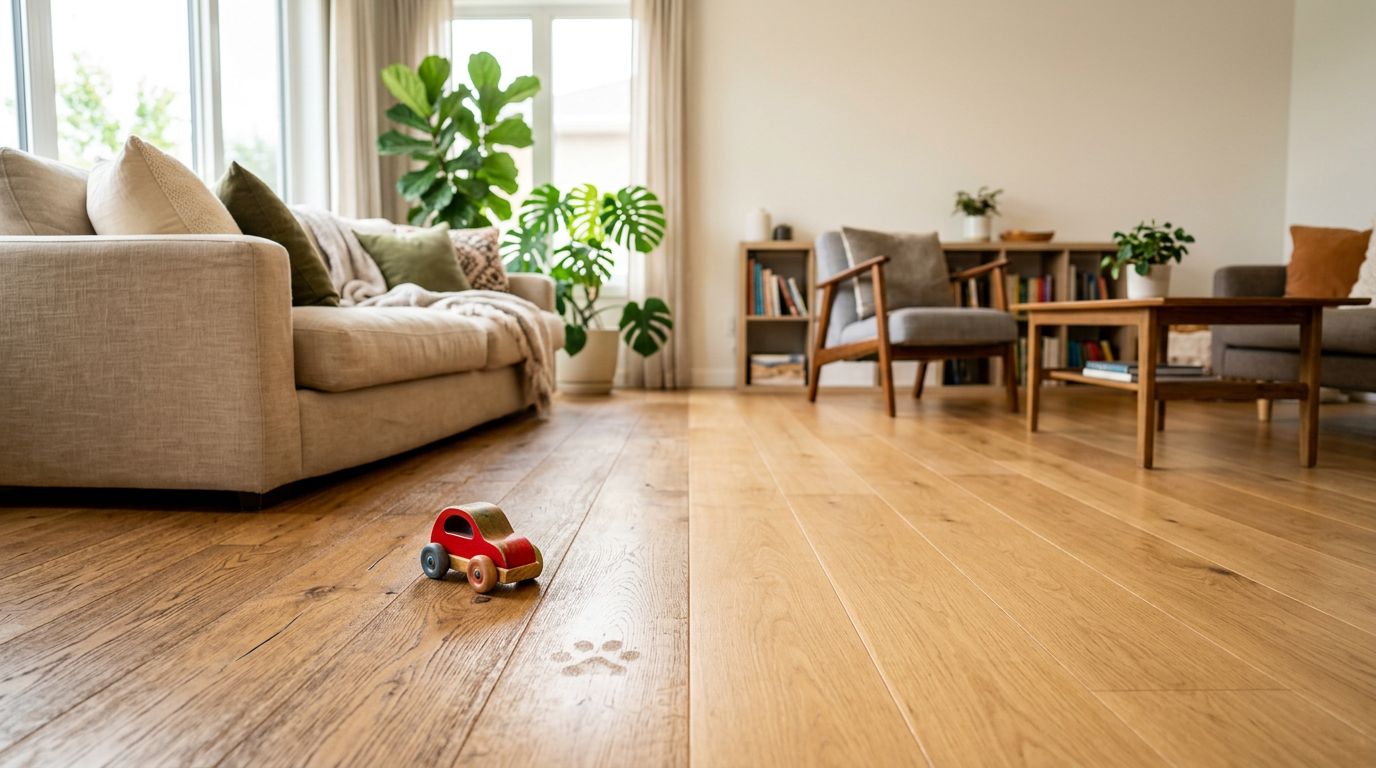
When families ask us about wire-brushed vs smooth hardwood, they usually want the same answer: which floor will still look good after daily life gets to it. Showroom beauty matters, but so do toy wheels, pet nails, spills, and heavy foot traffic.
We have seen beautiful floors age well, and we have seen the wrong finish show signs of wear and tear far too soon. In a busy home, the better choice often comes down to texture, sheen, and how much damage you want the floor to hide.
The smartest comparison starts with what each surface actually is, rather than just the natural beauty suggested by a sample board.
Key Takeaways
- Hide vs. Highlight: Wire-brushed hardwood features a textured finish that naturally disguises scratches, dents, and dust, whereas smooth hardwood offers a refined look that highlights the wood grain but can show imperfections more easily.
- Maintenance Trade-offs: While wire-brushed floors are superior at camouflaging everyday wear from kids and pets, smooth-finished floors are generally easier to wipe clean of crumbs and spills due to their uniform surface.
- Refinishing Considerations: Smooth hardwood is more straightforward to sand and refinish for a uniform look in the future, while wire-brushed textures require more specialized care to replicate the original surface profile.
- Aesthetic Impact: Wire-brushed flooring provides a warm, casual, and modern-farmhouse aesthetic; conversely, smooth hardwood delivers a clean, tailored, and formal appearance that suits contemporary interior designs.
What wire-brushed and smooth hardwood really mean
Wire-brushed hardwood flooring features a lightly textured surface that adds depth to any room. During the manufacturing process, a steel wire brush is used to remove some of the soft wood fibers, which leaves the harder, more durable grain slightly raised. This process reveals beautiful wood grain patterns, resulting in a floor with distinct character and a relaxed, lived-in aesthetic.
In contrast, smooth-finished hardwood is crafted to be flatter and more even across the face of the board. It is important to note that smooth does not necessarily mean shiny; these floors are available in a variety of looks, including a popular matte finish or a more subtle satin finish. The result is a surface that feels uniform and offers cleaner, more tailored lines.
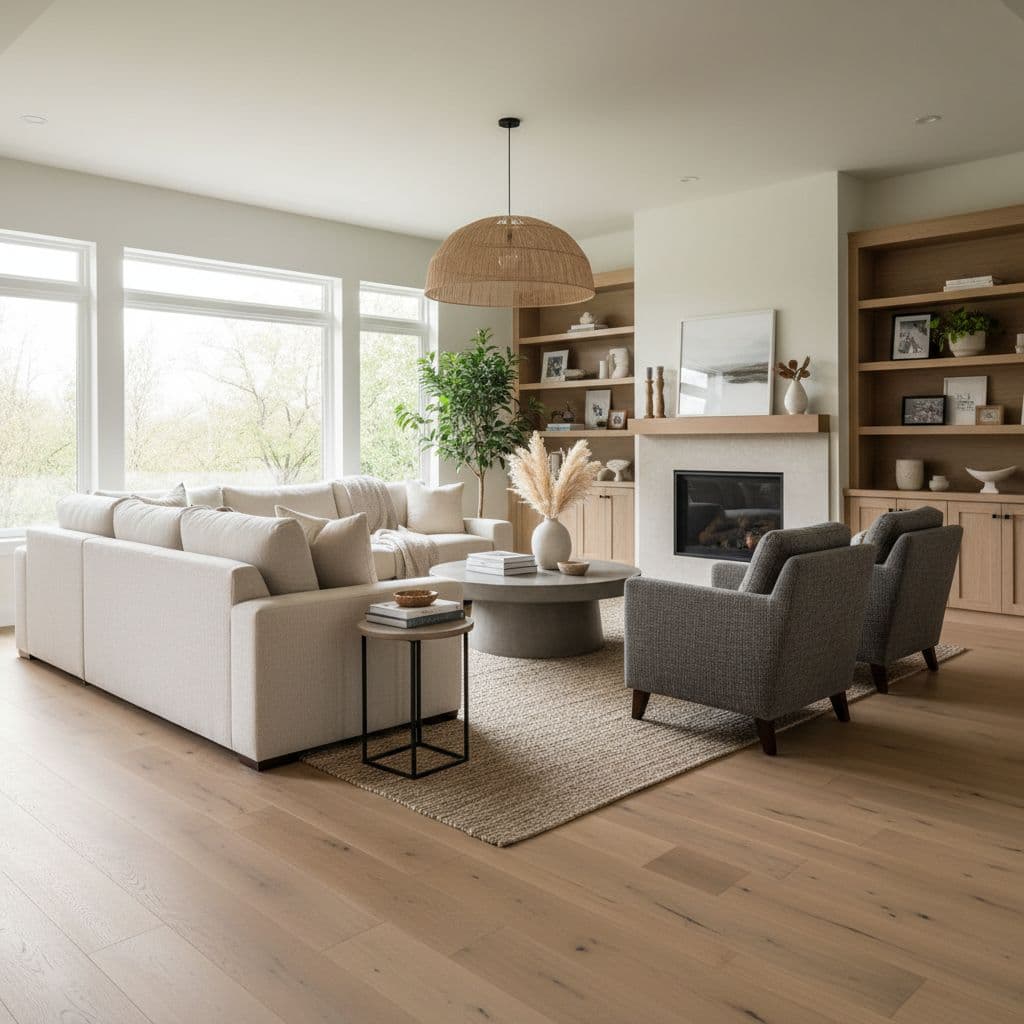
While these differences may seem subtle on paper, they significantly change how a floor impacts a space. Textured planks tend to soften the appearance of everyday wear because the surface variation breaks up light reflection. Smooth planks display the wood grain in a more polished way, which many homeowners prefer for formal or modern interiors. It is also helpful to keep in mind that the final look depends heavily on the specific hardwood species, such as white oak, which reacts differently to these treatments compared to other varieties.
When comparing styles, many homeowners view wire-brushed options as a more modern take on distressed hardwood, providing texture without the heavy damage often associated with traditional rustic styles. Regardless of the texture, remember that color and sheen remain major factors; a dark, glossy floor will show dust more easily than a light, matte floor.
For family homes, we often frame the choice this way: if you want a floor that disguises small marks and feels less precious, wire-brushed hardwood flooring usually has the edge. If you prefer a crisp, tailored appearance and do not mind a little more visibility from daily use, smooth hardwood may be the better fit for your lifestyle.
How each floor handles kids, pets, and constant traffic
Daily use is where the comparison becomes practical, especially in high-traffic areas. In most active households, small scratches and scuffs are not the real problem; seeing them every hour is. Wire-brushed surfaces usually win here because the texture helps hide scratches and dents caused by busy families. That lines up with this wire-brushed flooring overview, which notes that a textured surface tends to make dust, footprints, and light marks less obvious. Because of this, many homeowners consider these boards a pet-friendly flooring option, as the natural grooves provide better traction and grip for claws.
Smooth hardwood has its own strengths. It is undeniably easy to clean, as it gives spills fewer places to settle. However, homeowners may face specific cleaning challenges with footprints and smudges, which show up more prominently on a flat, glossy finish. If you have toddlers, the ease of wiping away spills matters. Cracker crumbs, dried juice, and kitchen grit come off a smooth surface with less effort, especially when the finish has a low sheen and the color is mid-tone rather than very dark.
A quick side-by-side comparison makes the tradeoffs easier to see:
| Feature | Wire-brushed hardwood | Smooth hardwood |
|---|---|---|
| Minor scratches | Less visible | More visible under light |
| Dust and footprints | Usually less obvious | Can show faster, depending on sheen |
| Cleaning | Slightly more textured surface to vacuum | Faster to wipe and mop |
| Refinishing later | Can be harder to match texture | Easier to sand to a uniform look |
| Overall look | Casual, natural, lived-in | Clean, tailored, formal or modern |
The main takeaway is simple: a textured surface hides wear, while a flat surface cleans faster.
In a busy family home, the floor that still looks good after a year matters more than the floor that looks perfect on day one.
Long-term maintenance also matters. A smooth floor is more straightforward to manage during sanding and refinishing because the surface is even. A wire-brushed floor can be refinished, but matching the original profile takes more care. If you expect to perform a full restoration years from now, smooth hardwood offers a more traditional path. However, if your priority is getting through the next ten years with a durable surface that resists daily wear, wire-brushed hardwood flooring often makes the most sense.
Style, light, and room-to-room fit
Performance matters, but appearance still drives the final decision. Wire-brushed hardwood tends to feel warmer and less formal. It works well in family rooms, open kitchens, and breakfast areas. Many families love the rustic appearance it brings to a space, making it a perfect match for a modern farmhouse style. The texture adds depth without asking for constant attention, and these textures are available in both solid and engineered hardwood flooring to suit any subfloor or installation method.
Smooth hardwood fits spaces where clean lines matter. We often see it work best in contemporary homes, dining rooms, and kitchens with sleek cabinetry or a more tailored look. It also pairs well with classic stain colors when the goal is simple elegance rather than textured character.
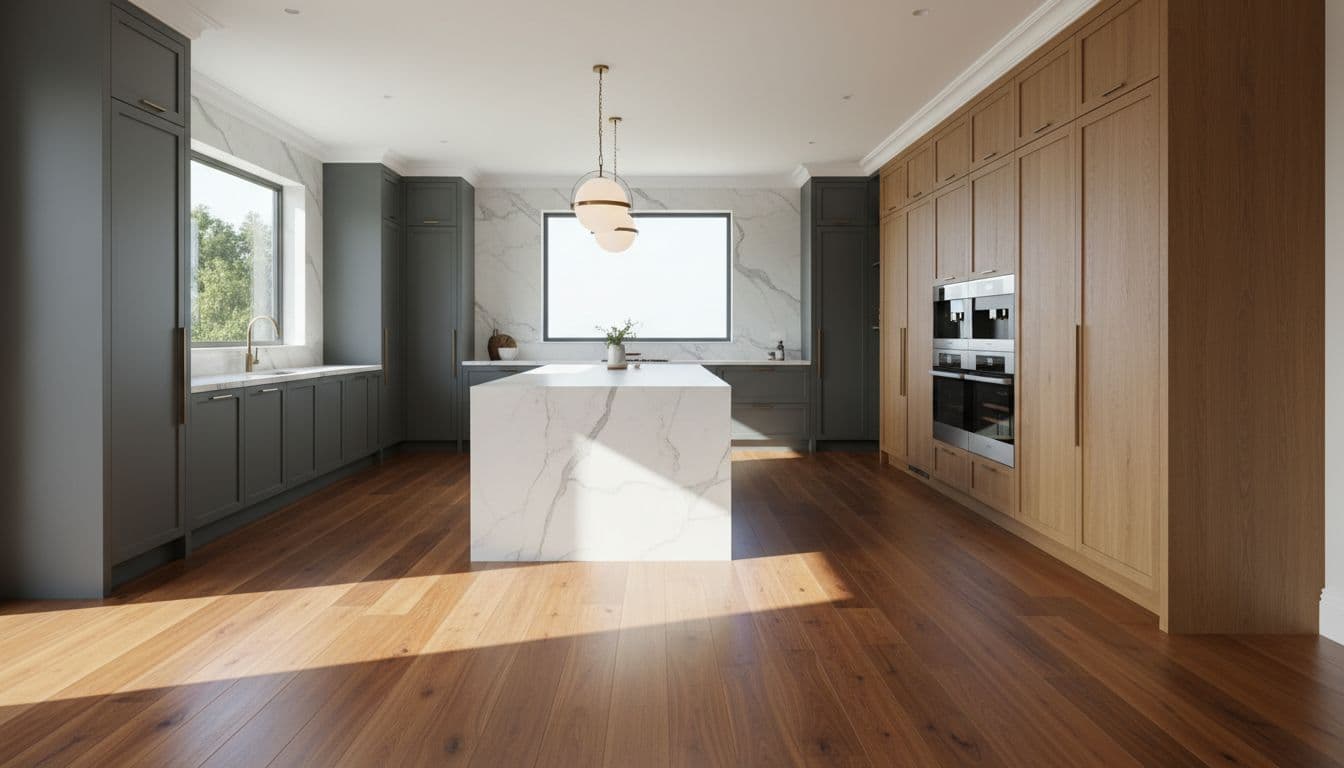
Light changes this decision more than many people expect. A floor that sits under strong afternoon sun will show surface dust and fine scratches more clearly, especially if it is dark and smooth. Because your interior design style and the amount of natural light in your home influence the visual appeal of your floors, we recommend lower sheen finishes regardless of the texture you choose. We usually caution families against combining a deep stain, a smooth face, and a higher gloss if they want a low-maintenance look.
This matters even more when the flooring continues onto stairs. Stair treads take sharp, repeated wear in a small footprint. A textured surface can hide that wear well, but the stair profile, nosing detail, and finish quality still need close attention. We also see homeowners match hardwood with bathroom or mudroom tile, so the transition between surfaces should look intentional and clean.
A second review of wire-brushed floor pros and cons makes the same practical point we see in homes every week: active households often prefer finishes that hide the little marks of daily life. Choosing wire-brushed hardwood flooring provides a forgiving surface for busy families, while opting for smooth-finished hardwood remains a top choice when the household accepts a bit more upkeep in exchange for a sharper, more refined look.
How we help families choose the right floor, and when the project grows
We do not recommend a floor based on trends alone. We ask where the traffic lands, whether large dogs run through the house, and how your current maintenance routine aligns with the daily wear of your household. We also evaluate how natural light hits your main level and whether you prefer the aesthetic of smooth surfaces or the forgiving, textured finish of wire-brushed hardwood flooring. These details are vital, as the right choice significantly boosts the long-term resale value of your property.
Many homeowners start by searching for a local hardwood flooring contractor in Alpharetta Ga. As the project expands, they often discover they need more than just new wood. They may require a top hardwood floor sanding contractor in Alpharetta for existing floors upstairs, a tile installation company Alpharetta homeowners trust for a bath or laundry room, or a local bathroom remodeling contractor in Alpharetta and Milton when water damage or aging fixtures turn a small task into a larger renovation.
This pattern frequently carries over to stairs, kitchens, and lower levels. Families often look for a Stair remodeling company Alpharetta homeowners can rely on, or a local stair contractor alpharetta residents call when treads are worn and rail details need updating. When selecting materials for these high-traffic areas, we always discuss the benefits of high-quality heartwood to ensure your investment stands the test of time. In larger remodels, clients may compare the best local kitchen remodeling contractor in Alpharetta, another local kitchen remodeling contractor in Alpharetta, or a local basement finishing contractor in alpharetta and milton before deciding how far to take the project.
That broader view matters because flooring rarely lives alone. New hardwood changes stair transitions, while kitchen work affects underlayment and appliance clearances. Bathroom updates may call for tile instead of wood in wet zones. When we look at the full scope early, the finished result usually feels more cohesive and costs less to correct later.
For homeowners who want clear pricing, we offer free estimates. Call us at 470-352-1156 and we will walk through the options with you. If you already have a written quote from another contractor, show it to us and we will beat it by 5%.
Frequently Asked Questions
Which floor type is better for homes with pets?
Wire-brushed hardwood is generally the better choice for pet owners because the textured surface provides better traction for paws. Additionally, the natural grooves in the wood help mask the fine scratches often caused by claws.
Does smooth hardwood always look shiny?
No, smooth hardwood is available in a variety of sheens, including popular matte and satin finishes that avoid a high-gloss look. A smooth floor refers to the flat texture of the wood board rather than the level of shine on the finish.
Is wire-brushed hardwood harder to clean?
Because of the subtle texture, wire-brushed floors may trap more debris than a perfectly flat surface. However, a regular vacuuming routine is usually sufficient to keep them clean, and the texture does an excellent job of hiding footprints and dust between cleanings.
Can I refinish wire-brushed hardwood floors?
Yes, these floors can be refinished, but the process is more complex than sanding a standard smooth floor. You must use a contractor who is experienced in maintaining the specific texture and depth of the wood grain to ensure the floor retains its intended character.
Conclusion
For most active households, the choice comes down to one idea: do you want the floor to hide wear, or highlight perfection? Wire-brushed hardwood flooring usually suits homes with kids, pets, and heavy traffic because it effectively helps hide scratches and dents that occur over time. This makes it an ideal choice for busy families looking to manage the daily wear and tear of a lively home.
Smooth hardwood still has a strong place. It looks cleaner, feels more formal, and refinishes more easily down the road. However, it usually asks for more regular touch-up cleaning and a little more tolerance for visible marks.
When the house works hard every day, a forgiving floor often gives the better long-term result. If you would like help comparing samples in your own lighting, call us at 470-352-1156 for a free estimate, and if you have another written quote, we will beat it by 5%.