
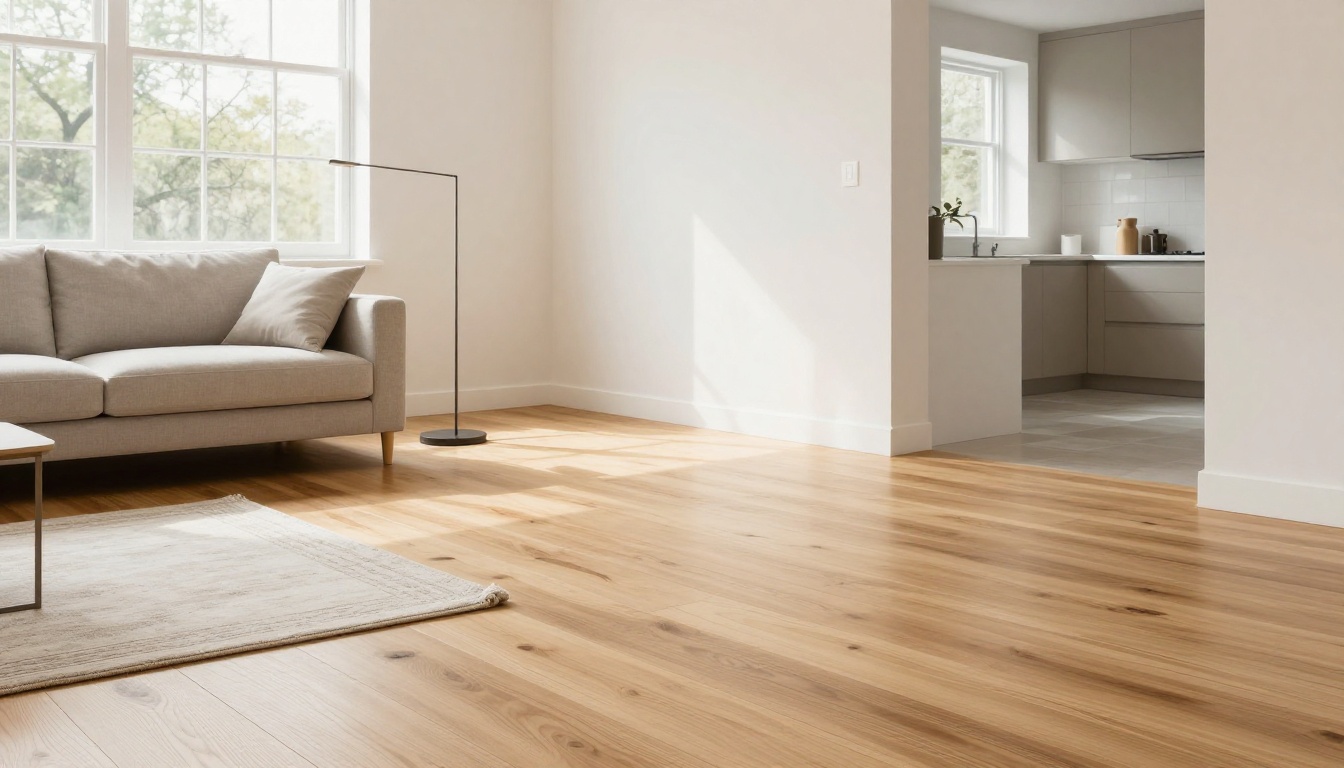
When buyers step inside, the floor often sets the mood before they read a single feature sheet. Flooring signals “clean,” “updated,” and “well cared for” in seconds, or it raises doubts just as fast. That is why the right pre-listing floor plan can feel like turning on better lighting in every room.
We focus on high-return moves that help a home show well without turning your sale into a full remodel. In Alpharetta, Milton, and across North Georgia, we usually see the best results from smart refinishing, targeted replacement, and simple repairs that remove common objections.
If you want an expert opinion on what will pay off in your home, call us at 470-352-1156 for a free estimate. If you show us any written quote from another contractor, we beat it by 5% for the same scope and materials.
Pick floors that make buyers feel the home is clean, updated, and easy to maintain
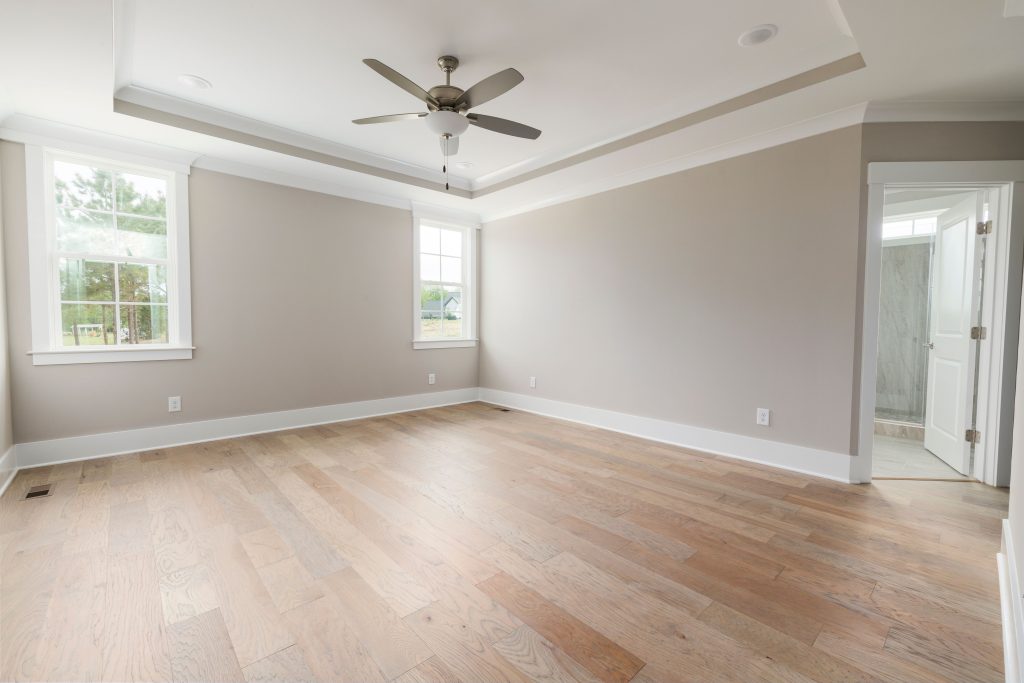 Buyers do not tour homes like contractors. They tour like guests. If the floors feel busy, patched, or hard to maintain, they assume the rest of the home will be the same. On the other hand, a simple, consistent floor reads as “move-in ready,” even when the kitchen is not brand new.
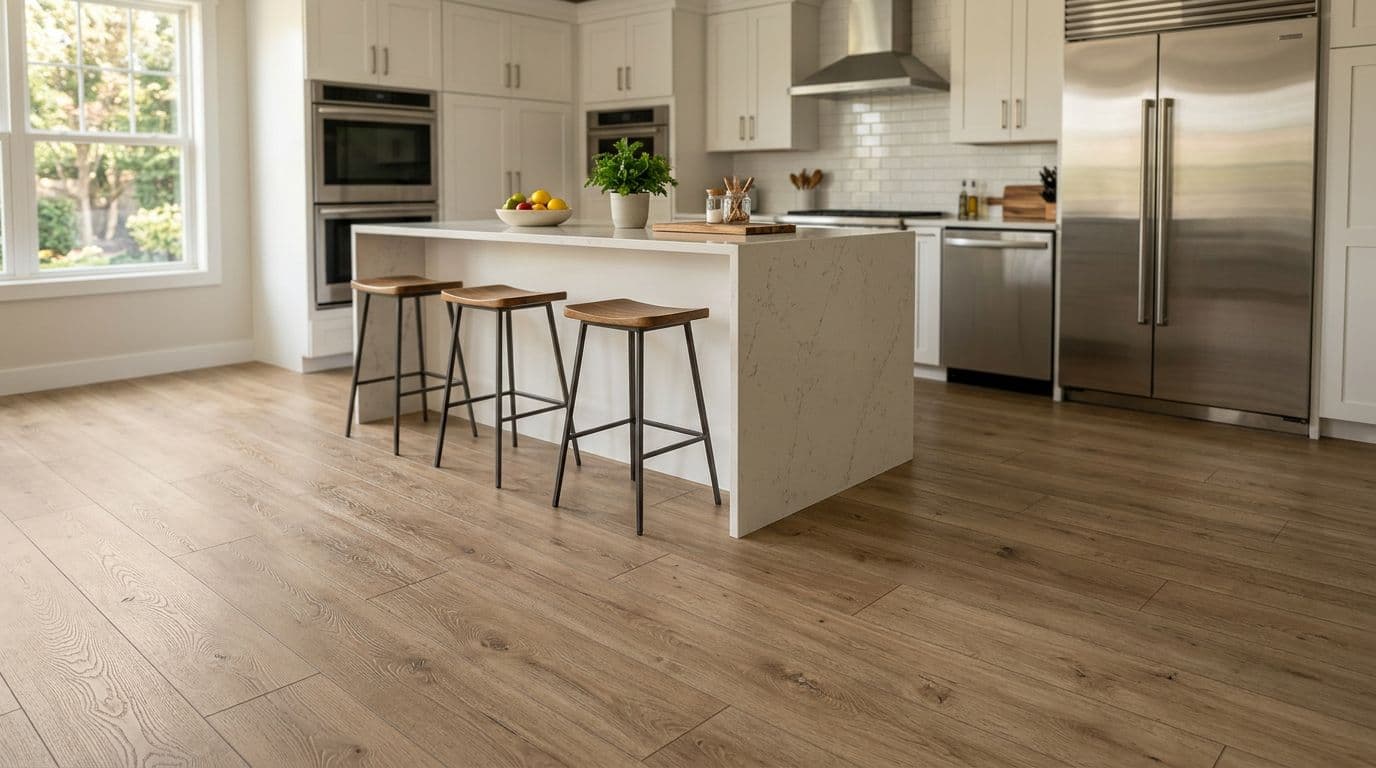
In 2026, staging preferences have settled into a clear lane: warm, natural looks that photograph well and hide daily wear. We see strong demand for warm oak tones, matte or satin finishes, wider planks, and large-format tile with minimal grout lines. These choices reduce visual noise, so rooms look larger and calmer in photos.
The fastest way to create that calm is to reduce transitions. Too many changeovers between rooms can make a house feel chopped up, like a quilt made from leftovers. Whenever possible, we recommend one continuous floor across the main living spaces, then a practical, water-safe option in wet areas. Strong patterns, high contrast, and shiny finishes tend to do the opposite, they pull attention to the floor instead of the home.
If buyers notice the floor, it should be for the right reason: it makes the room feel clean, bright, and easy to live in.
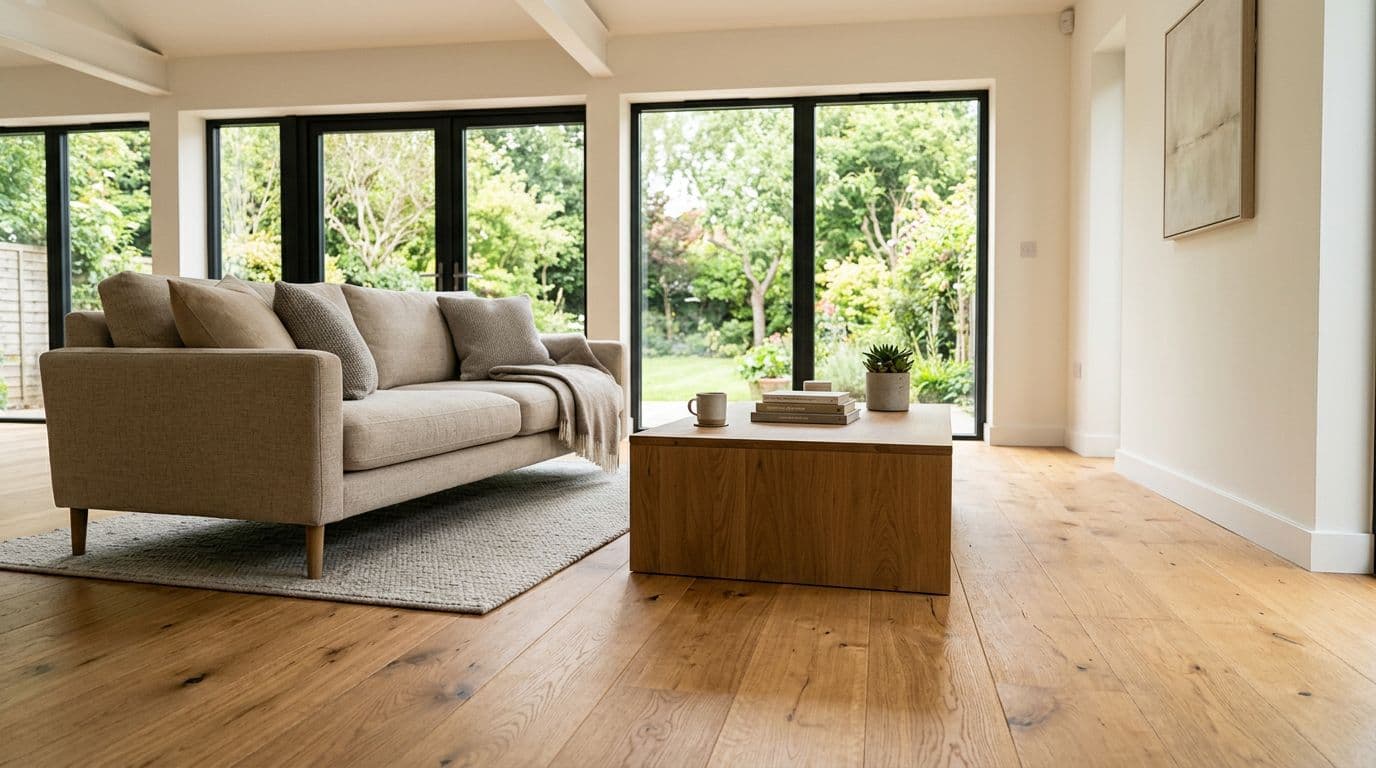
Best flooring choices by room, and what tends to turn buyers off
We like to match each room to what buyers expect there, because “wrong floor, wrong room” creates instant friction.
Living areas and halls usually show best with solid or engineered hardwood in warm mid-tones. Kitchens and basements often benefit from waterproof LVP, because buyers want durability without worry. Bathrooms and laundry rooms generally look cleaner with large-format neutral tile, since fewer grout lines read as less upkeep. Bedrooms can stay flexible, and if carpet is needed, a light, textured, low-pile option tends to look newer longer.
A few common deal-breakers come up in nearly every pre-listing walk-through:
- Pet-damaged carpet: stains and odors do not hide, even with fresh vacuum lines.
- Mismatched flooring in every room: buyers assume DIY patches and hidden issues.
- Loud patterns: bold prints can shrink a room in photos and distract in person.
- Glossy finishes: shine highlights scratches, footprints, and dust during showings.
For more detail on wood options that suit different styles and budgets, we often point sellers to this hardwood floor species guide to compare oak, maple, and hickory in plain terms.
Color and finish rules that photograph well and hold up during showings
We keep the rules simple because simple sells. First, choose warm neutrals: honey oak, light brown, beige-taupe, and soft natural tones. Cool gray is still present in older flips, but many buyers now see it as dated, especially when it fights warm lighting.
Next, watch the grain. High-contrast wood can read “busy” on camera, even when it looks fine in a sample. Wide planks help, because they reduce seams and make rooms feel larger. Similarly, large tile reduces grout lines, which usually looks cleaner and more modern in listing photos.
Finally, pick matte or satin over glossy. Lower sheen hides small scratches and keeps reflections from stealing attention. Before ordering, we always advise testing samples in both morning and evening light, then checking undertones against wall paint and cabinets.
Decide whether to refinish, replace, or just repair, based on what buyers will notice
Sellers often ask us the same question: “Do we need new floors?” Many times, we can get most of the benefit without the biggest price tag, as long as we focus on what buyers will actually see.
Here is the quick decision frame we use. We look at the main level first, then the stairs, then the path from the front door to the kitchen. Those areas dominate photos and first impressions. After that, we weigh consistency, safety, and cleanliness. A perfect floor in one room does not help if the hallway squeaks and the transitions look improvised.
This table summarizes how we usually compare options in pre-listing projects:
| Option | Best when | Typical buyer impact | Main risk |
|---|---|---|---|
| Refinish hardwood | Boards are solid but finish looks tired | High, because it looks “restored” | Not ideal for deep stains or warped boards |
| Replace with LVP | Moisture risk, pets, heavy traffic | High, because it feels practical and new | Poor install or weak transitions can look cheap |
| Repair and tune-up | Damage is limited to a few spots | Medium, because objections drop | Only works if the rest still looks consistent |
The takeaway is simple: we spend on the surfaces buyers will remember, and we avoid overbuilding in places they barely process.
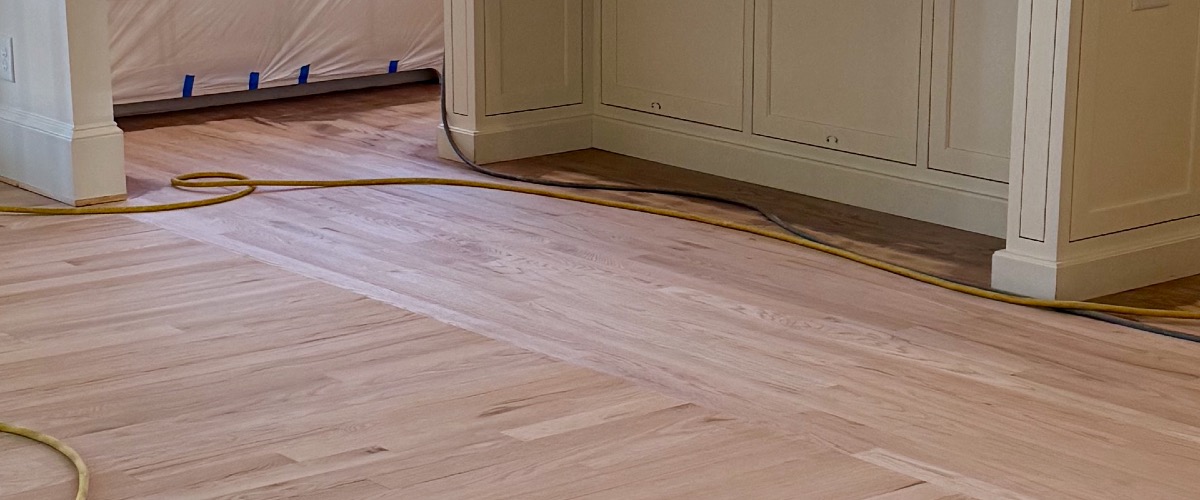 Sanding existing hardwood floors will renew the stain and finish
When sanding and refinishing hardwood makes more sense than new flooring
Refinishing is often the best value when solid hardwood is already in place. If the boards feel stable underfoot, and the main issue is surface wear, sanding and refinishing can make the home feel “updated” without changing the style.
We typically recommend refinishing when scratches, dullness, and uneven sheen are the primary problems, or when stains are localized and treatable. On the other hand, deep pet stains that reach into the wood, severe cupping, or floors that have already been sanded many times can limit results. In those cases, selective replacement or a new floor may be the cleaner choice.
If you are also worried about durability in busy zones, this overview of high-traffic flooring options helps sellers compare performance without getting lost in sales talk.
Quick fixes that reduce buyer objections without a full flooring job
Small problems can shout in a quiet room. We often see sellers win back confidence with quick, targeted fixes.
A short pre-listing walk-through checklist helps:
- Odors near carpet edges, pet areas, and basement corners
- Trip hazards at transitions, loose stair nosing, or raised thresholds
- Visible patches like mismatched planks, peeling corners, or cracked tile
- Noisy spots such as squeaks in halls and on stair runs
We also like to replace stained thresholds, repair damaged boards, re-stretch loose carpet, and tighten stair components. When possible, we aim for one continuous floor on the main level, even if bedrooms use a different material. Consistency where buyers gather matters most.
Plan the work around listing timelines, showings, and your budget
Timing affects results as much as product choice. We see the smoothest listings when sellers plan backward from photography and the first showing.
As a simple schedule, we prefer 3 to 6 weeks out to confirm scope, measure, and order materials. Then, 1 to 2 weeks out, we install or refinish and allow proper cure time. Finally, in the last few days, we deep clean and protect floors, because scuffs happen during staging and moving.
Rushing finishes can backfire, because soft coatings can show marks in photos and during tours.
What to do first, and what to skip if you are short on time
We prioritize what shows in photos: the entry, the main level, stairs, and the route from the front door to the kitchen. Those areas form the buyer’s “storyline” as they walk the home.
When time or budget is tight, we usually skip replacing closet floors, custom patterns, and premium upgrades that most buyers will not pay extra for. Instead, we focus on clean transitions, consistent tones, and safe stair details, because those reduce objections fast.
Conclusion
Floors can either welcome a buyer in, or quietly push them away. When we prepare a home for sale, we focus on three wins: choose warm, neutral, durable floors; make a smart refinish versus replace decision; and plan the work early enough to avoid last-minute stress. The goal is not perfection, it is confidence during showings.
For homes in Alpharetta, Milton, and North Georgia, call us at 470-352-1156 for a free estimate. If you bring us any written quote from another contractor, we beat it by 5% for the same scope and materials.