
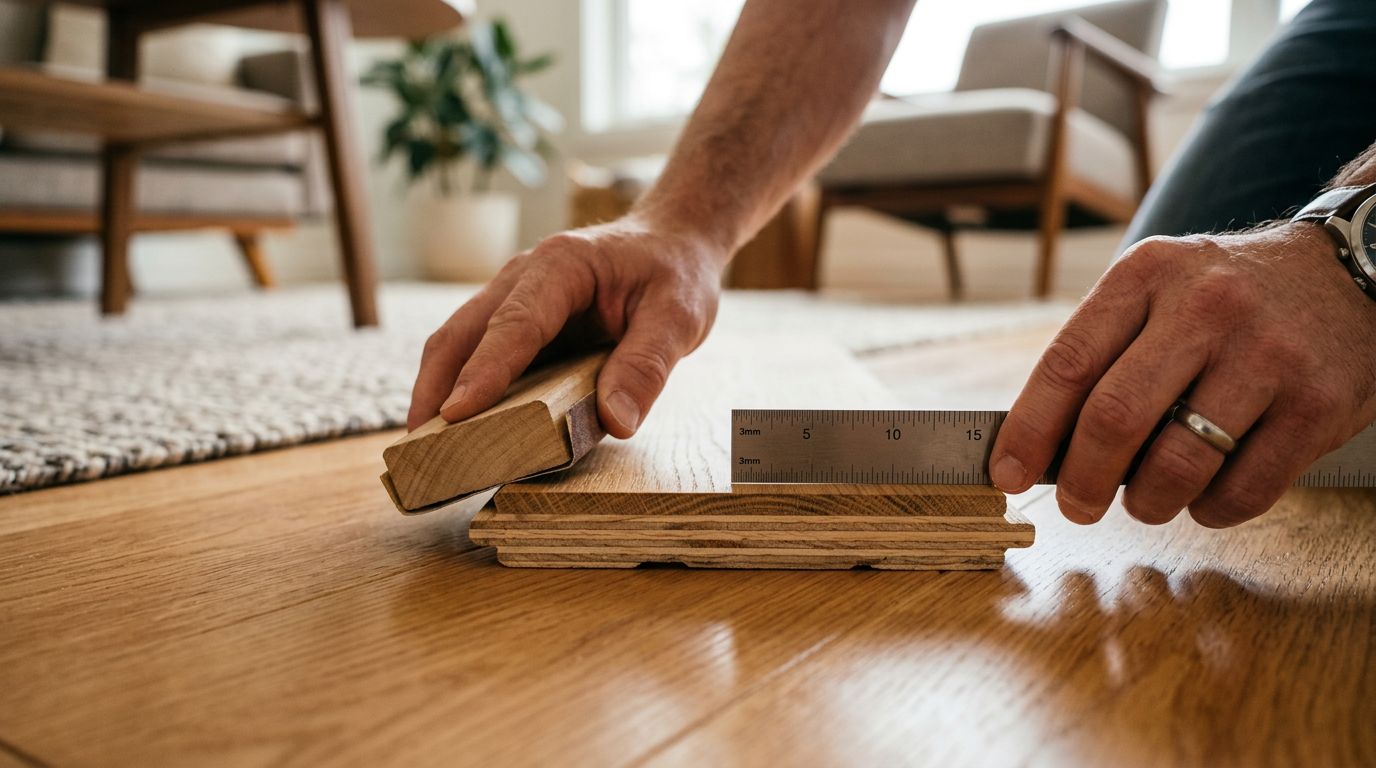
Engineered wood looks like hardwood because it is hardwood, at least on top. The long-term question is whether that surface can be sanded later without exposing the core. That answer comes down to one detail we check on every site visit: engineered hardwood wear layer thickness.
In this guide, we explain what the wear layer is, what common thickness ranges mean for refinishing, and how we assess your floor before any sanding starts. If you want a clear recommendation for your home in Alpharetta or Milton, call us at 470-352-1156 for a free estimate. If you show us any existing written quote from another contractor for the same scope and materials, we beat it by 5%.
What the engineered hardwood wear layer really is (and what it is not)
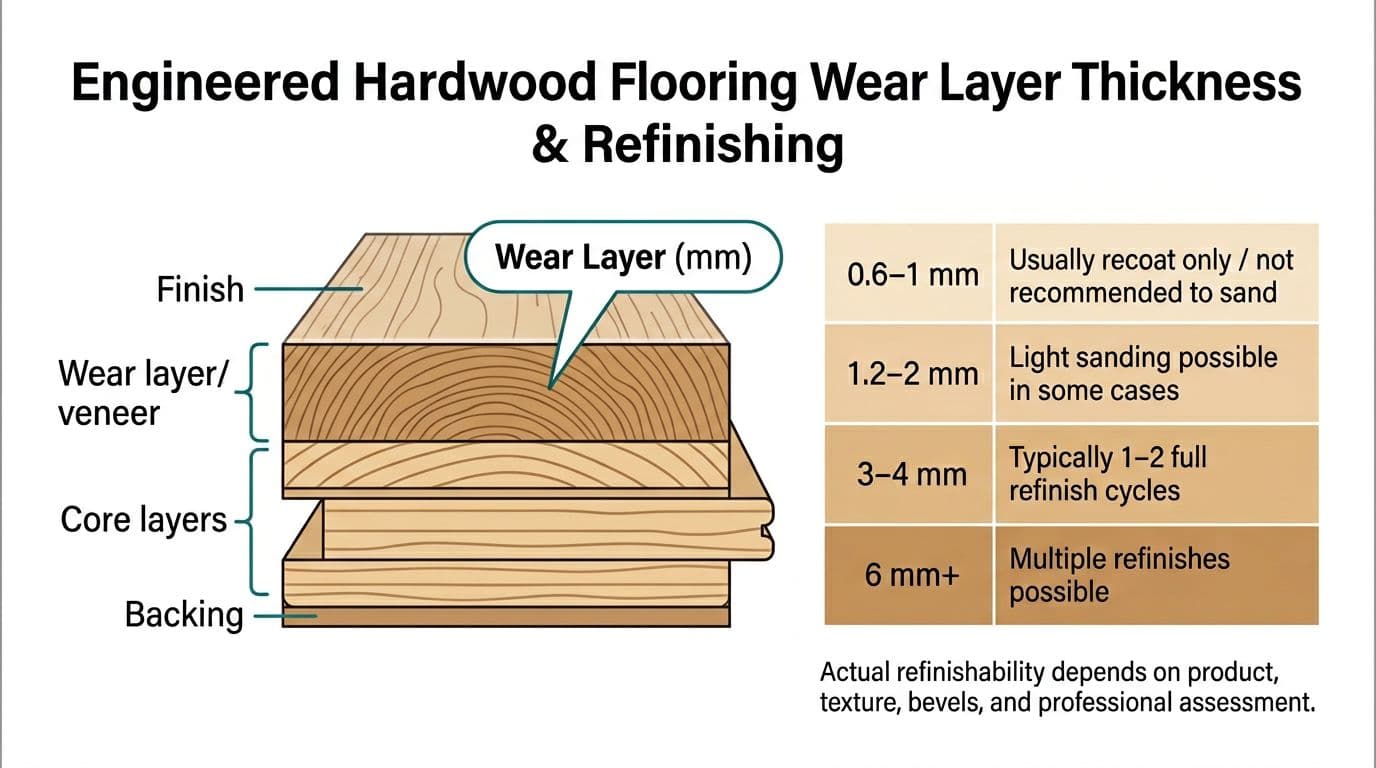
The wear layer is the top slice of real hardwood (often called the veneer). It sits above the plywood or fiber core that gives engineered flooring its stability. When we sand and refinish, we are removing a thin amount of wood from that veneer, not from the full plank thickness.
That distinction matters because engineered boards can look “thick” overall while still having a thin veneer. A 1/2-inch engineered plank might only have a 1 mm to 2 mm wear layer, depending on the product. In other words, total thickness is not a reliable predictor of refinishability.
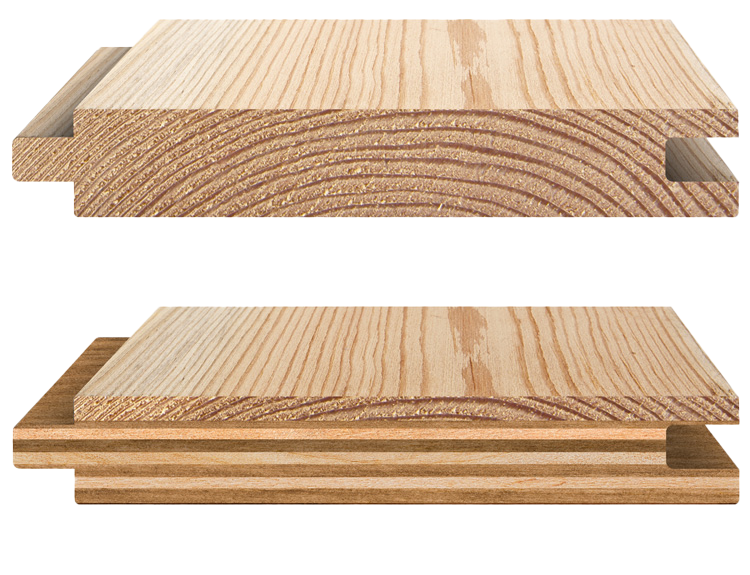
We also consider how the floor is made and styled. Handscraped textures, heavy wire-brushing, deep bevels, and wide micro-bevels reduce the usable wood at the edges. Even with a decent veneer, those features can limit how much sanding we can do before the floor looks uneven.
Manufacturers list wear layer thickness in millimeters, but listings can be confusing. If you want a plain-language refresher on how engineered hardwood is built and how it differs from solid wood, this engineered hardwood FAQ summarizes common construction terms we also hear from homeowners during consultations.
The key takeaway is simple: the wear layer is like the “save file” for your floor’s future. Each sanding spends a little of it. Once it’s gone, refinishing stops being an option.
Wear layer thickness ranges: when we can recoat, screen, or fully refinish
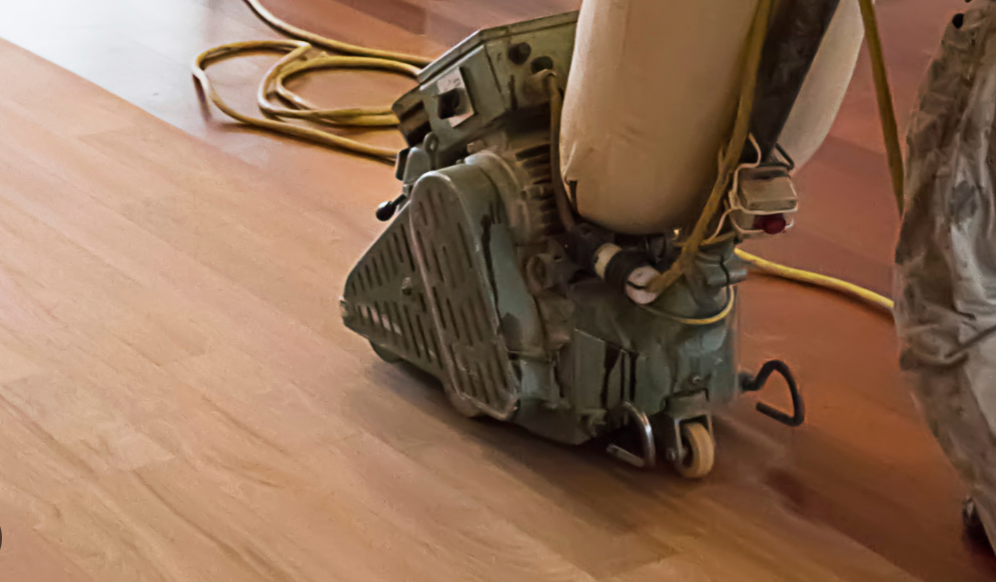 Sanding hardwood flooring
Refinishing is not one single service. We usually sort options into three levels, and wear layer thickness strongly influences which level is safe:
- Recoat (no sanding to bare wood): We clean, lightly abrade the existing finish, then apply a new coat.
- Screen and recoat (light abrasion): Similar goal, slightly more aggressive surface prep, still not a full sand.
- Full refinish (sand to bare wood): We sand the finish off, flatten the surface, then stain (optional) and re-finish.
This table is a practical starting point we use when setting expectations:
| Wear layer thickness (approx.) | What it often supports | What we watch closely |
|---|---|---|
| 0.6 to 1 mm | Recoat only, full sanding not recommended | Risk of sand-through at edges and seams |
| 1.2 to 2 mm | Light sanding possible in some cases | Texture depth, bevels, prior sanding, glue-down vs floating |
| 3 to 4 mm | Often 1 to 2 full refinish cycles | Flatness, repairs, and board-to-board height variation |
| 6 mm+ | Multiple refinishes may be possible | Product quality varies, we still verify on site |
A thicker wear layer raises the odds of a successful refinish, but it never guarantees it. The floor’s surface profile, bevels, and past work matter just as much.
Some owners ask for a “safe minimum” thickness. Many guides point to 3 mm to 4 mm as a comfortable zone for future sanding in typical homes. For a general discussion of thickness ranges, this overview on engineered wood wear layer thickness aligns with what we see in the field, while still leaving room for product-by-product limits.
Also, sanding is not always the best value. If the finish is dull but the wood is stable, a recoat can restore shine and protection without spending wear layer. On the other hand, deep scratches, pet staining that has penetrated the wood, or lippage between boards may require more aggressive work, if the veneer allows it.
How we assess refinishability in Alpharetta homes (and when replacement makes more sense)
Before we quote sanding, we confirm what we are working with. We look for a floor vent or a transition where we can see the plank edge. When needed, we carefully remove a threshold or shoe molding to inspect the profile. We also check the floor’s condition in high-traffic lanes, because those areas show the “worst case” wear.
Next, we evaluate risks that have nothing to do with thickness alone. Glue-down engineered floors can behave differently under sanding than floating floors, and moisture history changes everything. If we see cupping, edge swelling, or signs of delamination, refinishing may be the wrong plan even with a thicker veneer.
At that point, we talk through options in plain terms. Sometimes the best result comes from a recoat plus a few board swaps. Other times, replacement gives a cleaner look and better long-term durability, especially when the wear layer is very thin or the floor has already been sanded.
This is also where homeowners broaden the project scope. Floors connect to stairs, kitchens, and baths, so we coordinate work to avoid re-doing transitions later. We handle complete flooring planning through our professional flooring services in Alpharetta and, when the layout calls for it, we align flooring with cabinets and trim through our kitchen remodeling in Alpharetta.
As we meet clients, we often hear the exact searches people use:
- best flooring contractor in alpharetta ga
- best flooring company alpharetta and milton
- top hardwood floor sanding contractor in alpharetta
- Stair company Alpharetta
- stair contractor alpharetta
- tile installation company Alpharetta
- best local kitchen remodeling contractor in alpharetta
- best kitchen contractor alpharetta
- bathroom remodeling contractor in alpharetta and Milton
Our practical promise is simple. We give clear pricing, we explain risk before work starts, and we match the plan to your floor’s wear layer, not just its appearance. Call 470-352-1156 for a free estimate. If you show us any written quote from another contractor, we beat it by 5%.
Conclusion
Wear layer thickness is the guardrail that keeps refinishing safe. Once we verify your engineered hardwood wear layer, we can recommend the right path, whether that is recoat, light sanding, full refinishing, or replacement. For a free in-home estimate in Alpharetta or Milton, call 470-352-1156. Bring any existing written quote, and we will beat it by 5% for comparable scope and materials.