
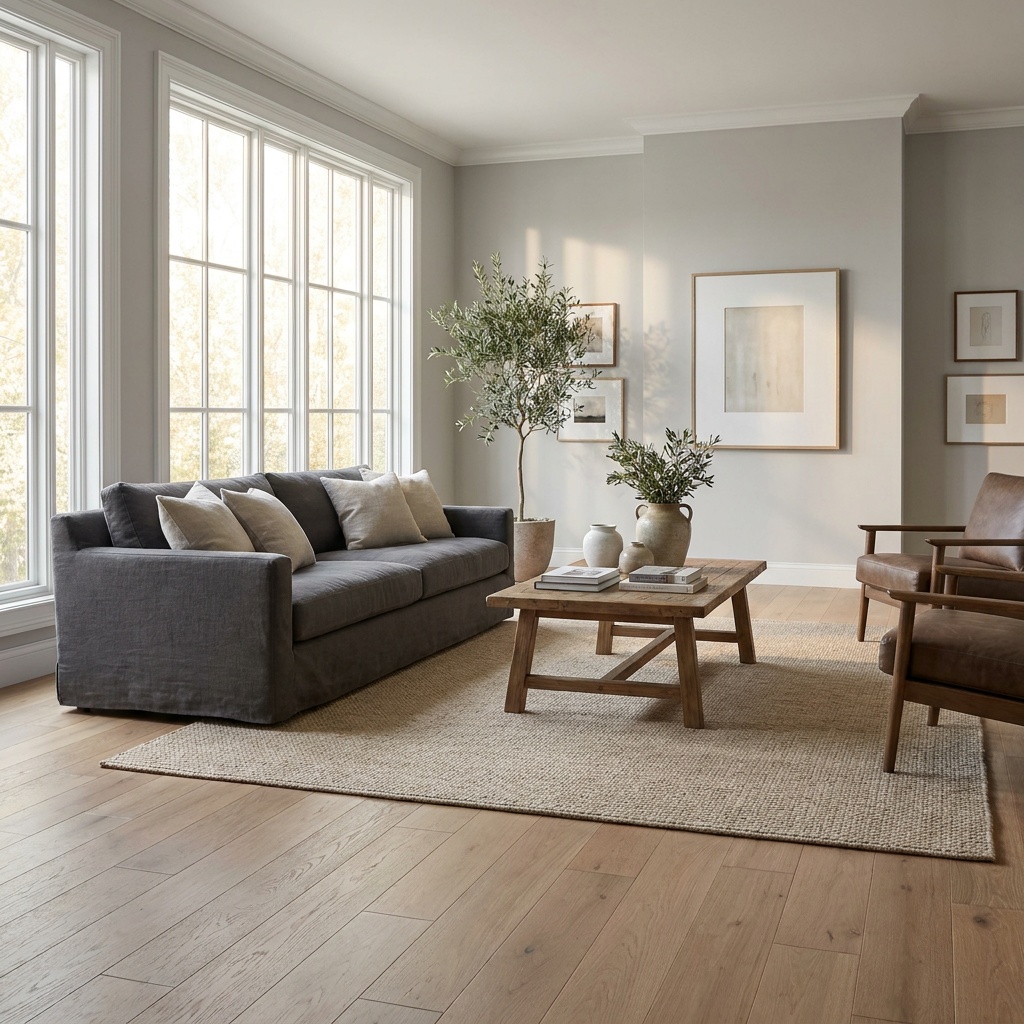
Paint first, floors last. In almost every remodeling project, interior painting should happen before new floors go down, and if you’re refinishing existing hardwood, the final coat of finish should always go on after the walls are painted but before trim touch-ups. Doing it in this order protects your new floors from paint drips, sanding dust, and scuff marks from ladders and drop cloths — which means less rework and lower total cost.
Why Order Matters More Than People Think
Homeowners often assume paint and flooring are separate projects that can happen in any sequence. In reality, the order determines how much protection, masking, and cleanup labor is needed — and that labor shows up on your invoice. Get the order wrong, and you’re paying twice: once to protect floors that are already down, and again to fix paint drips or scratches that inevitably happen anyway.
The Ideal Sequence for Most Homes
- Step 1: Rough repairs and prep. Patch drywall, fix trim, and handle any demolition before anything else.
- Step 2: Ceiling and wall painting. Rollers and brushes are messy. Painting over bare subfloor or old flooring you’re replacing anyway means drips don’t matter.
- Step 3: New flooring installation. Once walls are dry and cured, install hardwood, carpet, or LVP without worrying about paint splatter.
- Step 4: Baseboard and trim touch-up. A final light coat of trim paint after floors go in hides any small dings from installation.
What Changes When You’re Refinishing Existing Hardwood
If you already have hardwood and you’re planning to sand and refinish rather than replace it, the sequence shifts slightly. Sanding creates fine dust that settles everywhere, including on freshly painted walls — so walls should be painted (except for a final touch-up coat) before the floor sanding and refinishing crew arrives. Then, once the new stain and polyurethane have fully cured, painters come back for baseboards and any wall repair caused by the sanding equipment.
This two-visit approach for paint might sound like more work, but it actually costs less overall. Painting a room once before dust-generating work and once lightly after for trim is far cheaper than repainting entire walls that got covered in sanding dust or scuffed by heavy equipment.
Dust Containment Makes a Real Difference
Not all sanding jobs create the same mess. Dust-contained sanding equipment captures the majority of fine particles at the source, which means less dust settling on painted walls, trim, and furniture. This is one reason the order-of-operations question comes up so often — with better dust control, you have more flexibility, but painting first is still the safer, lower-cost default for full room remodels.
How This Saves You Money
The savings come from avoiding rework, not from any single line item. Consider the alternative: floors go in first, painters show up, and now every wall needs full masking, floor covering with rosin paper or plastic sheeting, and extra care around baseboards. If a drip lands on brand-new hardwood or LVP, it has to be caught immediately or it can damage the finish. That extra masking labor and risk gets built into a painter’s quote — or worse, into a repair bill after the fact.
When painting happens first, none of that protection labor is necessary. The room is empty or under construction anyway, so painters can move fast without babying a finished floor.
Budgeting for the Full Project
Because paint and flooring order affects labor time, it’s worth budgeting both pieces together rather than treating them as separate quotes. For reference, hardwood flooring installation in the Atlanta area typically runs $6-15 per square foot, and LVP typically runs $5-12 per square foot — both figures assume a ready-to-work space with no subfloor repair, nothing to move, and standard-grade material; get your exact number with a free consultation. Carpet installation generally falls between $5-8 per square foot under the same ready-to-work assumptions, and stair work is usually priced per step at $100-250, again assuming no extra prep or repair is needed.
If you’re refinishing rather than replacing, floor sanding and refinishing starts around $3.89-$8 per square foot, though the final price depends on the type of flooring and the scale of sanding needed. You can see more detail on typical ranges in our hardwood floor refinishing cost guide and our flooring installation cost guide.
One Crew, One Schedule, Fewer Surprises
Coordinating painters and flooring installers separately often means gaps in scheduling, miscommunication about who protects what, and delays waiting for one trade to finish before another starts. Projects that combine painting with flooring, and sometimes kitchen or bathroom work, tend to move faster and with fewer surprises when handled under one crew and one contract rather than juggling multiple separate vendors. That’s the approach behind our broader whole-home remodeling services — floors, paint, kitchen, and bath coordinated as a single project instead of a string of unrelated jobs.
Every project gets a free consultation and an itemized written proposal, so you know exactly what order work will happen in and what each phase costs before anything begins. If you already have a comparable written quote for the same scope and materials, we’ll also beat it by 5%.
FAQ
Do I need to paint before installing LVP or laminate flooring?
Yes, painting first is recommended for LVP and laminate just as it is for hardwood. It’s easier to protect subfloor or old flooring you’re replacing than to mask brand-new click-lock planks from paint drips and foot traffic.
What if my walls were already painted before I decided to refinish the floors?
That’s common and manageable — just expect a touch-up coat on baseboards and lower walls after sanding is complete, since dust and equipment contact can leave marks even with dust-contained methods.
Does the paint-then-floors order apply to stair remodels too?
Generally yes. Painting stairwell walls and any wall-mounted trim before new treads, risers, or refinishing work keeps installers from having to protect fresh paint while working in a tight stairwell space; see our stair remodeling page for more on how that process is sequenced.
Ready to plan your paint-and-flooring timeline the right way? Book a free consultation or call 470-352-1156 and we’ll map out the order, timeline, and itemized cost for your home.