
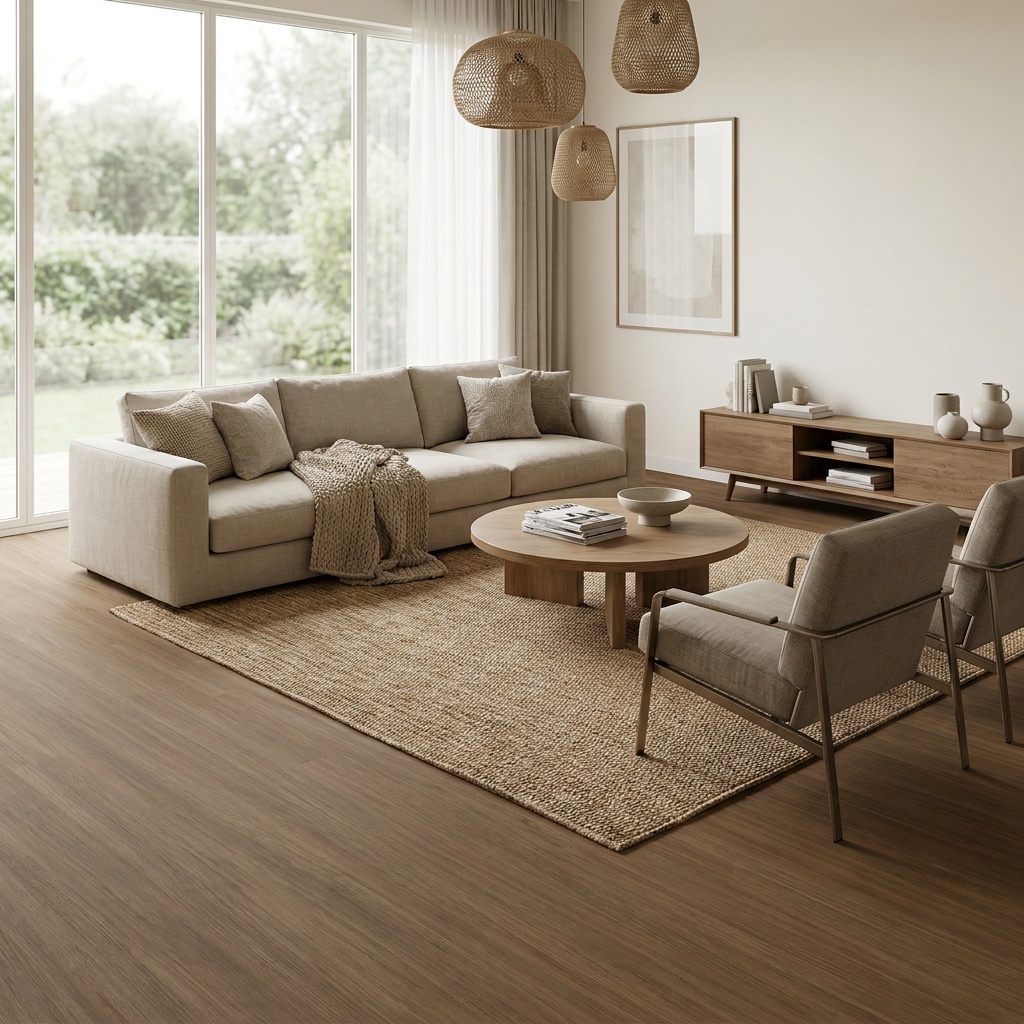
LVP (luxury vinyl plank) holds up better than laminate in Georgia’s humid, muggy climate. LVP has a waterproof vinyl core that won’t swell, warp, or delaminate when moisture levels rise, while laminate’s core is compressed wood fiber that can absorb humidity over time and expand at the seams. In kitchens, bathrooms, basements, and homes without tight climate control, LVP is the safer long-term choice. Laminate can still work well in dry, consistently air-conditioned living spaces, but it needs more careful upkeep in a state where summer humidity regularly sits above 60-70%.
Homeowners across Alpharetta, Milton, Roswell, Duluth, and Johns Creek ask us this question constantly, especially when replacing flooring in finished basements, sunrooms, or homes near water features where moisture is a bigger factor. Here’s a closer look at how each product actually performs once Georgia weather gets involved.
Why Georgia Humidity Is a Real Test for Flooring
Metro Atlanta summers bring heavy moisture in the air, and even well-sealed homes see humidity swings between seasons. Crawlspaces, slab foundations, and finished basements can trap moisture underneath flooring, and everyday sources like cooking steam, shower humidity, and HVAC cycling add to the load. Flooring materials that can’t handle that moisture exposure tend to show it fast — through swelling, peaking at seams, or a spongy feel underfoot.
How LVP Performs in Humid Conditions
LVP is built from multiple layers, including a waterproof vinyl core, making it essentially immune to the kind of moisture damage that affects wood-based products. It won’t absorb ambient humidity, and it holds its shape even in rooms with temperature and moisture swings, like sunrooms, laundry rooms, or basements. This is why LVP has become the go-to option for kitchens, bathrooms, and lower levels throughout our service areas.
- Waterproof core resists swelling, cupping, and warping
- Performs well over concrete slabs, which is common in Georgia basements
- Handles temperature swings in sunrooms and three-season spaces
- Available in floating or glue-down installation depending on the subfloor
Because LVP isn’t moisture-sensitive, it also tends to have a longer service life in problem areas of the home. Installation costs typically run $5-12 per square foot, and our flooring installation cost guide breaks down how material grade and subfloor prep affect that range.
How Laminate Performs in Humid Conditions
Laminate flooring is built around a dense wood-fiber core topped with a printed image layer and a protective wear layer. That wood-fiber core is the weak point in Georgia’s climate — it can absorb moisture from the air or from small spills, causing boards to swell, edges to lift, or seams to darken over time. Laminate can still be a solid, budget-friendly option for bedrooms, hallways, and living areas that stay dry and climate-controlled, but it’s not the best fit for bathrooms, basements, or homes with inconsistent air conditioning.
If you already have laminate showing early signs of swelling or peaking, it’s worth having it evaluated before the damage spreads to more boards.
Where Each Material Makes Sense
Best Fit for LVP
Kitchens, bathrooms, mudrooms, basements, and sunrooms all benefit from LVP’s waterproof performance. It’s also a strong match for homes with pets or kids, where spills and tracked-in moisture are a daily reality.
Best Fit for Laminate
Laminate can still work well in dry, low-traffic spaces like formal living rooms, home offices, or bedrooms on upper floors where humidity exposure is minimal and the HVAC system keeps conditions stable year-round.
Cost Comparison in the Atlanta Market
Both products fall in a similar price range, but installation costs vary based on subfloor prep, room size, and material grade. As a general guide for the 2026 Atlanta market:
- LVP installation: $5-12 per square foot
- Hardwood installation: $6-15 per square foot
- Carpet installation: $5-8 per square foot
- Stair conversions: $100-250 per step
For a full breakdown across flooring types, our flooring cost hub is a good starting point before you compare quotes.
What This Means for Your Renovation Plans
If you’re renovating multiple rooms at once — say a kitchen refresh alongside new flooring in adjoining living spaces — it’s worth thinking about moisture exposure room by room rather than picking one flooring type for the whole house. A kitchen or bathroom near a water source calls for a different moisture strategy than a formal dining room. Our flooring installation team can walk your specific rooms and recommend where LVP makes sense versus where laminate or hardwood is a better long-term fit.
Many of our clients pair new flooring with other updates in the same visit, since we can handle floors, kitchen remodeling, bathroom and shower remodeling, and paint under one crew and one contract through our whole-home remodeling services. That keeps scheduling simple when moisture-prone rooms need a coordinated plan.
Every project starts with a free consultation and an itemized written proposal, so you know exactly what material, prep work, and labor costs are included before work begins. If you already have a written quote from another contractor for the same scope and materials, we’ll beat it by 5%.
FAQ
Does LVP ever fail in humid Georgia basements?
LVP is highly moisture-resistant, but subfloor moisture and poor ventilation can still cause issues over time. Proper underlayment and a moisture check before installation help prevent problems.
Can laminate flooring be installed in a bathroom?
It’s not recommended. Laminate’s wood-fiber core is vulnerable to swelling from splashes and steam, so LVP or tile is a safer choice for bathrooms.
Which option is easier to repair if damaged?
LVP planks are generally easier to replace individually, while damaged laminate boards often require pulling apart more of the floor to reach the affected area.
Ready to compare LVP and laminate for your own home? Book a free consultation or call 470-352-1156 to get an itemized proposal for your space.