
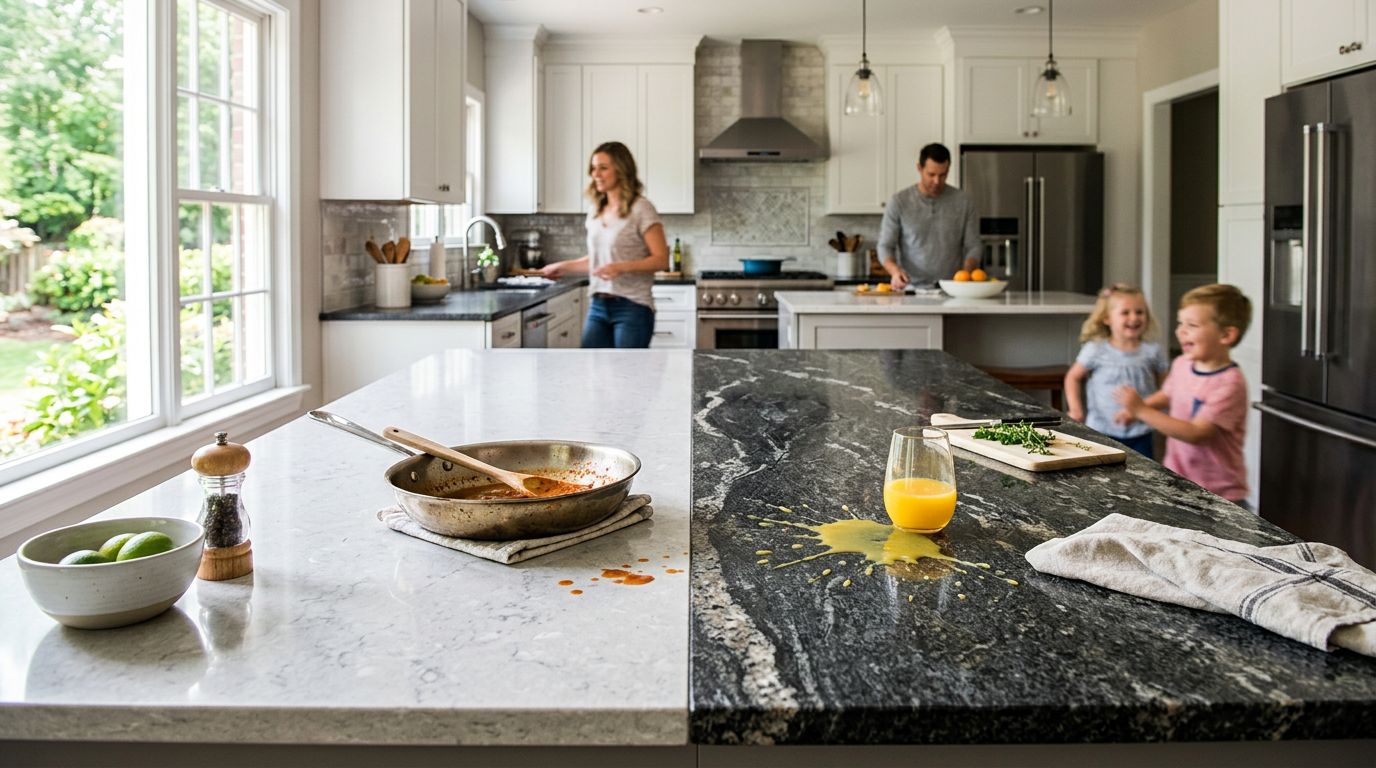
If your Alpharetta kitchen runs like a train station, breakfasts, homework, meal prep, and late-night snacks, your counters need to keep up. In 2026, the real question isn’t which material is “best” in general. It’s which one fits your cooking style, cleaning habits, and budget.
A quartz countertop vs granite countertop decision comes down to a few daily realities: spills that sit too long, hot pans that land where they shouldn’t, and the wear that shows up around the sink. Below is a practical, local-minded way to choose, plus what installation and care really look like.
What busy kitchens actually demand, stain resistance, heat, and downtime
Most countertop regrets aren’t about color. They’re about friction, like having to baby the surface, or feeling nervous every time someone sets down a hot skillet.
Here’s a quick side-by-side that matches what homeowners typically feel after the first few months.
| What matters day to day | Quartz (engineered stone) | Granite (natural stone) |
|---|---|---|
| Spill cleanup | Usually easier because it’s non-porous | Easier when sealed, but still more absorbent |
| Heat from cookware | Better than older quartz, still use trivets | Handles heat well, still avoid thermal shock |
| “Real stone” look | Consistent patterns, many marble looks | One-of-a-kind slabs with natural movement |
| Ongoing maintenance | No sealing, simple routine | Sealing every 1 to 2 years is common |
| Pattern matching | Predictable from slab to slab | Variation makes seams and matches trickier |
If you want the lowest daily upkeep, quartz often wins. If you want natural character and strong heat handling, granite usually feels more satisfying.
Also consider how the counters connect to the rest of the room. Many 2026 kitchens pair new countertops with a tile backsplash, updated lighting, and flooring changes. That’s where coordination matters, especially when you’re trying to avoid a long “kitchen out of service” stretch.
Quartz countertops in 2026, why families like them (and the myths to ignore)
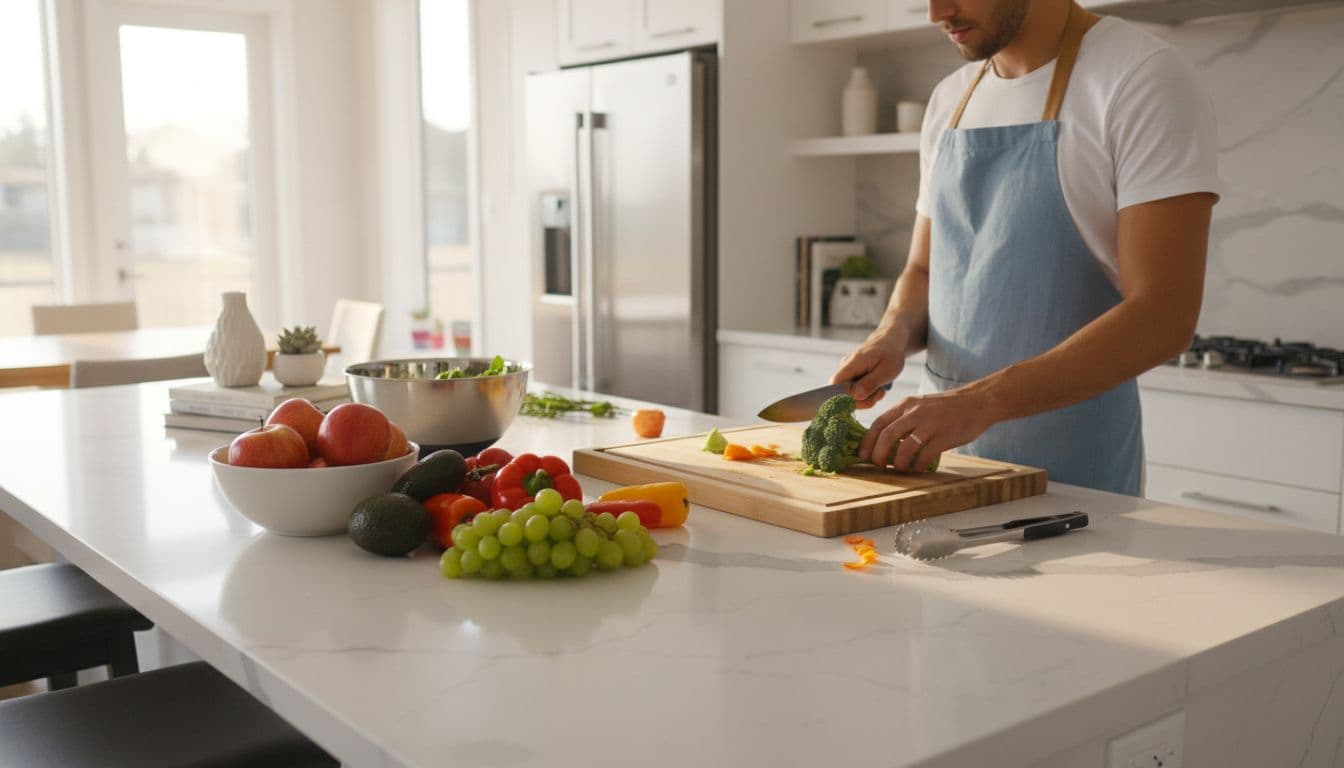
Quartz has stayed popular in North Fulton for a simple reason: it’s forgiving. Because it’s non-porous, it resists most kitchen stains from coffee, wine, and oils without needing sealing. That’s a big deal when spills happen during rush hour.
2026 style note: matte quartz finishes are everywhere right now, partly because they hide fingerprints better than high-gloss. Waterfall edges are still requested too, although they raise fabrication cost and can increase seam planning.
Common quartz myths (and what’s true)
Quartz isn’t “stain-proof.” It’s stain-resistant. Strong dyes, harsh chemicals, and neglected spills can still discolor some products. Performance also varies by brand and color. Pure whites and very light patterns can be less forgiving than mid-tones.
Quartz also isn’t “bulletproof” with heat. Newer formulas handle normal kitchen warmth well, but the resin content can scorch under very hot cookware. Use a trivet, even if your neighbor never does.
Quartz care, simple habits that prevent problems
Most quartz manufacturers recommend gentle, non-abrasive cleaning. A good routine looks like this:
- Use warm water, a soft cloth, and a small amount of dish soap for daily cleaning.
- For stuck-on residue, use a non-scratch sponge and a pH-neutral cleaner.
- Avoid bleach, oven cleaner, high-alkaline degreasers, and abrasive powders.
- Skip vinegar as a daily cleaner, it’s not worth the risk to finishes and seams.
- Don’t use steel wool or harsh scrub pads.
If your project includes more than counters, coordinate selections early. Many homeowners start with kitchen remodeling in Alpharetta because counters, backsplash, and floors affect each other more than people expect.
Granite countertops, the natural look that still fits real life
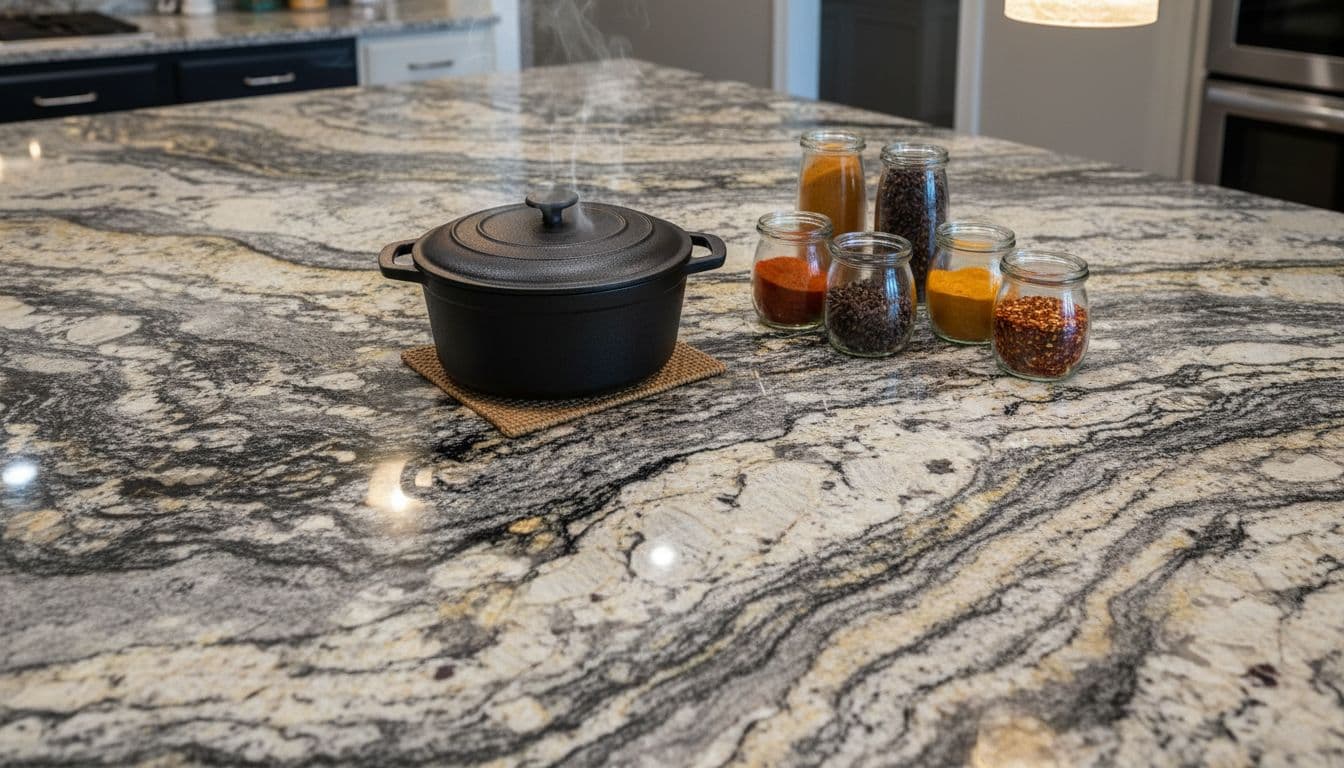
Granite is the “snowflake” option. Every slab has its own movement, minerals, and color shifts. If you want your kitchen to feel grounded and less manufactured, granite can do that better than most patterns trying to imitate it.
For busy cooks, granite’s biggest practical advantage is heat tolerance. You still shouldn’t shock it with extreme temperature swings, but it generally handles hot cookware better than quartz.
The granite myth that won’t die
Granite doesn’t have to be “high maintenance.” It’s more accurate to say it’s routine maintenance. Sealing is usually quick, and many modern sealers last longer than people think. Guidance from the Natural Stone Institute aligns with this: keep it clean, wipe spills, and seal when water no longer beads.
On the other hand, granite isn’t automatically stain-proof once sealed. Some colors are more porous than others, and light granites can show oils near the cooktop if spills sit.
Granite care, what to use (and what to avoid)
- Clean with warm water, mild dish soap, and microfiber.
- Use stone-safe, pH-neutral cleaners for deeper cleaning.
- Avoid vinegar, bleach, ammonia, and abrasive powders.
- Blot oil spills quickly, don’t smear them wider.
- Reseal when needed (often every 1 to 2 years, depending on stone type and use).
Granite also pairs nicely with other “real material” choices, like hardwood floors. If you’re blending projects, homeowners often compare bids from a top hardwood floor sanding contractor in alpharetta to get the whole main level feeling consistent.
2026 pricing and countertop installation in Alpharetta, what drives the range
In 2026, installed pricing usually lands in these broad ranges (your slab choice matters a lot):
- Granite: about $40 to $100 per square foot installed
- Quartz: about $50 to $120 per square foot installed
For a typical 40-square-foot kitchen, that often puts totals roughly between $1,600 and $4,800 before add-ons. The range is wide because the details add up fast.
What pushes cost up (or keeps it under control)
Square footage matters, but these factors often matter more:
- Number of sink cutouts, cooktop cutouts, and faucet holes
- Edge profiles (simple eased edges cost less than complex profiles)
- Thickness (and whether you “build up” edges for a thicker look)
- Seams and layout complexity (especially with dramatic veining)
- Tear-out, disposal, and plumbing disconnects
- Backsplash height and material (many homeowners loop in a tile installation company Alpharetta for this phase)
If you’re planning to change countertop alpharetta without a full remodel, ask how the crew protects floors, walls, and cabinets during removal. That protection step prevents expensive collateral damage.
How to choose a reputable fabricator in North Fulton
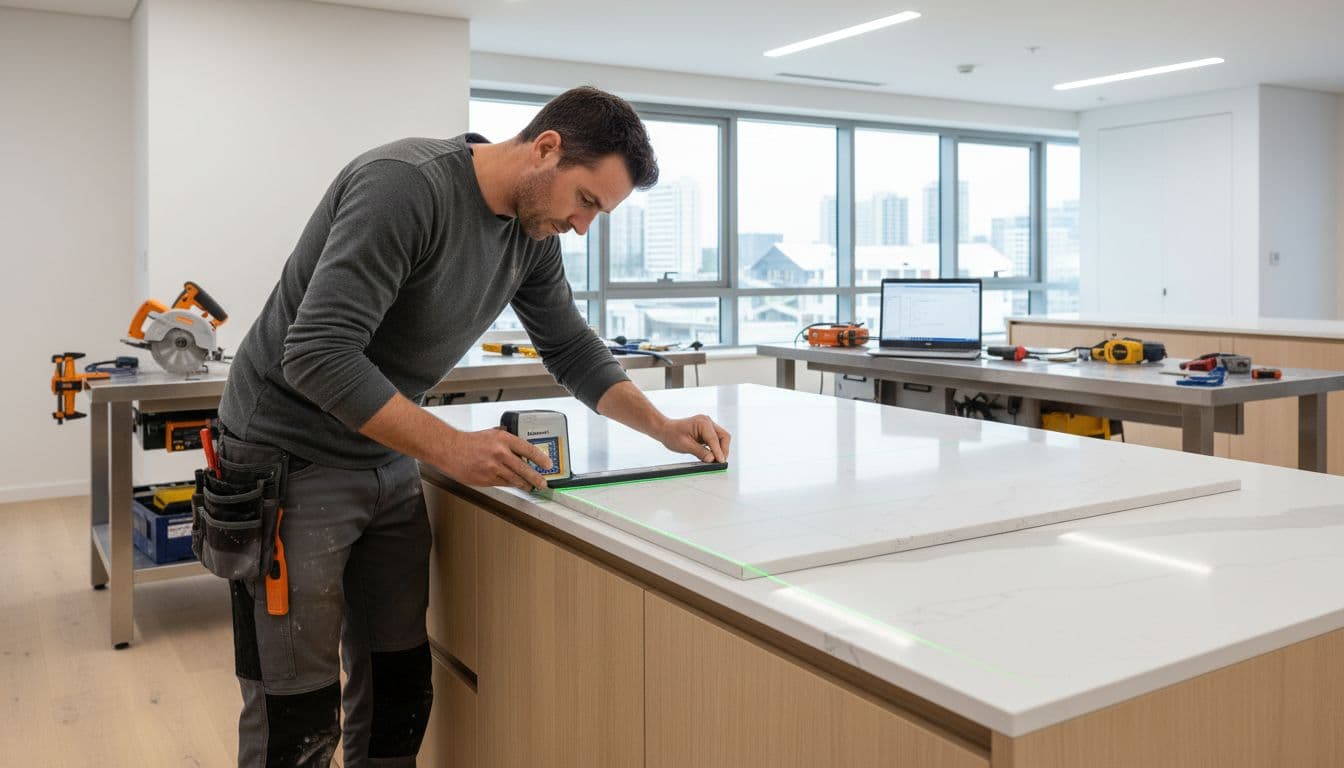
A clean countertop installation is part measuring and part communication. Look for:
- License and insurance documentation (ask for proof, not promises)
- Digital templating (it reduces fit surprises and odd gaps)
- Clear seam planning, shown on the template layout
- Written warranty details for both labor and materials
- For quartz, confirmation they’re approved by the slab brand (or follow brand handling rules)
This is also where “one team” can reduce headaches. Homeowners comparing the best local kitchen remodeling contractor in alpharetta or the best kitchen contractor alpharetta often want a single point of contact for counters, backsplash, and floors. The same thinking applies if your kitchen sightline includes stairs. A Stair company Alpharetta can help match stains and finishes, and a stair contractor alpharetta can coordinate timing so the house doesn’t feel half-finished.
If you’re bundling spaces, the right partner matters even more. Many homeowners looking for a bathroom remodeling contractor in alpharetta and Milton try to align countertop colors across kitchens and baths for a calm, consistent look. For planning ideas on value, kitchen remodel ROI Alpharetta is a helpful reference, and Alpharetta bathroom and shower remodeling can help you map finishes across rooms. People doing whole-home updates also compare service quality the same way they’d compare the best flooring contractor in alpharetta ga or the best flooring company alpharetta and milton.
A simple decision framework (and next steps for local estimates)
Choose quartz if you want fast cleanup, fewer maintenance tasks, and consistent patterns. Pick granite if you care most about natural uniqueness and better heat comfort while cooking. Either can be a smart long-term choice, as long as you match the material to your habits.
Next, collect 2 to 3 in-home measurements and written quotes, confirm what’s included (tear-out, plumbing, disposal, and protection), and review seam layout before anything is cut. Your countertop should feel like a workbench, not a fragile display shelf.