A leak from leaking pipes or plumbing spills can turn a calm home into a guessing game overnight, causing water damage. One day your floor feels flat and quiet, then the next day the board edges feel sharp under socks, like pages of a damp book trying to curl. This situation can lead to hardwood floor cupping if not addressed promptly.
That raised edge is a common sign of hardwood floor swelling. The good news is that many floors can recover if we act fast, dry the right way, and wait before sanding. The bad news is that rushing the “fix” can lock in the damage.
Understanding hardwood floor cupping is crucial for effective repair and prevention strategies.
Below, we explain what edge swelling means, how we judge whether boards can be saved, and what a proper repair plan looks like after a leak.
What Wood Floor Cupping Tells Us, and What to Do First
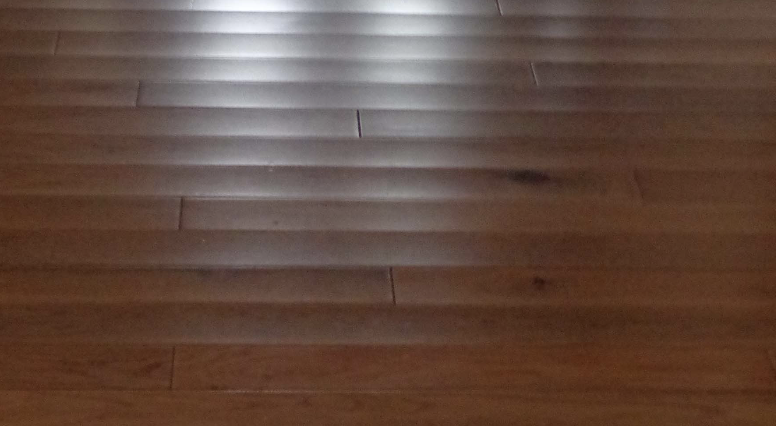
Wood floor cupping usually shows up as edge swelling, when the edges rise higher than the center. This is a specific response to high subfloor moisture, since wood takes on moisture unevenly. Often, the bottom of the boards gets wetter first (from a soaked subfloor or trapped moisture), so the edges pull upward as the board shape changes.
In the first 24 hours, our goal is simple: stop water, remove water, then move dry air.
Here is the approach we recommend for homeowners right away:
Stop the source: Shut off the valve, repair the supply line, or fix the drain leak before anything else.
Remove standing water: Use towels and, if available, a wet-dry vacuum. Mopping alone spreads water.
Start drying fast: Run fans and a dehumidifier. Increase ventilation and airflow to keep air moving across the floor surface.
Lower relative humidity: Set HVAC to a comfortable temperature, and avoid humidifying the home.
Check “hidden” areas: Water often travels under baseboards, into adjacent rooms, and under rugs.
If the leak is from a dishwasher, fridge line, or sink, we also look at toe-kicks and nearby cabinets. Water does not respect room boundaries.
If we can dry the floor evenly and early, we often prevent wood floor cupping from turning into permanent hardwood floor buckling, along with mold growth.
If boards are lifting high, or you smell a strong musty odor, call for help sooner rather than later. Trapped moisture can lead to mold growth in the subfloor, even when the top looks “almost fine.”
When swollen hardwood boards can be saved (and when they cannot)
Not every raised edge or closed expansion gap means replacement. In many homes, boards flatten as moisture levels and relative humidity return to normal. The key is the severity, the time wet, and whether the wood fibers broke down.
We use quick field checks: feel for softness, look for black staining, and watch for boards that no longer sit in plane. We also test moisture content with a wood moisture meter. A reading that stays high after days of drying is a warning sign that water remains below the surface.
Here is a simple guide we use during inspections:
What we see after the leak
What it usually means
Can boards be saved?
Light peaking, minor cupping, no odor
Surface moisture, short exposure
Often yes, with proper drying
Moderate cupping, some looseness, faint musty smell
Moisture reached the underside or seams
Often yes, but needs time and monitoring
Severe hardwood floor buckling, boards lifting off subfloor
Fasteners released or subfloor swelled
Usually no, partial replacement likely
Soft wood, crumbling edges, strong mold smell
Material breakdown or mold growth
No, remove damaged materials
Staining alone does not always mean the wood is ruined. Some stains sand out. Others run deep and remain visible even after refinishing. That is why we do not promise a “perfect match” until we see the depth of the discoloration.
Another deciding factor is the subfloor. If plywood or OSB swelled and stayed swollen, causing structural damage, the hardwood above it rarely settles correctly, especially without a vapor barrier over a concrete slab. In that case, saving boards may still be possible, but only after we correct the structure underneath.
Sanding too early is one of the most expensive mistakes we see. Wood can move again as it finishes drying.
A practical repair plan after drying wood floor cupping (sanding, blending, and selective replacement)
After we stop the leak and begin drying, the next step is patience with a plan. Depending on the amount of water and the build-up under the floor or issues with the moisture barrier, drying can take days, and sometimes longer. We confirm stability by checking moisture levels and the condition of the moisture barrier over multiple readings until the boards reach their equilibrium moisture content, not a single day.
Once the floor reaches equilibrium moisture content and stays stable, we choose one of three repair paths:
Dry and monitor only: For small spills and light wood floor cupping, boards often relax back close to flat.
Selective floorboard replacement: If a few boards split, delaminate (engineered wood), or stay crowned or peaking, we remove only those pieces. We avoid obvious square patches when possible, because seams show. Instead, we weave replacements into the run so the repair looks natural. Before installation, we acclimate hardwood flooring to prevent future plank separation from crowning or peaking.
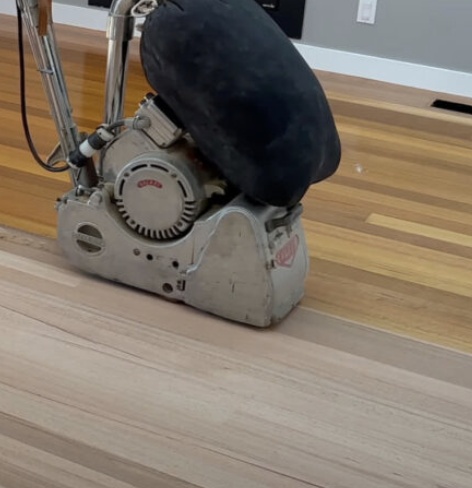
Sanding and refinishing (best for blending): When wood floor cupping remains but the wood is sound, sanding and refinishing can flatten raised edges and erase minor staining. We typically refinish a continuous area for a consistent sheen and color.
What a successful save should look like in the end
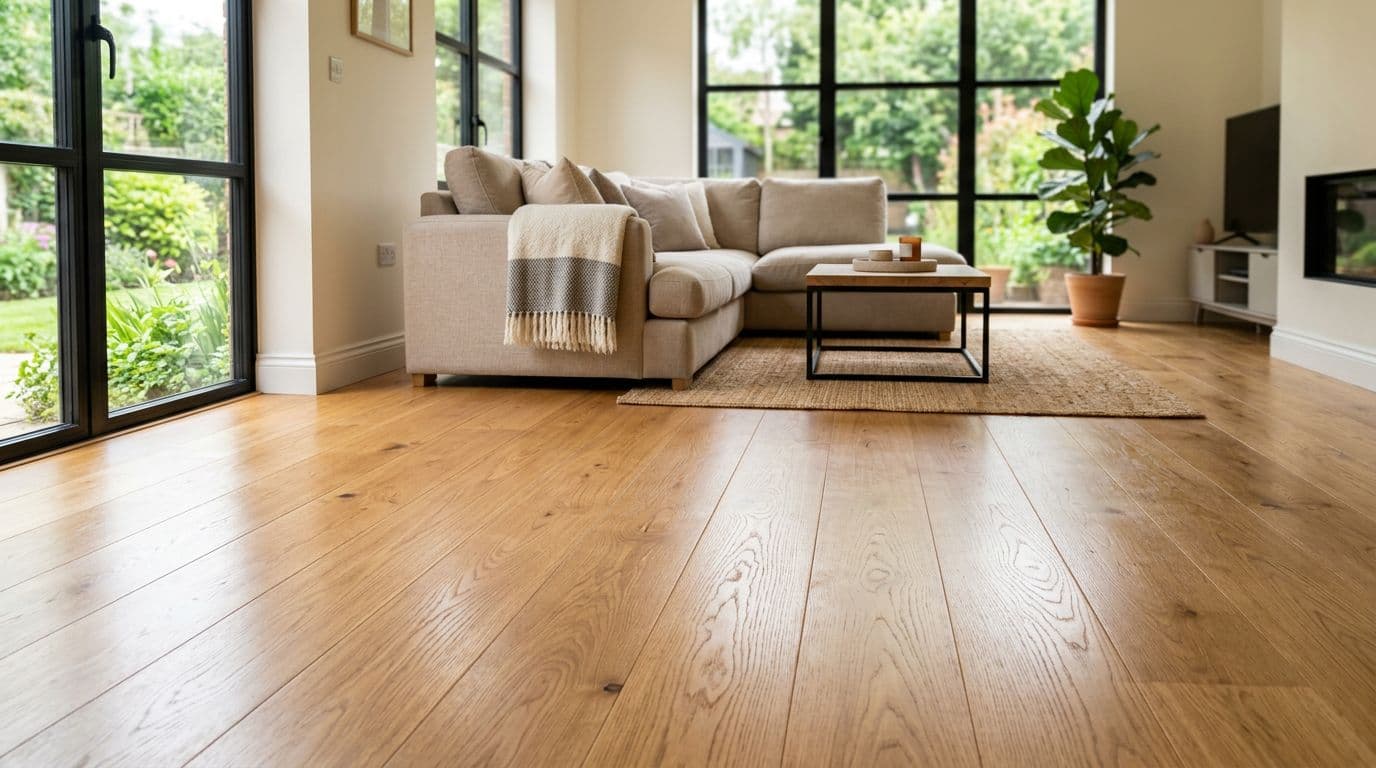
A smooth, even hardwood floor after sanding and refinishing
A good outcome feels boring, in the best way. The boards sit flat, transitions look clean, and the finish reflects evenly without ripples at the seams, protected by a new polyurethane sealant and proper hardwood floor maintenance to handle seasonal humidity changes.
When we handle leak recovery, we also help homeowners think bigger if the damage started in a kitchen, bath, or stair landing. You can review our flooring installation Alpharetta GA services if the floor needs partial replacement, or our stairs remodeling in Alpharetta page if the leak affected treads, risers, or a landing. If cabinets or layout changes are part of the fix, our kitchen remodeling in Alpharetta team can coordinate the full scope.
Many homeowners find us by searching phrases like best flooring contractor in alpharetta ga, best flooring company alpharetta and milton, or top hardwood floor sanding contractor in alpharetta. Others call when they need a bathroom remodeling contractor in alpharetta and Milton, the best local kitchen remodeling contractor in alpharetta, or the best kitchen contractor alpharetta for a post-leak rebuild. If the water reached tile, we can also act as your tile installation company Alpharetta. If stairs are involved, we are a Stair company Alpharetta, and a reliable stair contractor alpharetta for repairs and upgrades.
For a clear plan and pricing from your professional flooring contractor, call us at 470-352-1156 for a free estimate. If you show us any existing written quote from another contractor for comparable scope and materials, we beat it by 5%.
Conclusion
Hardwood floor swelling from water damage is stressful, but it is not always a total loss. Identifying wood floor cupping early helps ensure better recovery. When we stop the water, dry the floor evenly, and wait for stable moisture, we can often save boards and restore a flat surface. In many cases, careful sanding and refinishing completes the restoration without a full replacement. For a free estimate, call 470-352-1156, and remember, if you bring an existing written quote, we beat it by 5%.