
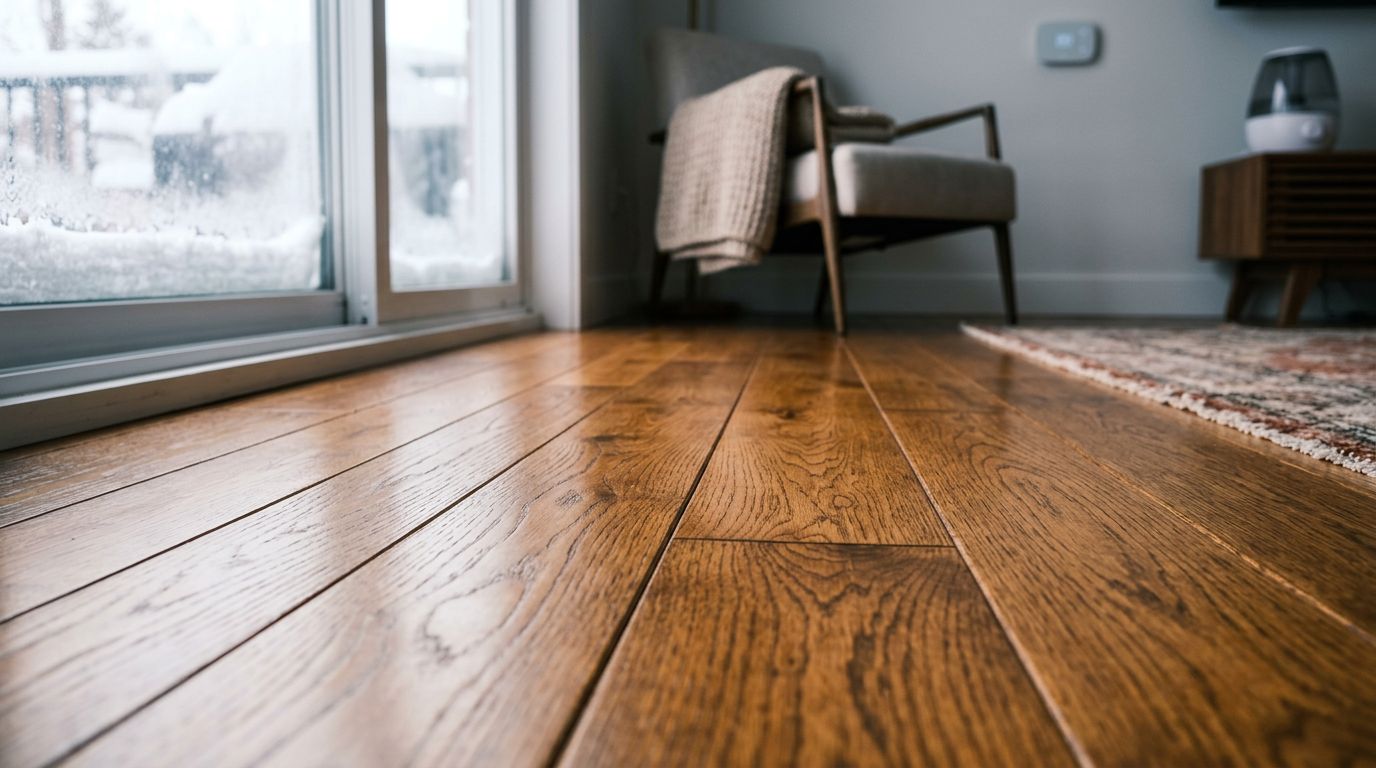
When thin lines open between boards in January, it is easy to think the floor is failing. In most homes, solid wood floors experience hardwood floor gaps in winter due to simple moisture changes rather than structural disasters.
Wood reacts to the air in your home. When indoor heating systems dry out the air, the boards lose internal moisture and shrink. This process of expansion and contraction is a natural part of how wood behaves as the seasons change. Because this movement is expected, the most effective repair strategy depends on the timing, the size of the gaps, and whether the boards naturally close again once the indoor moisture content returns to a balanced state.
Key Takeaways
- Seasonal Movement is Natural: Hardwood floor gaps in winter are typically caused by low indoor humidity drying out the wood, causing the boards to contract; this is a normal reaction to the environment.
- Avoid Premature Repairs: Filling gaps during the peak of winter can lead to problems in the spring, as wood expands when humidity returns, potentially pushing out the filler.
- Prioritize Humidity Control: Maintaining indoor relative humidity between 30% and 50% is the most effective way to prevent and minimize seasonal floor gaps.
- Identify Persistent Issues: If gaps remain open during humid summer months or are accompanied by squeaking and unevenness, it indicates a structural issue rather than simple seasonal movement.
Why hardwood floors open up in cold weather
We see this every winter. Furnaces run longer, fireplaces add dry heat, and indoor humidity drops. As a result, hardwood boards contract across their width, and small gaps appear. These seasonal changes are a natural response to the environment as the wood reacts to the indoor climate.
A few narrow spaces that show up across many floorboards usually mean the floor is behaving exactly as wood should. The same pattern comes up in this HomeImprovement winter gap discussion, where homeowners describe gaps growing during heating season and easing when moisture levels recover.
Several conditions make winter gaps worse. Wide planks move more than narrow strips, and the specific wood species also dictates the degree of movement you might notice. While engineered wood floors are generally more stable due to their layered construction, traditional solid wood will always shift. New homes can dry out fast in the first heating season, and floors installed before they fully acclimated often show larger openings. In some homes, a wood-burning fireplace or an overworked HVAC system pulls moisture out of the air, significantly altering the temperature and humidity balance within the room.
For most houses, maintaining steady humidity levels within a range of 30 to 50 percent relative humidity helps limit movement. A small hygrometer can tell us whether the current humidity levels are too low for the health of your home. If the air becomes too dry, the floor often tells the story before the thermostat does.
When we should wait, and when repair makes sense
Timing matters because a winter repair can create a spring problem. If we fill seasonal gaps while the floorboards are at their smallest, the filler may crack, loosen, or push up when the wood expands again. Because your home experiences a constant cycle of summer and winter humidity changes, recognizing normal patterns is essential to long-term floor care.
This quick guide helps separate natural movement from trouble that needs closer attention.
| What we see | What it usually means | Best next step |
|---|---|---|
| Hairline gaps across many boards | Seasonal shrinkage | Monitor humidity and wait for spring |
| A few wide gaps in one area | Local movement or installation issue | Inspect that section closely |
| Gaps with loose boards or squeaks | Fastener or subfloor problem | Schedule a repair visit |
| Gaps that stay open in humid months | Permanent shrinkage or board damage | Plan a targeted repair |
| Surface distortions like cupping or buckling | Severe moisture issues | Consult a professional immediately |
The biggest warning sign is persistence. If the spaces stay open after summer humidity returns, they are no longer simple winter gaps. We also pay attention when board edges chip, the floor feels uneven, or the subfloor becomes visible. Those are the cases that stop being a humidity story and become a targeted hardwood floor repair instead.
Most winter gaps close on their own, so patience often prevents an unnecessary repair.
Moisture problems below the floor can change the diagnosis. For example, crawlspace moisture, a small plumbing leak, or poor acclimation before installation can create movement that looks seasonal but is not. In those cases, the floor needs more than a tube of filler.
The fixes that work best, and the ones that usually do not
The first fix is often climate control. If the gaps are seasonal, we usually recommend stabilizing indoor humidity levels before touching the floor. A whole-house humidifier can help keep air steady, which is vital because wood is a living material that reacts to its environment.
If the gaps remain after the weather changes, we move to repair. For smaller openings, filling gaps with a high-quality wood filler can be effective. If you are dealing with minor shrinkage in pine floorboards, a flexible sealant applied with a caulking gun can accommodate slight movement better than rigid alternatives. To keep the process tidy, use masking tape to protect the surrounding wood before filling gaps. After the area is prepped with a vacuum to remove debris, apply the wood filler, allow it to dry, and follow up with fine-grit sandpaper and light staining to match your finish.
For larger, persistent openings, especially in older pine floorboards, cosmetic wood filler may not suffice. A more permanent repair involves custom-cut wooden strips. By using wood glue to secure these wooden strips into the space, you create a structural bridge that moves with the floorboards. While some reach for wood filler to mask these areas, deep gaps are best addressed by these inlay methods. Always remember that the goal of filling gaps is to blend the repair seamlessly; using the wrong wood filler or a mismatched shade will only highlight the problem.
What rarely works well is a rushed cosmetic patch. Cheap, store-bought wood filler often fails because the floor is at its driest point in mid-winter. Heavy, non-flexible caulk is another poor choice because it attracts dirt and does not age like natural wood.
Many homeowners find us while searching for a local hardwood flooring contractor in Alpharetta GA or a top hardwood floor sanding contractor in Alpharetta. Others reach out because they also need a tile installation company Alpharetta, a local bathroom remodeling contractor in Alpharetta and Milton, the best local kitchen remodeling contractor in Alpharetta, a local kitchen remodeling contractor in Alpharetta, a stair remodeling company Alpharetta, a local stair contractor Alpharetta, or a local basement finishing contractor in Alpharetta and Milton. In each case, the same rule applies: the right repair starts with identifying the cause, not just treating the symptom.
We offer free estimates, and we keep the advice plain. Call us at 470-352-1156 if you want us to inspect seasonal gaps, sanding issues, stair wear, or tile transitions around the same project. If you show us an existing written quote from another contractor, we beat it by 5%.
Frequently Asked Questions
Should I fill my floor gaps immediately when I see them in winter?
No, it is usually best to wait. If you fill gaps while the wood is at its driest and smallest point, the filler may crack or be forced out of the gap when the wood expands again in the spring.
What is the ideal humidity level for my hardwood floors?
Hardwood floors thrive in an indoor environment where relative humidity stays between 30% and 50%. A small hygrometer can help you monitor these levels and determine if you need to run a humidifier during the heating season.
How can I tell if my floor gaps are a sign of a larger problem?
If the gaps remain open during the summer months when humidity is high, or if you notice issues like loose boards, persistent squeaking, or cupping, it is likely more than a seasonal reaction. These signs suggest potential subfloor issues or improper installation and should be inspected by a professional.
Can I use wood filler for all types of floor gaps?
Wood filler is generally suitable for minor, stable gaps, but it is not a permanent solution for large or structural openings. For deeper, persistent gaps, custom-cut wood strips are a more durable and effective repair method.
Final thoughts
Winter hardwood floor gaps can be fixed, but not all of them require the same approach. Small seasonal openings often respond best to humidity control and patience, while persistent or uneven gaps call for a more focused repair.
Ultimately, your floors are a dynamic material that reacts to the environment. Understanding that expansion and contraction are natural responses to fluctuating temperature and humidity levels helps you maintain your home more effectively. By monitoring the moisture content of your environment, you can often stabilize the behavior of your floorboards before they become a permanent concern. The smartest move is to diagnose the gap pattern before filling anything, as a measured repair protects the floor, avoids wasted money, and keeps a normal seasonal shift from turning into a lasting problem.