
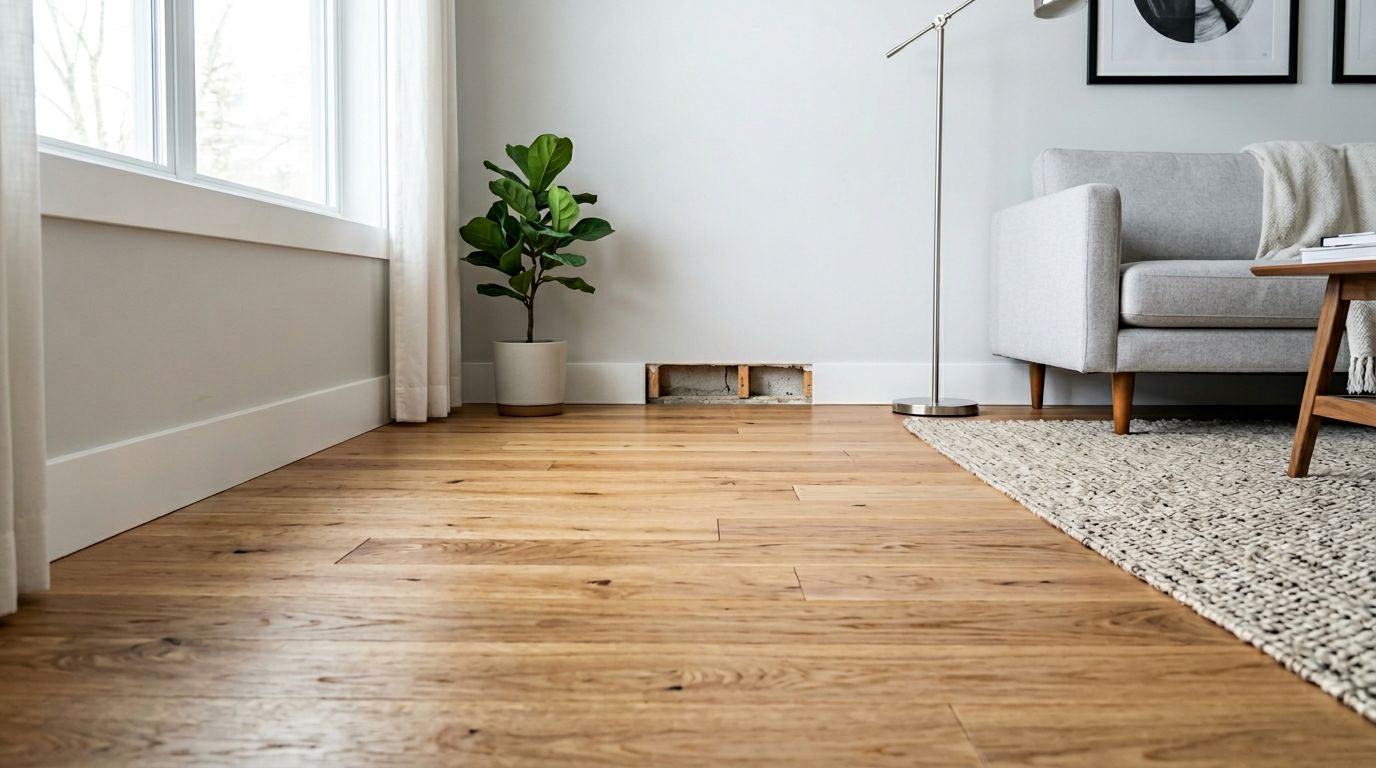
New floors can make a room feel new, but tired trim can pull the whole result down. Our short answer is not always, but many floor projects look cleaner and last longer when we replace the baseboards too.
When people search “replace baseboards floors,” they usually want a simple yes or no. The better answer depends on the trim’s condition, the new floor’s height, and how finished we want the room to feel once the work is complete.
When keeping existing baseboards makes sense
We don’t replace baseboards by habit. If the trim is straight, solid, and still fits the style of the room, we can often remove it carefully and reinstall it after the new floor goes in. That choice works best when the new material is close in height to the old one.
This comes up often with floating floors, such as laminate or LVP. In those cases, the expansion gap can sit behind the trim, or we can use shoe molding if the look stays clean. For a basic overview of trim timing, this guide on baseboards before or after flooring explains why the order matters.
We also look at labor. Pulling off old baseboards sounds simple, but old caulk, heavy paint, and brittle trim can turn a careful removal into wall repair and repainting. If we’re already handling professional flooring installation in Alpharetta, we price that choice upfront so there are no surprises.
We also plan for door casings, jamb cuts, and how the trim meets fireplaces or built-ins, because those small edges affect the final look.
Here’s a quick way we weigh the decision:
| Situation | Keep the baseboards | Replace the baseboards |
|---|---|---|
| Trim is straight and in good shape | Often yes | Rarely needed |
| New floor height is close to old floor | Often yes | Sometimes |
| Trim is dated, chipped, or swollen | Usually no | Usually yes |
| Full room refresh with new paint and doors | Sometimes | Often yes |
The pattern is simple: if the trim still helps the room, keeping it can save money. If it drags the room backward, replacement is usually the smarter call.
Reusing trim also makes the most sense when the walls are staying the same color, because every removal leaves at least minor touch-up work. We also avoid using quarter-round as a bandage for damaged trim. It can look right when planned, but it should not hide bad cuts, swelling, or rough wall lines.
Clear signs it’s time to replace baseboards with new floors
Damaged trim is the easy call. Chipped corners, swollen MDF, deep dents, peeling caulk, and heavy paint buildup stand out even more next to a fresh floor. New hardwood beside worn baseboards is like a tailored suit with scuffed shoes. The room never feels fully finished.
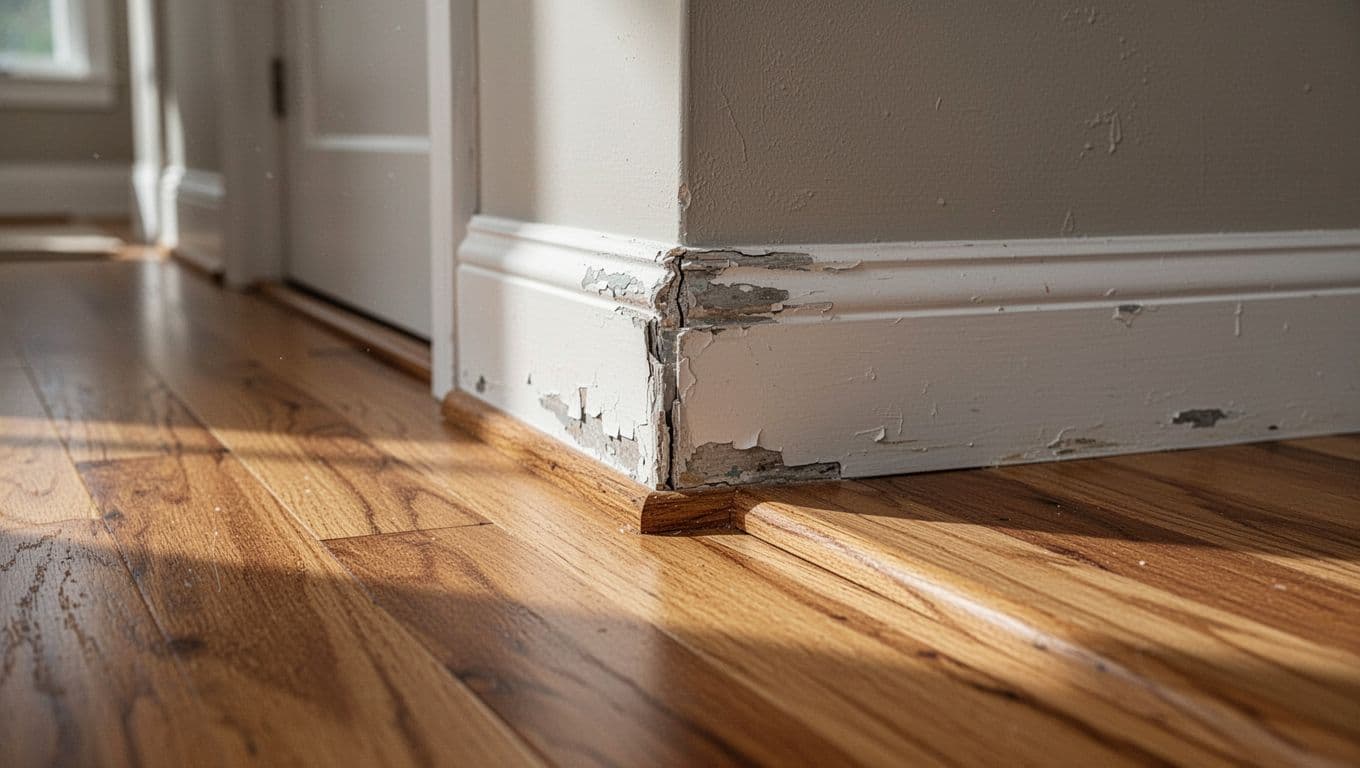
Height changes matter too. If the new floor sits higher or lower, the old trim may leave shadow lines, exposed wall paint, or uneven gaps. In older homes, we also see baseboards that crack during removal because decades of caulk have glued them to the wall. In that case, replacement often costs less than trying to save them.
If the old trim leaves a visible paint line after removal, caulk alone won’t make it disappear.
Style matters as much as damage. Thin 1990s ranch trim can make a large-plank floor look undersized. Replacing baseboards is often the least expensive way to help a room feel updated without changing the walls.
This is also why trim should be discussed during refinishing jobs, not only full replacement. When we’re sanding and refinishing hardwood floors, we check whether the baseboards need protection, reset, or replacement so the edges look crisp after the final coat. If you’re comparing contractors, this homeowner overview of baseboard replacement during flooring projects shows why trim is often part of the scope.
We usually recommend new baseboards when the room already needs paint, when the trim style looks dated, or when the floor change reveals wall damage. In those cases, replacement is not extra fluff. It is the finish work that makes the investment look complete.
Why baseboards matter even more in stairs and remodels
Baseboards are not only a flooring detail. They connect walls, stairs, cabinets, tile, and transitions. That is why we talk about trim early, especially in larger projects.
A local hardwood flooring contractor in Alpharetta Ga should discuss baseboards before demo starts. The same rule applies to a local bathroom remodeling contractor in Alpharetta and Milton when tile changes the finished floor height. Homeowners searching for the best local kitchen remodeling contractor in Alpharetta often focus on cabinets first, but trim matters around islands, appliance walls, and new flooring lines. A Local kitchen remodeling contractor in Alpharetta should explain how toe kicks and wall trim meet.
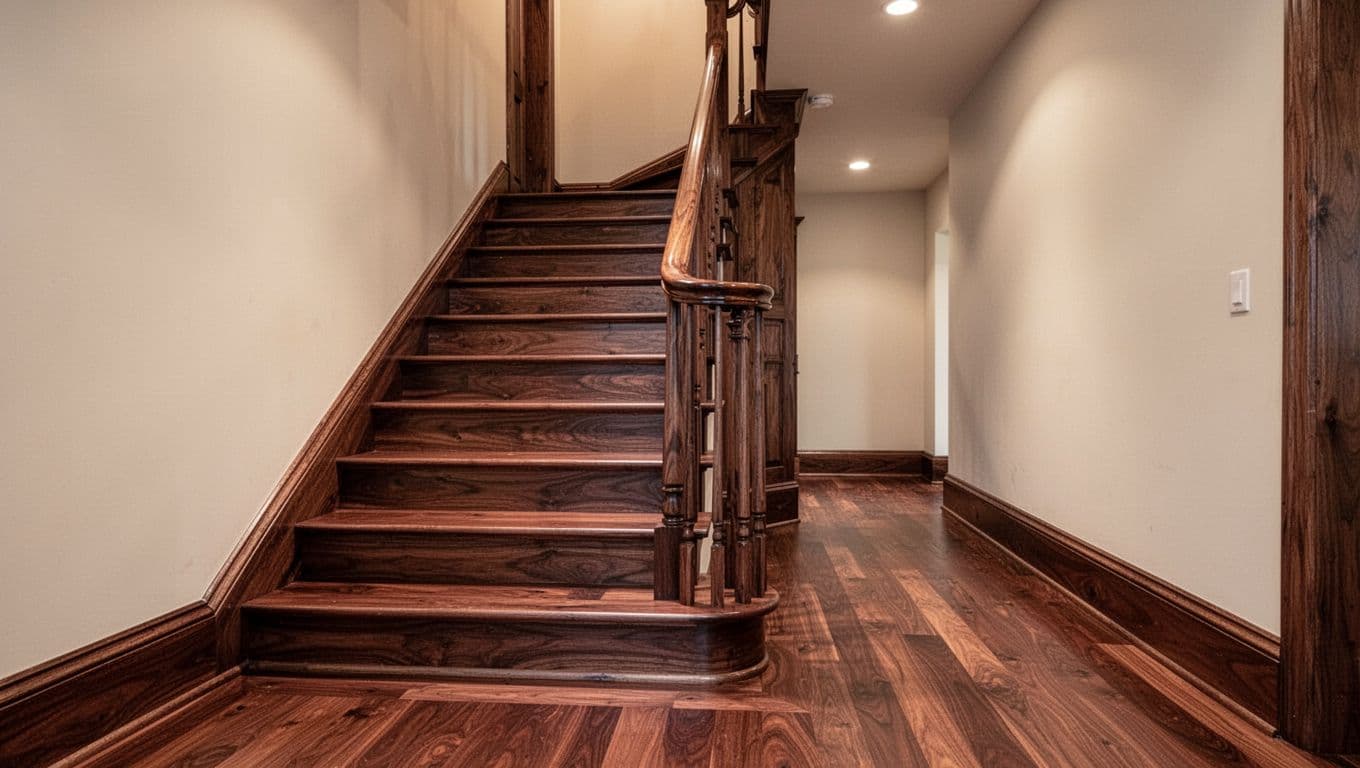
Stairs raise the stakes because every line is in plain view. Our stair remodeling services help tie treads, risers, skirt boards, and nearby baseboards into one clean look. When people compare a Stair remodeling company Alpharetta homeowners can trust, or a local stair contractor alpharetta families can hire with confidence, they should ask whether trim repairs and repainting are included.
The same thinking applies to surface changes. A top hardwood floor sanding contractor in Alpharetta should spell out trim protection before sanding starts. A tile installation company Alpharetta homeowners hire for baths or laundry rooms should plan for tile thickness and clean caulk joints at the base. When tile is part of the job, our tile installation services in Alpharetta keep that detail on the schedule. If the work moves downstairs, a local basement finishing contractor in alpharetta and milton should also check slab conditions, wall finish thickness, and trim height before the new floor goes in.
When we handle related work together, the result looks more consistent. That is true whether we are planning kitchen remodeling in Alpharetta, bath tile, or full-room floor replacement. We avoid finger-pointing between trades and can match stain, sheen, and caulk lines from room to room. If you’d like a free estimate, call us at 470-352-1156. If you show us any existing written quote from another contractor for a comparable scope, we’ll beat it by 5%.
Baseboards seem small until the room is done and they are the one detail that still looks old. A smart flooring plan treats them as part of the finish, not an afterthought.
If we’re replacing floors in your home, we’ll tell you plainly whether the trim should stay, be reset, or be replaced. Call 470-352-1156 for a free estimate, and bring any written quote from another contractor, we’ll beat it by 5%.