
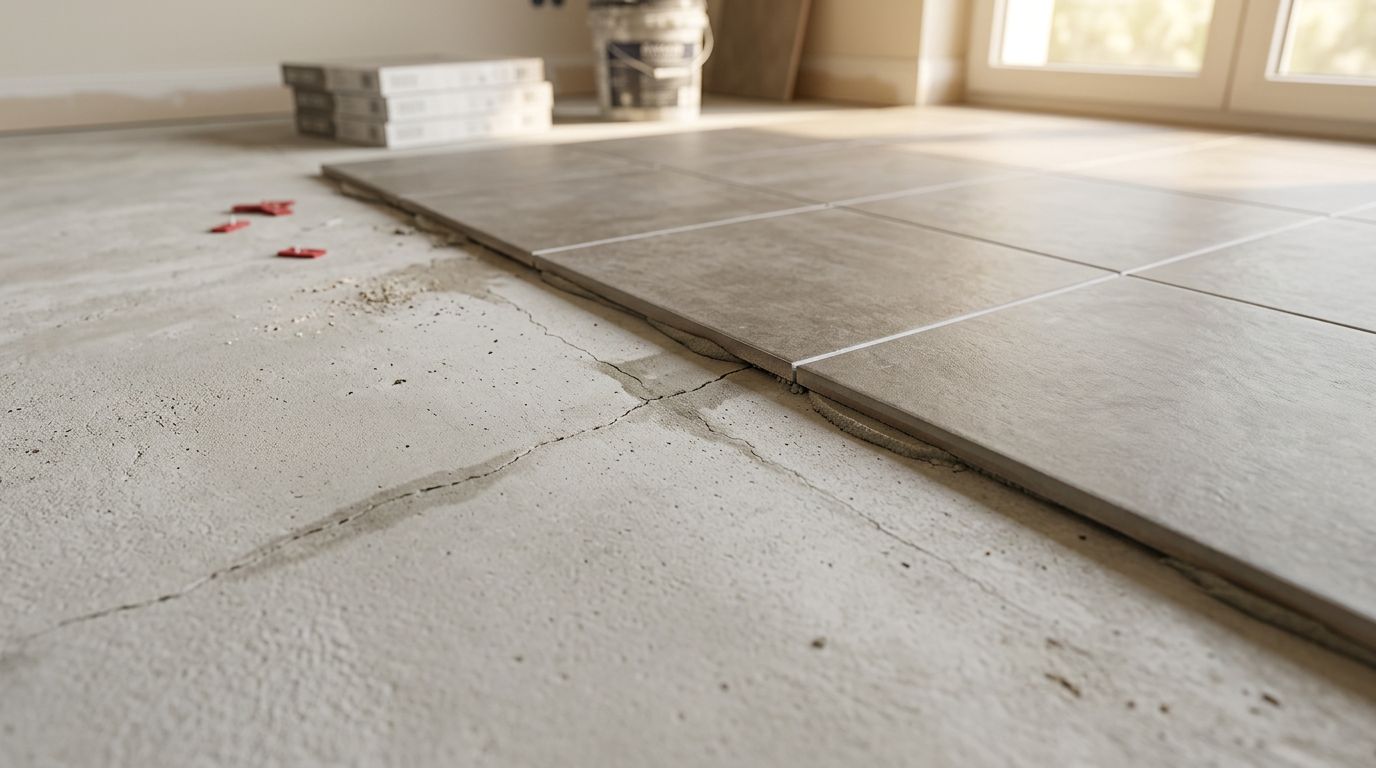
A cracked slab under tile feels alarming, but not every crack is a deal-breaker. Some concrete slab cracks like shrinkage cracks are stable, old, and manageable with the right prep. Others like settlement cracks keep moving, hold moisture, or show settlement, and those must be fixed before tile goes down.
We see this often in kitchens, baths, and basement slabs across North Georgia. The hard part is not finding the crack. The hard part is knowing whether the slab has finished moving or is still sending a warning through structural cracks. It’s like a wrinkle under wallpaper, the surface may hide it for a while, but it rarely ignores it forever.
We judge the crack, not just the tile above it. Width matters. Height difference matters more. Moisture, location, and crack pattern matter too. If we tile over the wrong crack, the floor may look fine for a month, then start talking back through loose grout, hollow spots, or broken tile.
Which concrete slab cracks need repair before tile work
Tile is hard but brittle. Concrete moves. That mismatch is why diagnosis comes first. The National Tile Authority’s guide on tile cracking makes the same point clearly, the cause decides the fix.
The quickest way to sort concrete slab cracks is to look for movement.
| Crack condition | What it usually means | Must be fixed? |
|---|---|---|
| Hairline cracks, flat, no widening | Old shrinkage crack from concrete curing | Often manageable |
| One side higher than the other | Vertical movement or settlement | Yes |
| Wide, dirty, or actively growing | Ongoing slab movement from soil compaction | Yes |
| Damp crack or white residue nearby | Water intrusion | Yes |
| Spiderweb or repeated crack pattern | Broader slab stress | Yes |
If one side of the crack sits higher, we don’t tile over it. Even a small lip can break tile later.
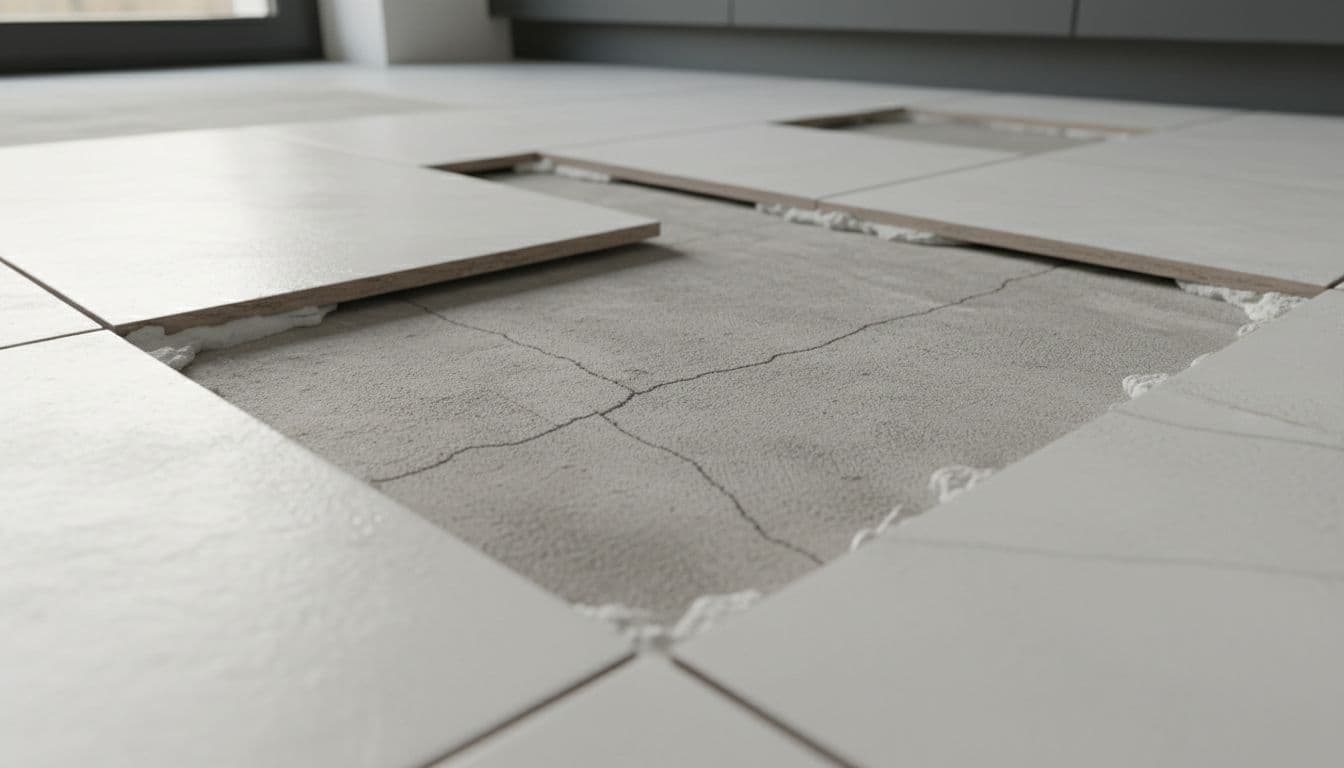
Crack direction helps too. A short random hairline crack in the middle of a room often behaves very differently from a long diagonal crack that runs corner to corner. Diagonal cracks can point to foundation settlement or stress, especially when the tile above follows the same path.
Settlement clues usually travel in groups. We may see cracked grout at doorways, hollow-sounding tile nearby, or baseboards that no longer sit tight. If the crack sits near an exterior wall, column, or plumbing line, we inspect those areas too. When warning signs stack up, we prioritize concrete repair on the slab, not just the tile.
A stable shrinkage crack from plastic shrinkage is different from a structural crack. However, if the crack runs through several rooms or keeps reopening, we take it seriously. For homeowners who want a simple checklist, this concrete damage inspection guide is helpful, and these structural crack warning signs explain when the issue may go beyond finish flooring.
Moisture changes the answer too, especially with Georgia’s freeze-thaw cycles. A dry slab can often be prepped. A damp slab can ruin thinset and weaken the bond. That same moisture logic affects other floors, which is why our hardwood on concrete slabs GA guide starts with testing, not product labels.
Cracks we can often manage before new tile goes down
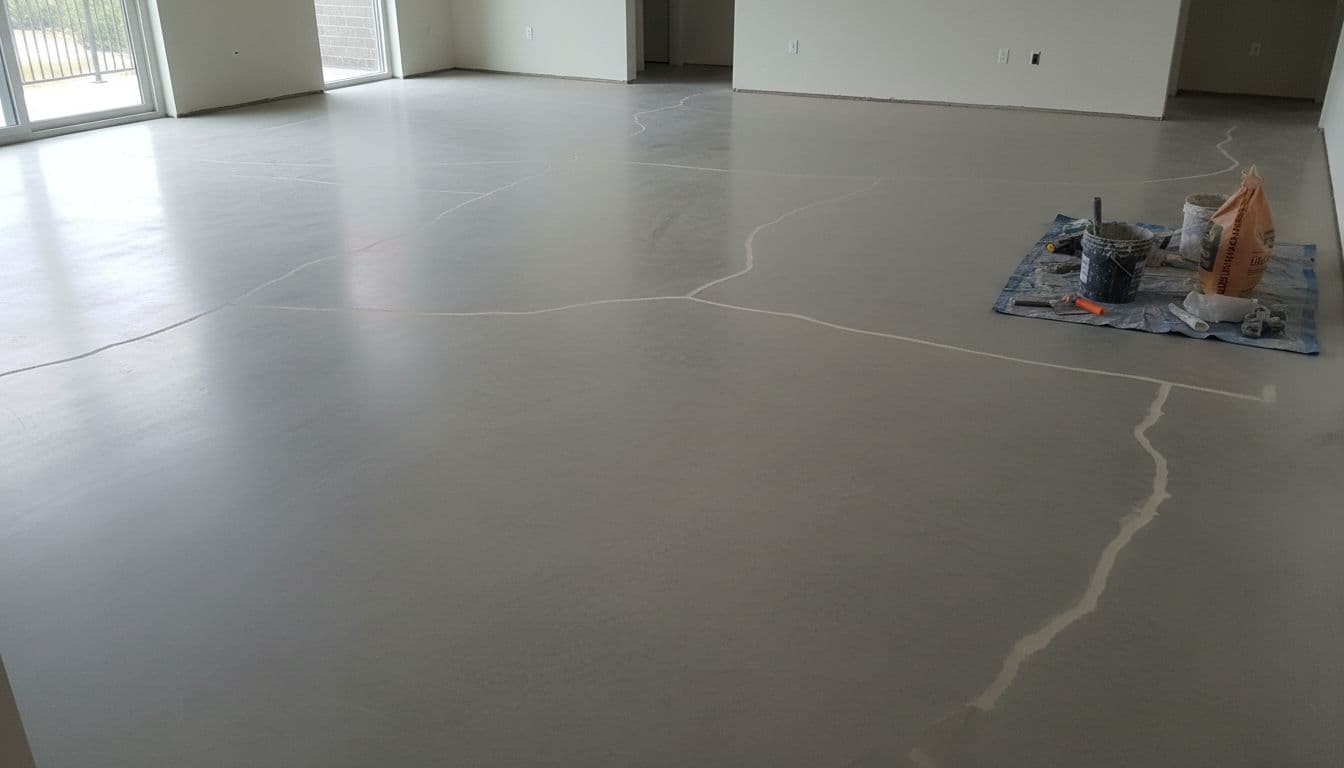
Not every slab needs heavy concrete repair. Cracks from factors like poor concrete mix design can often be managed if narrow, flat, old, and dry, after proper prep. The key word is proper. Tile should never bridge a crack with thinset alone and hope for the best.
First, we clean the slab and remove weak material. Next, we check flatness, because tile hates dips and humps. Then we address the crack with the right system, often epoxy injection, a crack-isolation membrane, or uncoupling layer. Fine Homebuilding’s article on tiling over a cracked slab gives a useful overview of that approach.
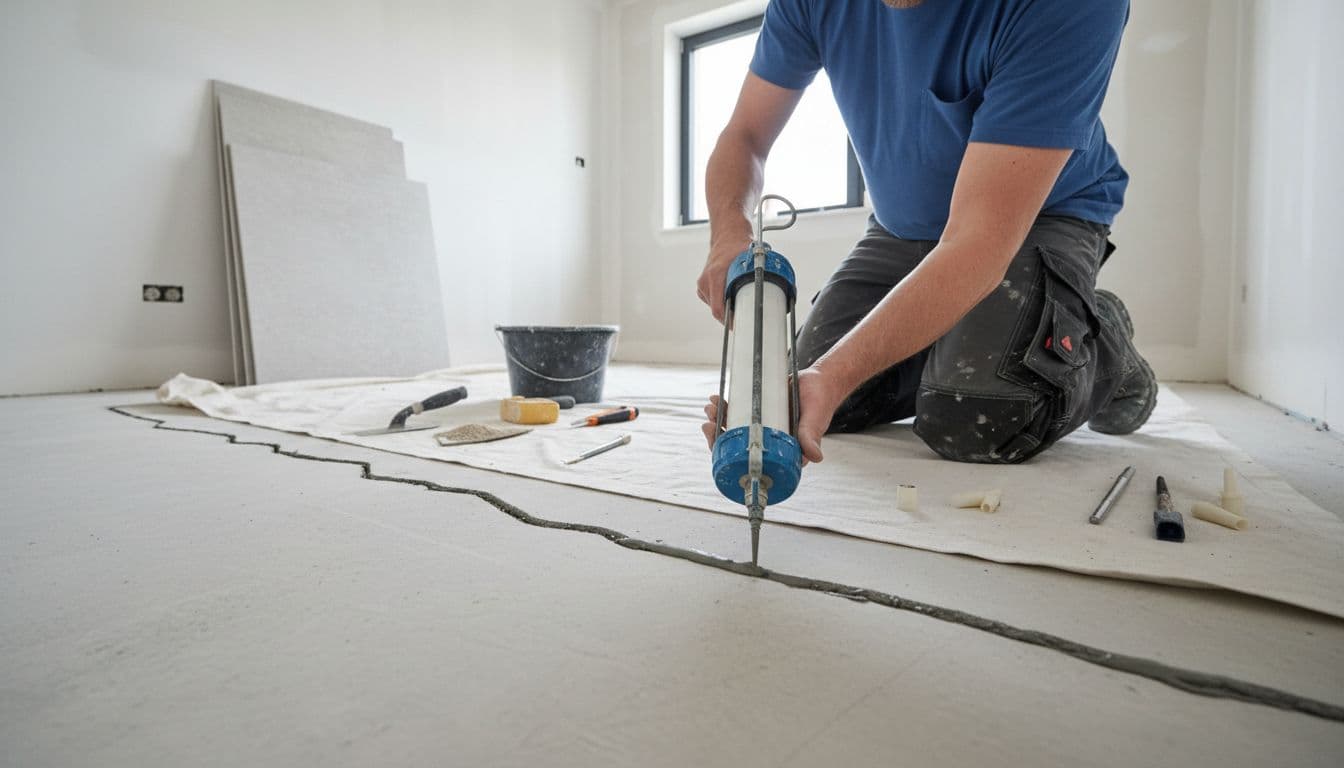
Good prep has four parts as part of effective concrete repair. We verify moisture. We flatten the slab. We repair or bridge the crack with the right product. We also place control joints and expansion joints where the tile field needs room to breathe. Skipping one of those steps is like painting over rust. It may look fine at first, but the failure keeps building underneath.
We also check whether old patching compound has let go or whether slab edges have curled. Tile likes a calm base. It does not forgive loose toppings, paint, adhesive residue, or dusty concrete that can hide crazing cracks. Good bonding starts with a clean, solid surface.
If existing tile is already cracking in a straight line, that often maps the slab crack below. Loose grout, tented tile, and hollow sounds are warning signs that the bond has been stressed for a while. In those cases, we usually remove enough tile to inspect the slab before offering a lasting fix.
When slab crack repair becomes part of a bigger remodel
A floor crack rarely lives alone. In bathrooms, it may come with moisture trouble near a shower or tub. In kitchens, overloading cracks may show up beside heavy cabinets or appliances or failing transitions. In garages, slab issues on the garage floor often need attention before tile upgrades. If the tile meets hardwood or stairs, one wrong height change can create a trip point.
That is why many homeowners call us after searching for the best flooring contractor in alpharetta ga, a tile installation company Alpharetta, or the best flooring company alpharetta and milton. Others need one team for more than floors, so they compare a bathroom remodeling contractor in alpharetta and Milton, the best local kitchen remodeling contractor in alpharetta, the best kitchen contractor alpharetta, a Stair company Alpharetta, a stair contractor alpharetta, and the top hardwood floor sanding contractor in alpharetta. We handle those connected details under one plan, because slabs, tile, hardwood, kitchens, bathrooms, and stairs often affect each other.
If nearby wood floors have moisture stains or finish damage, our hardwood floor sanding Alpharetta service can restore the transition area. If the project reaches the staircase, our custom stair builders in Milton guide shows how we keep tread heights and floor transitions consistent. When the cracked floor sits inside a kitchen update, our kitchen backsplash ideas Alpharetta page can help coordinate finishes after the slab work is done.
A good quote should spell out demo limits, site preparation, slab prep, concrete repair method, membrane choice or concrete sealer, tile reset, grout, and transition work. If the scope only says “replace cracked tile,” it may miss the real cause. Getting the diagnosis right is cheaper than buying replacement tile twice.
For a clear answer, let us inspect the slab before you buy tile. We provide free estimates at 470-352-1156. If you show us any existing written quote from another contractor for comparable scope and materials, we beat it by 5%.
Conclusion
The rule is simple. We can often manage flat, stable, dry shrinkage cracks, but we must repair cracks that move, hold moisture, widen, or show height change. When we diagnose the slab correctly to preserve the structural integrity of your home, the tile has a fair chance to last. For a free estimate and a clear concrete repair plan, call 470-352-1156 and bring any comparable written quote so we can beat it by 5%.