
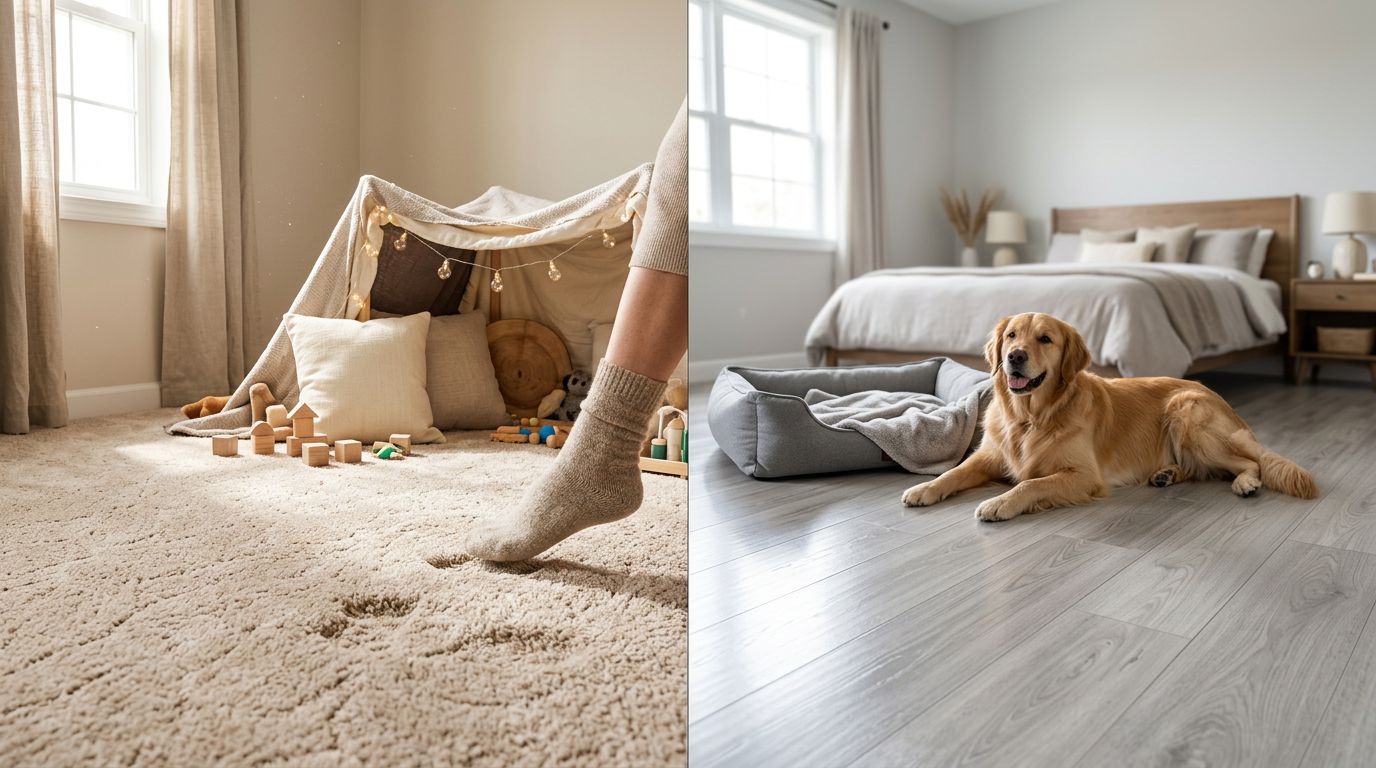
Choosing bedroom flooring feels simple until we picture real life: cold feet at 6 a.m., a child building a fort on the floor, a pet that sheds, and a future buyer scanning for “one more thing” they’ll need to replace. When we compare carpet vs LVP for bedrooms, we keep the decision frame tight around three priorities: comfort, allergies, and resale.
If comfort comes first, we focus on warmth, softness, and quiet. If allergies and indoor air matter most, we look at what holds dust and what wipes clean. If resale is the goal, we think like a buyer in 2026, noticing style, wear, and odors fast.
We provide free in-home estimates and clear pricing. To schedule yours, call 470-352-1156. If you show us a written quote from another contractor for comparable scope and materials, we’ll beat it by 5%. Below, we cover daily living feel, cleaning needs, and how buyers tend to view each option.
How carpet and LVP feel in a real bedroom, warmth, softness, and noise
Bedrooms are the one place where our feet expect kindness. The first step out of bed sets the tone. Carpet feels like a sweater on the floor, while LVP feels more like a clean, firm stage. Neither is “right” for every home, so we focus on what changes your day.
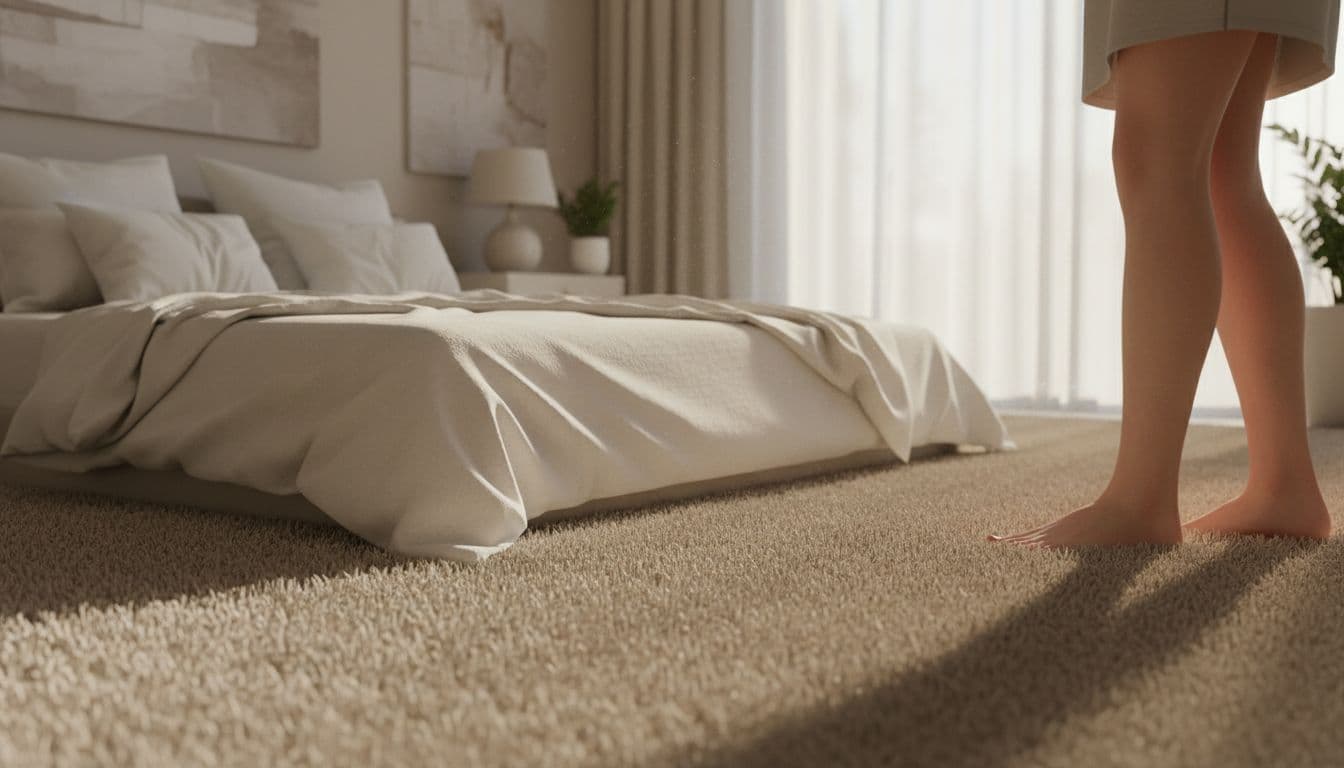 In North Georgia, seasonal comfort plays a role. Cooler winter mornings can make hard floors feel brisk. In humid summers, a bedroom can still feel calm with either surface, but the “feel” underfoot stays different. Also, bedrooms are quieter by nature. That makes small sounds stand out, like a dog’s nails, a late-night step, or a dresser drawer closing.
Underfoot comfort: soft carpet padding vs firm LVP planks
Carpet’s comfort mostly comes from the pad, not just the surface fiber. With the right pad, carpet reduces pressure on ankles, knees, and hips. That matters for anyone who stands while folding laundry, rocks a baby, or stretches in the morning.
LVP, on the other hand, feels firmer. A thicker plank and quality underlayment can soften the feel slightly, yet it won’t mimic the cushion of carpet. If you like a stable surface under a rolling chair or a bedside bench, that firmness can be a benefit.
A quick bedroom tip we use in estimates: choose pad density before pad thickness. A thick, low-density pad can feel soft at first, then flatten faster. A denser pad often feels supportive and keeps its shape longer. For many bedrooms, we aim for that “supportive cushion” feel, not the sinking feel.
Quiet matters: why carpet usually wins on sound control
Carpet tends to absorb sound. It softens footsteps and reduces echo, especially in upstairs bedrooms. When kids run down a hall, carpet can take the sharp edge off that noise. When an early alarm goes off, the morning shuffle sounds less harsh. When pets jump off a bed, the landing is quieter.
LVP can sound louder if the subfloor isn’t flat or the underlayment is thin. The room may also feel more “live,” meaning sound bounces more. We can manage that, but we plan for it up front. Area rugs help, especially beside the bed and near a dresser. Underlayment choices matter too, because some reduce sound transfer to rooms below.
If sound is your top priority, carpet usually wins. If you still want LVP, we recommend budgeting for better underlayment and using rugs where feet land most.
Allergies, pets, and indoor air: which bedroom floor is easier to keep clean
Allergy decisions are rarely about one “bad” material. They’re about how dust behaves in a room and how much effort it takes to remove it. Carpet can hold dust, pollen, and pet dander in its fibers. LVP is non-porous, so most debris stays on the surface until we remove it.
 We also keep the tone balanced for a reason. Some homeowners prefer carpet because it can trap particles until vacuuming, rather than letting dust move around. Others prefer LVP because they can see what’s there and wipe it away quickly. Both can work well with good habits.
We aren’t medical professionals. For serious allergy or asthma concerns, we suggest checking with your clinician and then choosing a floor that supports your cleaning routine.
Dust and dander: what gets trapped, and what wipes away
Carpet acts like a net. It catches fine particles that would otherwise float or settle elsewhere. That can be helpful, but only if we remove those particles consistently. Vacuuming matters more than people expect, and a vacuum with good filtration helps keep dust from blowing back into the room.
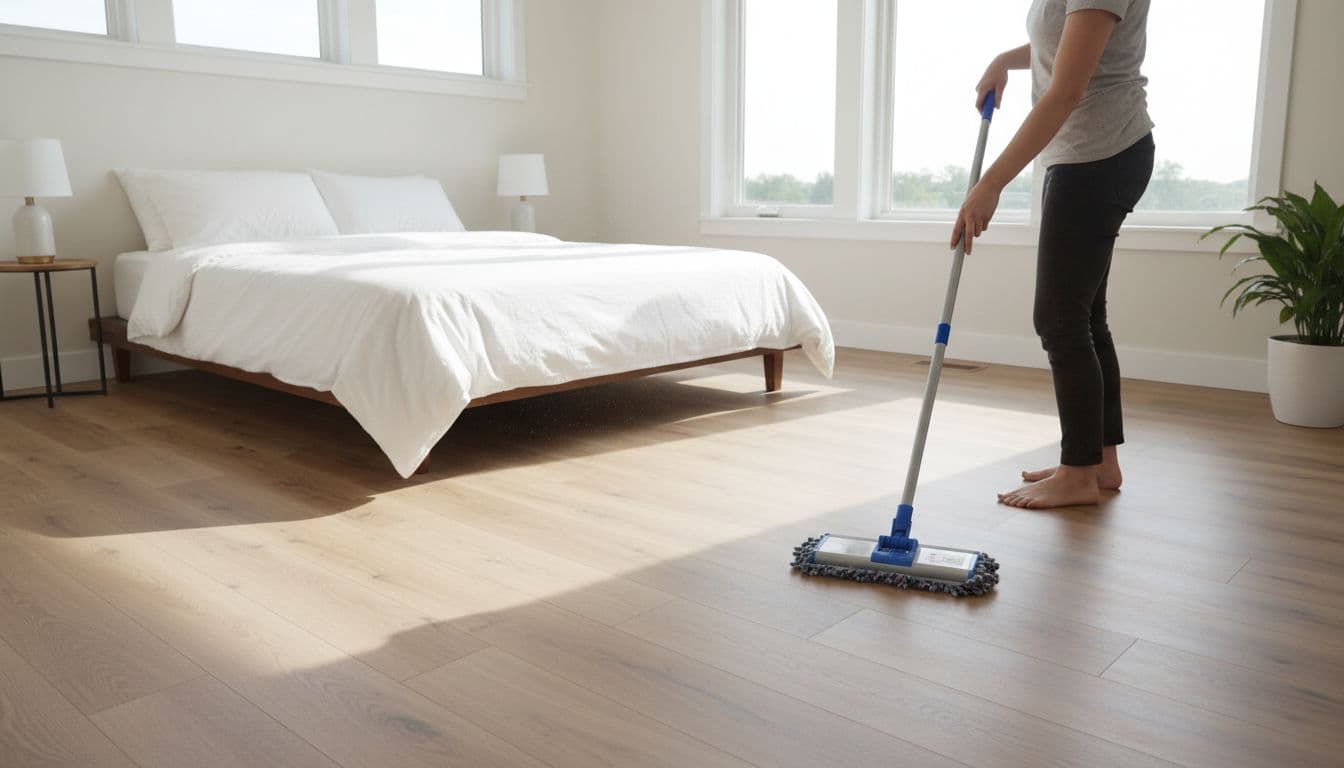
With LVP, dust and dander tend to sit on top. Therefore, sweeping or vacuuming picks it up fast. A damp mop finishes the job, as long as we avoid soaking the floor.
Here are simple schedules we often recommend:
- Carpet (weekly, monthly, annual): Vacuum weekly (more with pets), do edge vacuuming monthly, schedule a deep clean about once a year, or sooner for heavy use.
- LVP (weekly, monthly, annual): Dry dust-mop or vacuum weekly, damp mop monthly or as needed, and check baseboards and corners yearly for gaps or buildup.
The main difference is visibility. LVP shows crumbs and dust sooner. Carpet hides them better, which can be a comfort or a concern.
Spills and humidity: odor and moisture risks in bedrooms
Bedroom spills happen. Water cups tip over. Humidifiers run too long. Pet accidents occur at the worst time. The issue is not only the spill, it’s how long moisture stays in contact with the material.
Carpet can hold moisture and odors if we don’t clean it quickly. The pad can also absorb liquid, which makes drying harder. LVP resists moisture on the surface, yet seams and edges still need quick attention. Liquid can travel to the perimeter if it sits.
A short spill-response checklist keeps problems small:
- For carpet: Blot fast (don’t rub), use a mild cleaner made for carpet, rinse lightly, blot again, then dry with fans if needed.
- For LVP: Wipe immediately, then dry the seams and edges, and avoid leaving a damp mat or towel on the floor.
For humid North Georgia summers, we also like steady indoor humidity. Good HVAC habits and a properly sized dehumidifier can protect either floor.
Resale impact in 2026: what buyers notice first, and where each floor helps
Resale is not only about the material. Buyers react to what they can see and smell in seconds. During a showing, they scan bedrooms for cleanliness, wear paths, stains, and odors. They also notice whether the flooring looks consistent with the rest of the home.
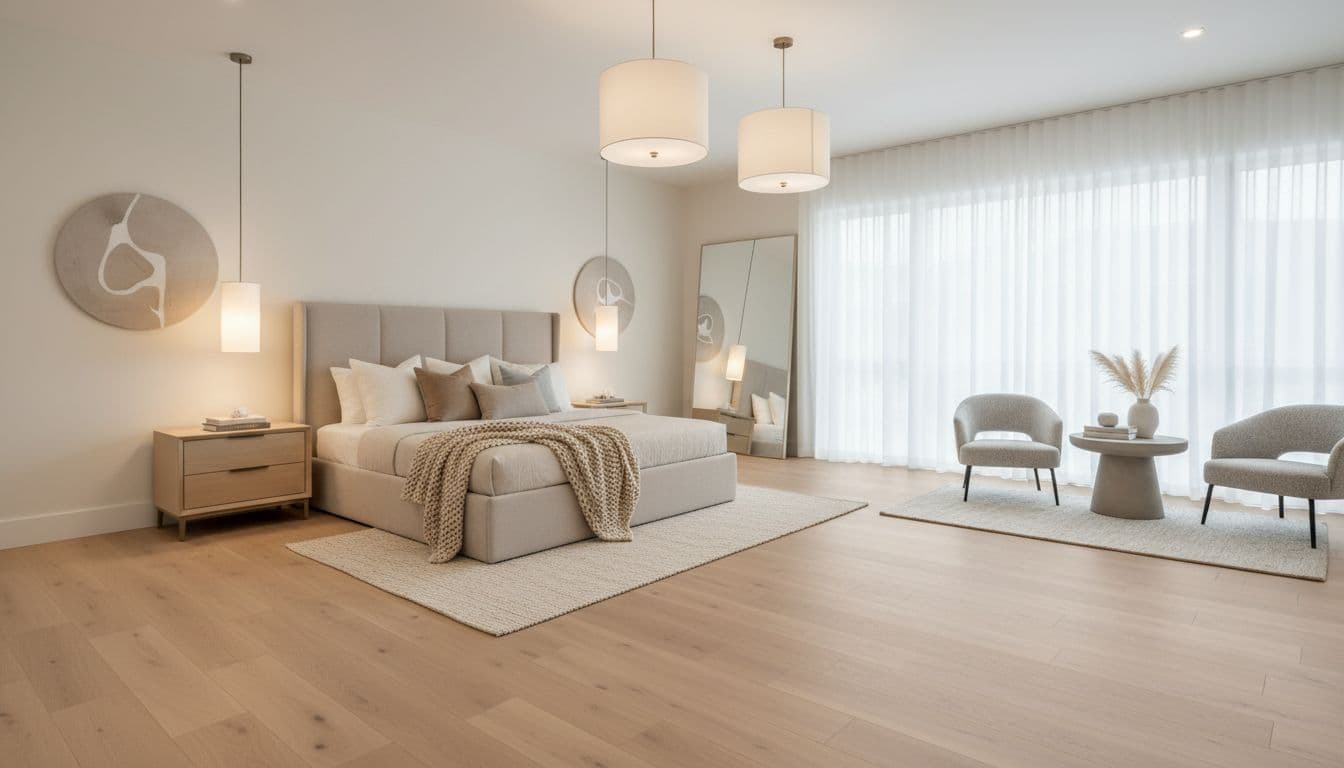 We can’t promise resale outcomes because every neighborhood and price point is different. Still, trend direction matters. In 2026, many homeowners lean toward hard surfaces with matte finishes and wide planks because they photograph well and feel current. Those trends show up often in LVP choices, especially in wood-look styles. Carpet can still present well, but it needs to look and smell new.
Buyer perception: updated, durable LVP vs cozy carpet that may feel dated
New carpet in a neutral color can make a bedroom feel calm and welcoming. It also signals “soft landing” for families with kids. However, older carpet often reads as a future replacement, even when it looks clean. Stains, matting, and pet odors are hard to hide from a buyer’s first impression.
LVP can read as updated, especially when it matches the rest of the home’s flooring flow. Buyers also like the idea of easy care. That said, cheap-looking planks, uneven transitions, or hollow sounds can create doubt. If the floor looks like a quick flip, it can backfire.
A simple mental test we use: if a buyer walks in barefoot, what do they feel, and what do they suspect? Carpet says “cozy,” but can also whisper “what’s under it?” LVP says “clean and modern,” but can also feel colder and louder.
Best-fit scenarios: when we recommend carpet, LVP, or a mix
We often recommend based on the household, not the trend. Many families choose a mix for a reason. Hard floors in common areas handle traffic, while carpet in bedrooms supports sleep and quiet.
A quick decision guide:
- We lean carpet when quiet, warmth, and softness matter most (kids, upstairs bedrooms, light sleepers).
- We lean LVP when allergies, pets, and quick cleaning are top priorities, or when you want consistent flooring flow.
- We lean a mix when you want durable halls and living spaces, plus cozy bedrooms.
- We lean LVP for rentals when turnover and easy maintenance drive the plan.
- We lean carpet in primary bedrooms when comfort is the daily goal and cleaning habits are consistent.
When in doubt, we match the bedroom plan to the hallway and stairs. That connection affects both noise and resale impressions.
Cost, lifespan, and upkeep: the practical math behind the choice
Most homeowners compare flooring by price per square foot. That’s understandable, but it’s not the full picture. Bedrooms involve furniture moves, closets, trim details, and the cost of removing old floors. Long-term value also depends on how often you expect to replace the surface.
Carpet often costs less upfront, especially in standard bedrooms. However, it may need replacement sooner in homes with pets, kids, or frequent spills. LVP may cost more at the start, yet it can reduce day-to-day cleaning time and resist common wear.
To make the comparison easier, we can think in categories instead of exact numbers:
| Factor | Carpet in bedrooms | LVP in bedrooms |
|---|---|---|
| First impression | Cozy and warm | Clean and modern |
| Daily feel | Soft and cushioned | Firm and stable |
| Allergy cleaning | More vacuum-dependent | Easier wipe-down |
| Spill tolerance | Needs fast drying | Wipe up quickly, watch edges |
| Replacement likelihood | Higher in busy homes | Often lower with proper install |
The takeaway is simple: carpet usually wins comfort, LVP often wins maintenance, and resale depends on presentation and consistency.
Upfront price vs long-term value: what we want homeowners to consider
We encourage a “total-cost” view. That includes materials, labor, pad or underlayment, trim work, transitions, furniture moving, and disposal. It also includes the cost of replacement if the surface won’t match your lifestyle.
When comparing quotes, we suggest asking a few direct questions so the scope is truly comparable:
- What pad or underlayment is included, and what’s the quality level?
- What subfloor prep is included (leveling, squeak fixes, repairs)?
- Who moves furniture, and what items are excluded?
- How are transitions and doorways finished?
- What is the expected maintenance routine for the chosen product?
Those questions prevent surprises and help you compare fairly, even when pricing looks similar.
Maintenance reality: cleaning time each week, and what tools help
Carpet maintenance is simple, but it must be consistent. A weekly vacuum is the baseline, and homes with pets often need more. We also like vacuums with HEPA filtration for homeowners concerned about indoor air, because they can reduce recirculated dust.
LVP care is usually faster. Dry dust-mopping or vacuuming removes grit, and a light damp mop handles the rest. We avoid wet mops and steam cleaning unless the manufacturer allows it. Too much water is never a friend to seams and edges.
In both cases, we protect the floor with small habits: remove shoes when possible, use felt pads on furniture, and keep a washable rug beside the bed if pets sleep with you.
Getting the install right: what matters more than the material
Even the best flooring can disappoint with poor prep. Subfloor flatness, moisture checks, and transitions affect comfort, noise, and how long the floor looks new. A bedroom should feel calm, not creaky, hollow, or uneven.
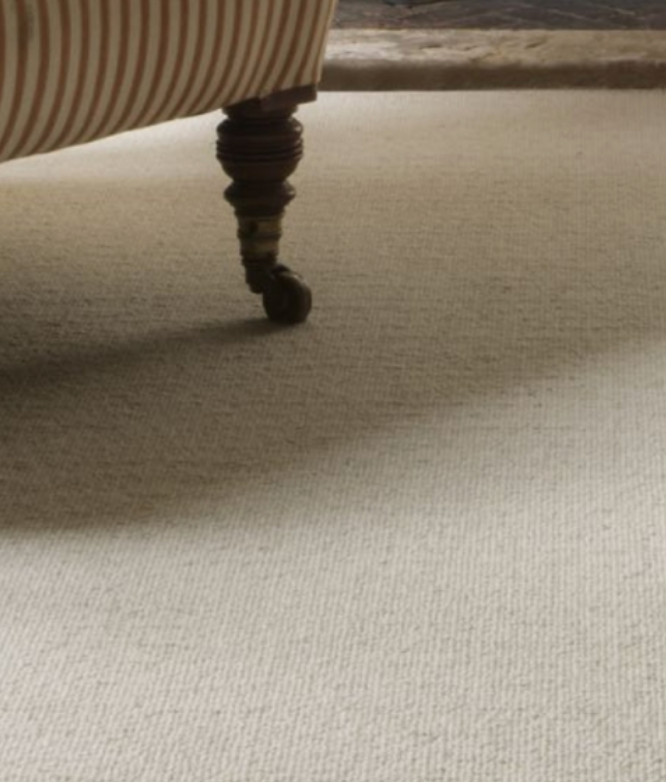
We also plan for the details people notice later, like closet cuts, doorway heights, and clean edges at baseboards. Those are small lines, but they shape the whole look.
Carpet success comes down to pad choice, seams, and a smooth subfloor
Great carpet feels smooth because the base is right. Pad quality drives comfort and helps with sound. Tight seams reduce visible lines and lower the risk of snagging. A smooth subfloor prevents soft dips that show up as “tracks” in sunlight.
For a closer look at what a proper bedroom carpet job involves, see our carpet installation service details.
LVP success comes from leveling, underlayment, and clean transitions
LVP needs a flat foundation. Leveling prevents bounce and keeps click-lock joints from separating. Underlayment choices can reduce noise and improve the feel, especially in upstairs rooms. Clean transitions at doorways matter too, because that’s where movement and shifting start if the install is rushed.
If you want an install plan that matches your home’s layout, review our professional flooring installation services.
Conclusion
When we weigh carpet vs LVP for bedrooms, we usually land here: carpet delivers the most softness and quiet, while LVP makes allergy control and routine cleaning easier and often matches modern resale preferences. A mixed approach works for many families, with LVP in halls and common areas, then carpet in bedrooms for comfort. The best choice also depends on how you live, not only how a sample looks in your hand.
For a free in-home estimate, call 470-352-1156. If you show us a written quote for comparable scope and materials, we’ll beat it by 5%. To reach us online, use our contact page to schedule your consultation.
Carpet vs LVP in Bedrooms: Frequently Asked Questions
Is carpet or LVP better for bedrooms?
For most Alpharetta bedrooms it comes down to priorities: carpet gives you the softest, quietest, warmest floor underfoot, while luxury vinyl plank (LVP) is easier to keep clean, better for allergies, and closer to what today’s buyers expect. If comfort and sound-dampening matter most, choose carpet; if low maintenance, moisture resistance, and resale appeal matter most, choose LVP.
Is LVP a good choice for bedrooms?
Yes. LVP works well in bedrooms when you want a hard-surface look that resists spills, pet accidents, and dust. It pairs nicely with an area rug at the bedside to add softness where your feet land, giving you the easy-clean floor plus the comfort of carpet exactly where you want it.
Which is better for allergies, carpet or LVP?
LVP is generally the better choice for allergy sufferers. Its sealed, non-porous surface does not trap dust, dander, or pollen the way carpet fibers can, and it wipes clean in seconds. Carpet can be made more allergy-friendly with low-pile options and frequent vacuuming, but LVP removes the problem at the source.
Is LVP too cold or loud for a bedroom?
LVP is firmer and cooler than carpet, but a quality underlayment softens both the feel and the sound, and an area rug takes care of the rest. In a bedroom, most homeowners find that a rug under and around the bed gives them the warmth and quiet they want without giving up the easy cleaning of a hard surface.
Can I mix carpet and LVP in the same home?
Absolutely — it is one of the most popular choices we install. Many Alpharetta families put LVP in halls, stairs, and common areas for durability and a clean look, then keep carpet in the bedrooms for comfort. We match transitions so the change between the two reads as intentional, not abrupt.