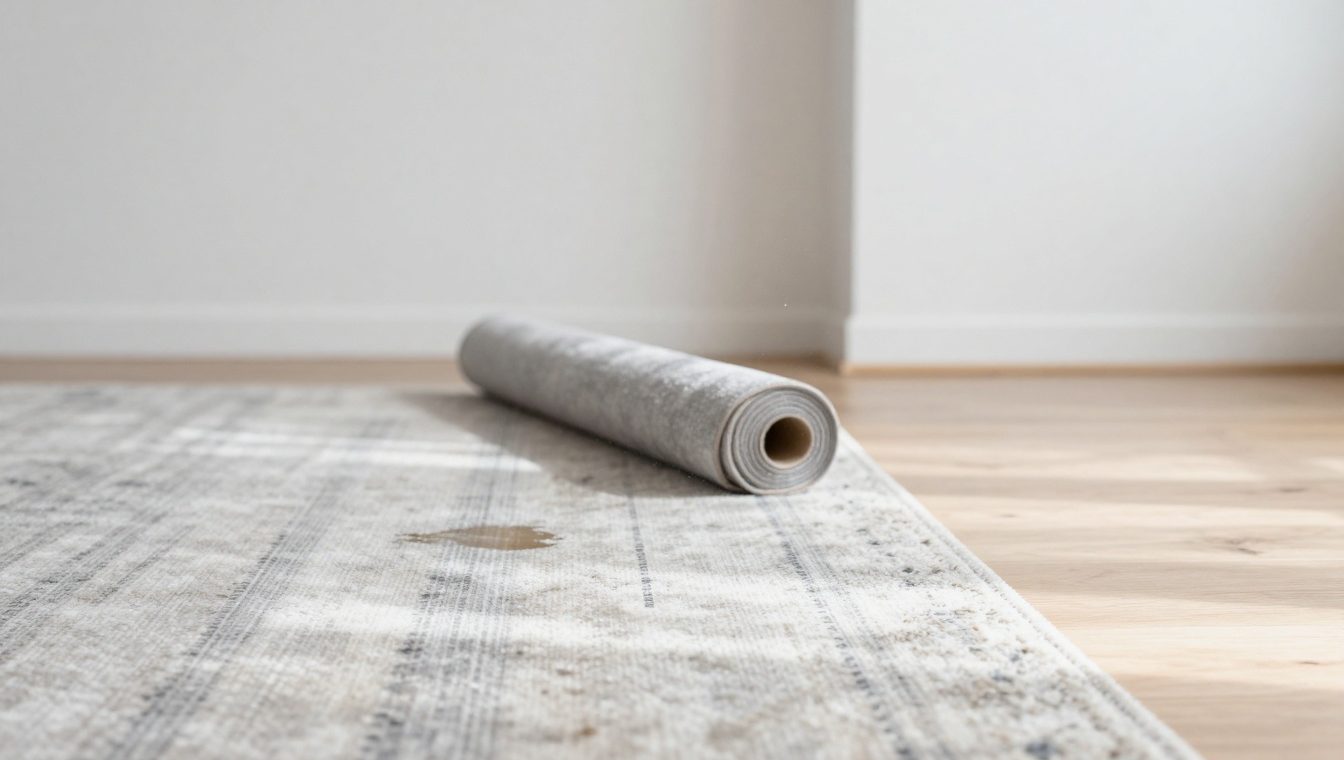
Carpet doesn’t usually fail all at once. It fades, flattens, and holds on to old messes so slowly that we get used to it. That’s why it helps to step back and know when is the time for Changing carpet floor instead of cleaning the same spots again and again.
In this guide, we’ll keep it simple and cover carpet age, visible wear, smells, allergies, moisture issues, and when a repair is still enough.
How long does carpet usually last in real homes?
In real life, most carpet lasts about 5 to 15 years, depending on how we live on it. A low-traffic bedroom can look fine for 10 years or more, while hallways, family rooms, and stairs can look worn out in 5 to 8 years, especially with kids and pets.
Padding matters more than many of us expect. When the pad breaks down, the carpet above it can look older fast and feel rough underfoot. Cheaper carpet also tends to crush sooner and show traffic lanes earlier.
One simple way to stretch its life is a steady vacuum routine, plus doormats at entries to trap grit before it grinds fibers down.
A quick rule of thumb by room and traffic
Bedrooms often last longest, living rooms land in the middle, stairs wear out fastest, and rentals usually need replacement sooner. Sunlight and humidity can also speed fading, loosening, and odor problems.
Signs it’s time to change your carpet floor (not just clean it)
Professional cleaning can remove soil and many stains, but it can’t fix carpet that’s worn out or unsafe. We usually recommend replacement when comfort drops, problems keep returning, or the surface becomes a trip risk.
Wear, matting, ripples, and stains that keep coming back
Flattened traffic lanes: If the walk paths look darker and stay matted after cleaning, the fibers are crushed.
Ripples or wrinkles: Loose carpet can buckle and catch toes, and that risk goes up on stairs and near doorways.
Frayed seams or loose edges: When seams split or the carpet pulls back, it keeps spreading with every vacuum pass.
Bare spots and thinning: If we can see backing or feel rough patches, the carpet is past its useful life.
Stains that reappear: Some spots “wick” back up after cleaning, which often means the stain soaked into the pad.
Hard or uneven feel: Padding breakdown can make the floor feel lumpy, thin, or oddly firm.
Odors, allergies, and moisture problems you shouldn’t ignore
Odors that return: Pet smells that come back after cleaning often live in the pad, not just the carpet.
Musty scent after a leak: Old water issues can leave moisture below, and that can mean mold risk.
More sneezing indoors: When allergies flare, trapped dust and dander can be part of the problem. If we suspect moisture, we should fix the source first, then replace.
Replace, repair, or switch flooring: how we decide what makes sense
We usually choose repair when damage is small and the rest of the carpet still has spring. A single burn spot can be patched, and a pet-damaged corner can sometimes be re-seamed if we have matching material.
We lean toward full replacement when wear is wide, like a whole-room matting problem, repeating stains across several areas, or loose carpet on stairs. At that point, repairs turn into a cycle.
If we want fewer odor issues or better water resistance, switching to another floor type like LVP or hardwood can fit better for pets, entryways, or stairs. For a free estimate, call 470-352-1156. If you show us any existing quote from another contractor, we beat it by 5%.
Conclusion
Carpet replacement usually comes down to age plus clear signs, like matting, ripples, repeat stains, odors, and any moisture history. If we wait too long, small issues spread and the home feels less clean and less safe.
Let’s handle it before it gets worse. Call 470-352-1156 for a free estimate, and remember, if you show us an existing contractor quote, we beat it by 5%.