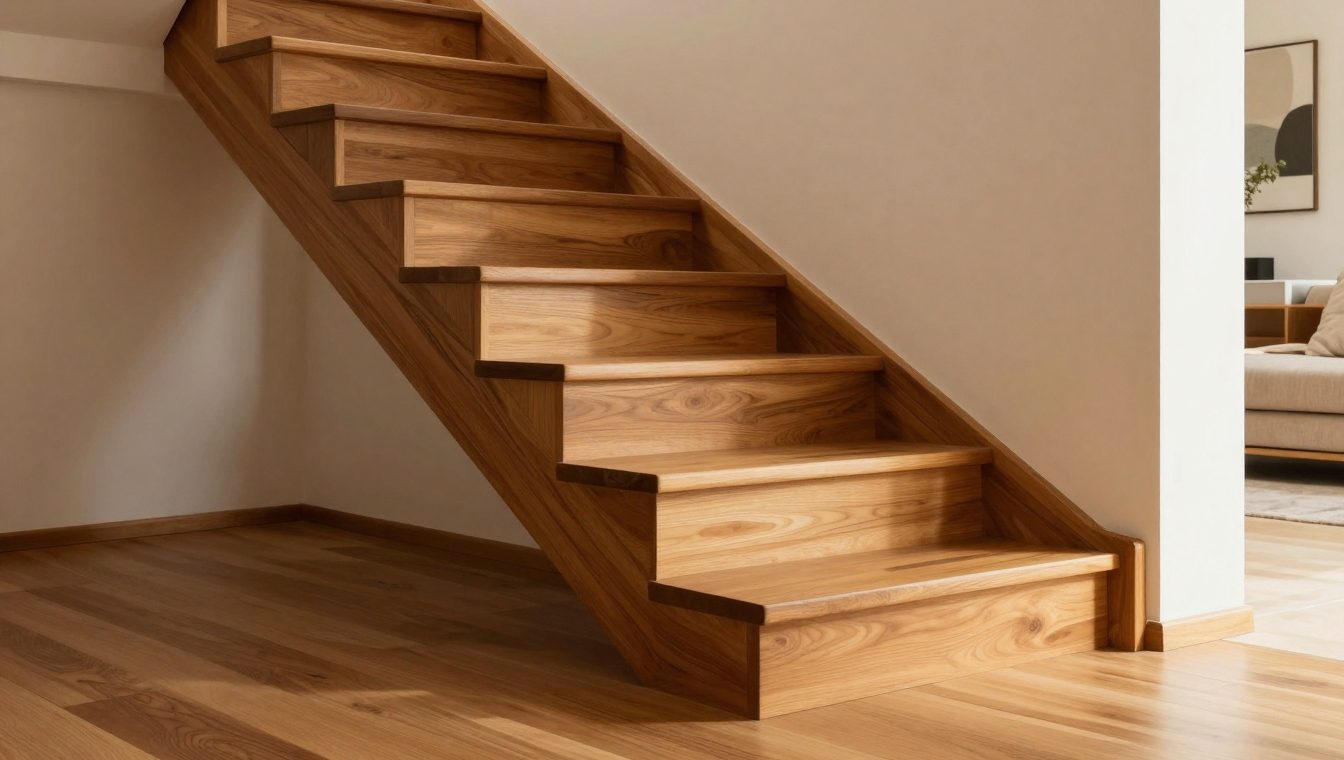
A staircase can look “almost right” and still feel off. Most of the time, the issue isn’t the treads, it’s the risers. When we refinish hardwood floors, the new tone and sheen set a higher standard, and mismatched risers stand out like a wrong note in a familiar song.
The good news is that blending stair risers with refinished floors does not require guesswork. With a few smart checks, we can make the stairs feel like they have always belonged to the home, even after a major update to the wood.

Decide what “blend” means in your home before you buy anything
“Blend” can mean two different looks, and mixing them halfway is where projects go sideways.
Blend by matching means the risers visually disappear, so the wood and finish read as one continuous feature from floor to stairs. This is common in traditional homes and open-concept layouts where the staircase is always in view.
Blend by balancing means the risers are intentionally different (often painted), but still coordinate with the floor tone, trim, and lighting. This can make a staircase look cleaner, brighter, and more tailored.
If you want a quick reference point, these guides are helpful for seeing real-world combinations: Hardwood stairs to match flooring and matching stairs to hardwood floors.
Start with species, grain, and texture, not stain color
Stain is not paint. Two boards can share the same stain name and still look different if the wood species and grain differ. For a true stair risers hardwood match, we focus on the wood first.
When a wood riser is the best choice
Wood risers usually blend best when:
- Your staircase sits next to the main hardwood area (foyer, hallway, great room).
- Your floors were refinished to a natural or stained look (not heavy “tone masking”).
- You want the staircase to feel original to the home.
Our rule of thumb: If the floors are oak, we prefer oak risers, even if we plan to paint later. Oak moves and accepts fasteners like oak, which helps long-term durability.
When to avoid “close enough” lumber
Common problems we see when homeowners mix species:
- Different grain scale (maple can look “flat” next to oak).
- Different pore structure (oak pores show through stain in a way birch will not).
- Different aging pattern (some woods amber more over time).
That does not mean you must replace everything. It means we choose materials with the final look in mind, not just what is easiest to buy.
Match undertones in the room’s lighting, not in the store
Undertone is the quiet color underneath the stain, and it drives whether a staircase looks calm or chaotic. Floors often lean:
- warm (gold, amber, red),
- cool (gray, taupe), or
- neutral (balanced brown).
We always check undertones in the actual space, because daylight, LED bulbs, and nearby wall color can change the read. A sample that looks perfect under store lighting can shift at home.
A practical approach is to compare your riser sample to the floor at three times:
- morning light,
- evening light with lamps on,
- lights fully on at night.
If you are using factory-made parts, this article gives a clear overview of how suppliers think about matching: How to blend stair parts with hardwood flooring.
Choose a riser color strategy that fits your trim and walls
Color is where we can either hide small differences or spotlight them. In 2026, we are seeing more homeowners pick simple, clean riser choices that support the floors, instead of competing with them.
Option A: Wood risers that match the floor
This is the “built-in” look. It works best when:
- the staircase is a focal point,
- the floor stain is classic (natural oak, medium brown, walnut tones),
- you want minimal contrast.
Option B: Painted risers that still coordinate
Painted risers can look sharp with refinished hardwood floors, but only when the paint relates to the rest of the room.
Most homes do well with:
- soft white that matches trim,
- warm white if floors read warm,
- muted off-white if floors lean gray or greige.
A bright, blue-white riser can look harsh next to warm floors. Think of it like pairing shirts and jackets, the “white” still has a temperature.

Don’t overlook sheen and finish, it’s what your eye catches first
Even a perfect color match can look wrong if the sheen is different. Refinished hardwood often ends in a satin or matte finish, while prefinished stair parts may come glossier.
Here is the simple way we explain it: sheen is the spotlight. Higher gloss reflects more, which makes edges and seams more visible.
When we want a blended look, we aim to:
- keep tread and riser sheen in the same family (matte with matte, satin with satin),
- use compatible topcoats so the staircase ages evenly,
- avoid mixing an oil-look finish next to a water-clear finish unless the contrast is intentional.
Small details that make risers look “custom,” not patched in
Risers sit in a high-contrast zone: between the step above and below. Small mistakes repeat on every step, so they multiply visually.
We watch for:
- Riser thickness: Too thin can telegraph waves or gaps.
- Stringers and skirt boards: If these are creamy white but risers are bright white, the mismatch reads as dirt.
- Nosing profile: A modern square edge beside traditional rounded trim can look accidental.
- Caulk lines: Thick caulk at every riser edge draws the eye; tight carpentry avoids that.
Quick decision table for blending choices
| Home style and goal | Riser choice that blends well | Why it works |
|---|---|---|
| Traditional, want continuity | Wood risers stained to match floors | Keeps the staircase visually unified |
| Bright interiors, want clean contrast | Painted risers that match trim | Ties stairs into the home’s millwork |
| Modern look, less visual weight | Light painted risers, matte finish | Reduces glare and “busy” lines |
A short checklist before you commit to materials
Before we order parts or start painting, we confirm a few basics. These steps prevent the common “almost matching” result.
Confirm the floor’s final tone: If your floors were just refinished, wait until the finish fully cures and settles before final color decisions.
Test a real sample: A photo on a product page is not a color match. We prefer physical samples whenever possible.
Plan the full stack: Floors, treads, risers, skirts, baseboards, and wall paint must work together. One change affects the rest.
If you want help aligning these choices with the actual finish on your floors, we can handle the full scope, from stair work to sanding and refinishing. Many clients call us first as a hardwood floor sanding contractor in alpharetta, then add stairs once they see how much the new floor color changes the entry.
When to bring in a contractor (and how we help in Alpharetta and Milton)
Stairs are not forgiving. Each step has to look consistent, feel solid, and meet safety needs. If the project includes new risers, tread work, or a full stair refresh, we can quote it clearly and schedule it around your floor refinishing timeline.
We serve as a flooring contractor in alpharetta ga, and we also take on connected projects that often come with stair updates, including work as a bathroom remodeling contractor in alpharetta and Milton and a local kitchen remodeling contractor in alpharetta. Many homeowners prefer one team for the surfaces that must coordinate, floors, stairs, and the surrounding trim.
For a fast, free estimate, call us at 470-352-1156. If you show us any existing written quote from another contractor, we beat it by 5%.
Conclusion
When stair risers match the mood of refinished hardwood floors, the whole home feels more intentional. We get the best results by starting with wood species and undertones, then dialing in sheen, trim color, and the small finish details that repeat on every step.
If you want a staircase that looks planned, not pieced together, call 470-352-1156 for a free estimate. With the right choices, stair risers hardwood details stop standing out, and start blending in the way they should.