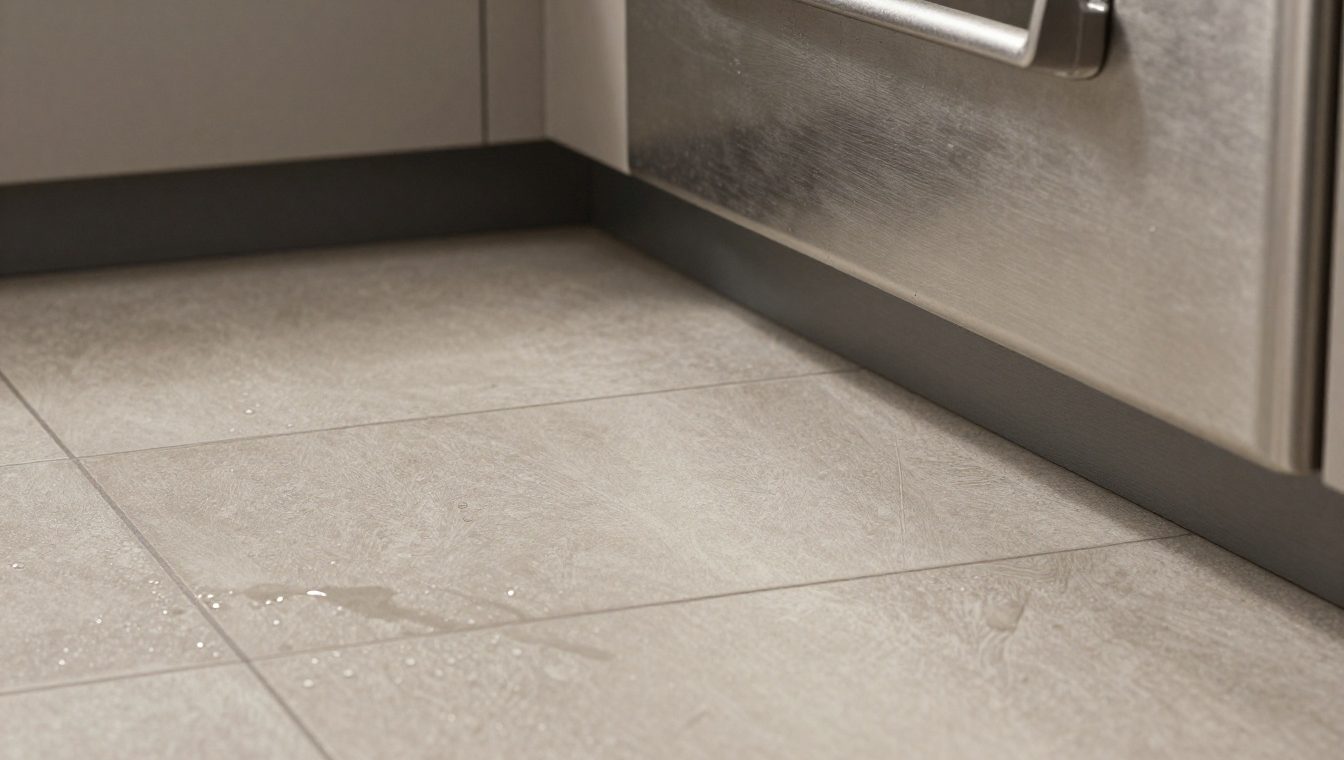
A kitchen sink area is the place where daily life hits the floor first, drips from rinsed produce, splashes from pots, ice cubes that miss the glass, and wet shoes on rainy Georgia days. If the tile is too slick, that small “wet zone” becomes a constant worry.
That is why we recommend slip resistant porcelain tile for busy kitchen floors near sinks. With the right surface, grout, and layout, porcelain gives you strong traction, easy cleanup, and a look that still feels refined.
Why the sink zone needs a different tile mindset
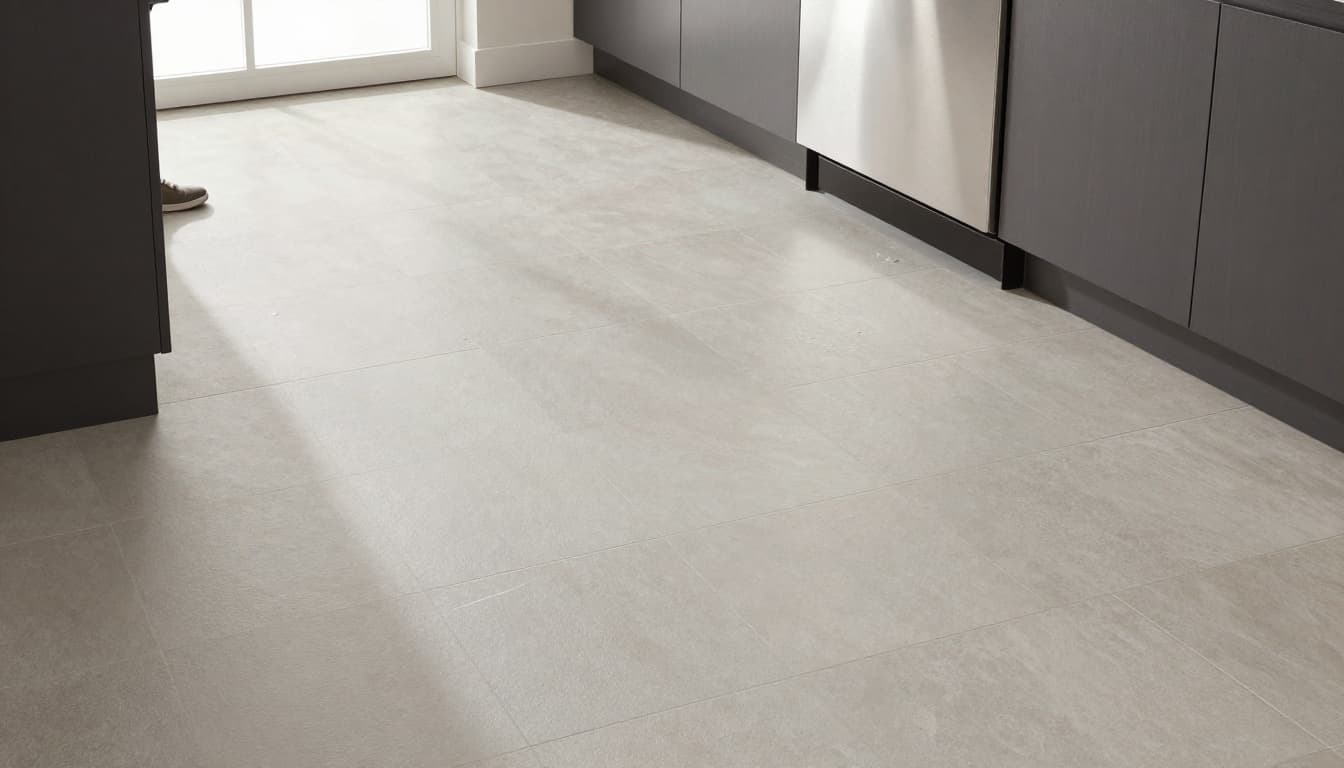
Most kitchens have two conditions that raise slip risk near the sink:
- Frequent moisture, including tiny films of water you may not notice until you step on them.
- Fast, repeated traffic, meaning you are turning, pivoting, and carrying weight (hot pans, groceries, a child on one hip).
A glossy tile can look beautiful in a showroom. In the sink zone, it can behave like a wet driveway. We treat the sink area like a “micro wet room,” even if the rest of the kitchen stays mostly dry.
Slip resistance basics: what to look for on the spec sheet
Slip resistance is not a feeling, it is measured. When comparing tile options, we look for published testing values and a finish designed for traction.
Many manufacturers reference COF (coefficient of friction) or DCOF ratings for wet conditions. If you want a practical overview of how some porcelain lines are built for wet areas, we suggest reviewing manufacturer guidance such as waterproof and slip-resistant porcelain floor tile options.
What we recommend focusing on:
Matte or textured finishes: A subtle texture often outperforms polished surfaces when water is present.
Stated wet-performance testing: If the brand does not publish any slip-related info, we treat it cautiously.
Realistic samples: We like to wet a sample and test it with the same shoes you wear while cooking.
For readers who want a technical explanation of how manufacturers describe non-slip finishes and intended applications, VIVES Ceramica’s slip resistance overview is a helpful reference.
Surface, size, and grout: the trio that decides how safe your floor feels
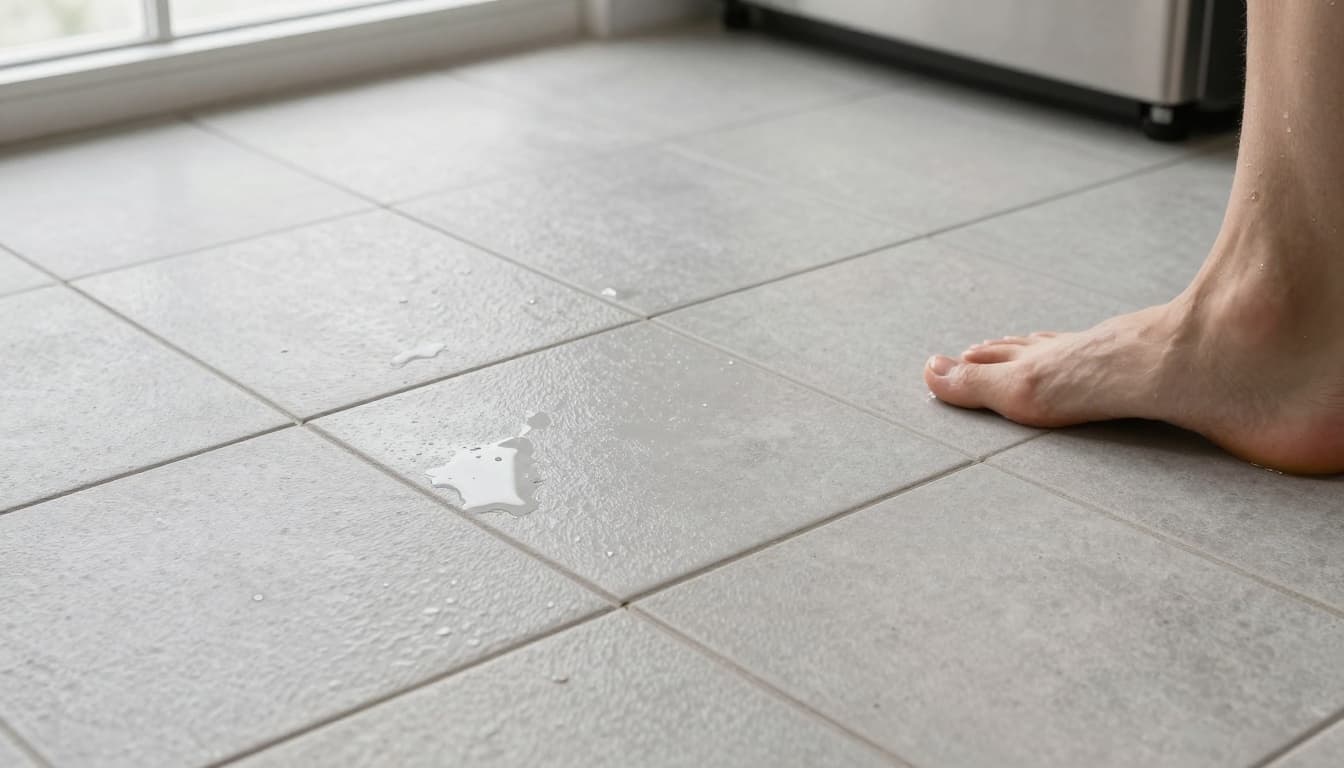
A sink-area floor needs grip, but it also needs to clean easily. The best choices balance traction with maintenance.
Matte texture that is “fine,” not abrasive
We aim for a texture you can feel, but not one that traps grime. Too much grip can hold onto kitchen grease. A fine, stone-look texture is often the sweet spot.
Tile size and layout that reduce “skate zones”
Large-format tile (like 12×24) can work well near sinks, but the layout matters. A running bond or staggered layout can help visually hide daily mess. Smaller tiles can add more grout lines, which may increase traction, but also increases grout maintenance.
Grout choice matters more than most people expect
Grout lines create micro-edges that help with footing. We also recommend grout colors that do not highlight every crumb.
Here is a quick decision guide we use in sink-heavy kitchens:
| Decision point | Why it matters near sinks | What we usually choose |
|---|---|---|
| Finish | Water reduces traction fast | Matte, lightly textured porcelain |
| Tile tone | Splash marks show on dark tiles | Mid-tone grays, warm grays, soft taupes |
| Grout width | More grout can add grip | Moderate joints, based on tile size |
| Edge detail | Sharp edges chip more easily | Rectified edges only if the subfloor is very flat |
| Pattern | Busy patterns hide grime, too busy looks chaotic | Subtle stone or concrete look |
If you are still browsing styles, Home Depot’s porcelain tile category can help you compare finishes and formats before you narrow down to a few samples.
Installation details that protect slip resistance (and prevent cracked tile)
Slip resistance is not just the tile. A great tile installed poorly can fail early, or feel uneven underfoot where you need stability most.
We follow installation practices that prioritize flatness, mortar coverage, and movement joints. If you want a clear checklist of what good tile work should include, we recommend this practical guide on quality requirements for tile installation.
Key points we insist on in sink-area kitchens:
Subfloor flatness and rigidity: Lippage (one tile edge higher than the next) is not just cosmetic, it is a trip risk.
Correct underlayment or uncoupling layer: Helpful when the home has movement or minor subfloor issues.
Proper slope control: Kitchens should not be sloped, but we do avoid low spots near sinks that hold water.
Right grout and seal strategy: We choose products that resist staining and support daily cleaning.
When homeowners ask us to recommend a tile installation company Alpharetta residents can rely on, this is the level of detail we mean. It is also why people searching for the best flooring contractor in alpharetta ga should ask contractors to explain their prep steps, not just show tile photos.
For those planning a full floor replacement, our process is similar to what we outline for professional floor installation planning, with extra attention on wet-prone areas like the sink and dishwasher run.
Designing the kitchen “work triangle” with safety in mind
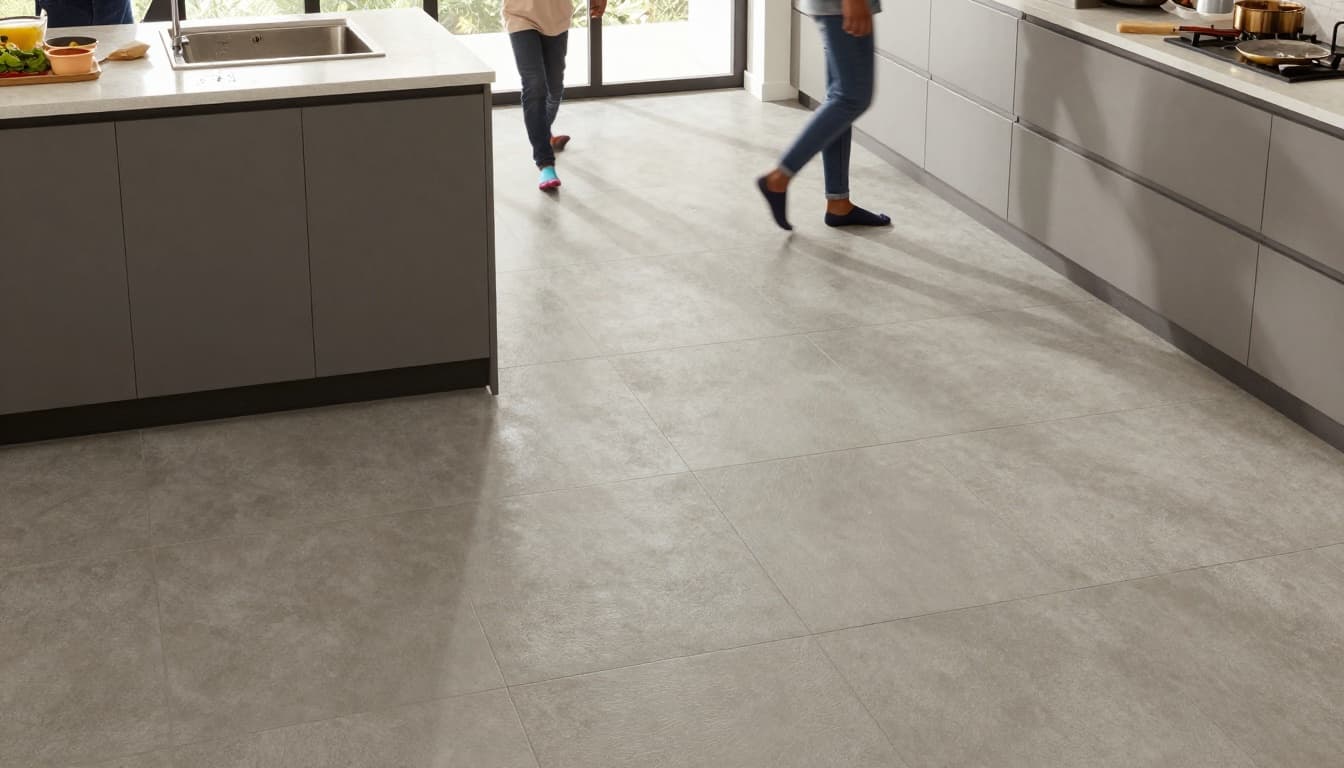
We think about how you move, not just how the tile looks. The sink area connects to the dishwasher, fridge, and cooktop. That is where you pivot with wet hands and quick steps.
Small choices can improve safety:
- Satin or matte tile over polished surfaces.
- Rugs with non-slip pads only if they lie flat and do not curl.
- Consistent traction across the kitchen, so you do not step from “grippy” to “slick” zones.
If you are planning a full kitchen update, many homeowners also compare contractor options for cabinets, lighting, and layout. We often coordinate tile floors as part of broader work for clients seeking the best local kitchen remodeling contractor in alpharetta and the best kitchen contractor alpharetta. The goal is one plan, not competing trades and mismatched timelines.
Matching tile floors with stairs, hardwood, and nearby remodel work
Kitchens rarely exist alone. They tie into hallways, stairs, and living spaces, and those transitions affect both safety and resale.
If your kitchen connects to steps, we can coordinate bullnose edges, stair nosings, and transition strips as part of a stair refresh. Homeowners often find us while searching for Stair company Alpharetta services or a stair contractor alpharetta, and we treat those projects as a single design problem, not separate jobs.
We also handle adjacent upgrades. Some clients keep hardwood in nearby rooms, then add porcelain in the kitchen for water resistance. Others refinish existing hardwood before installing tile. If you have worn oak or scratches near the kitchen entry, we can schedule that work with the same project timeline as a top hardwood floor sanding contractor in alpharetta.
Finally, kitchens and baths share the same moisture logic. If you are also planning shower or vanity updates, we can align materials and schedules with a bathroom remodeling contractor in alpharetta and Milton, so the home feels consistent from one room to the next.
Conclusion: choose traction first, then style
A sink area floor should feel steady even when it is wet, and slip resistant porcelain tile is one of the most dependable ways to get there. When we combine the right tile finish with correct prep, grout selection, and thoughtful transitions, the kitchen becomes easier to live in and safer to use.
For a free estimate, call us at 470-352-1156. If you show us any existing quote from another contractor, we beat it by 5%. Many homeowners looking for the best flooring company alpharetta and milton start with tile near the sink, then build a smarter plan for the whole home.