Screen-and-Recoat vs Full Refinish for Hardwood Floors, How We Tell Which One You Need (Simple At-Home Checks)
Screen-and-Recoat vs Full Refinish for Hardwood Floors, How We Tell Which One You Need (Simple At-Home Checks)
A hardwood floor can look “tired” long before it is truly worn out. The decision usually comes down to two options: a maintenance refresh (screen-and-recoat) or a full sand and refinish.
The good news is that we can often tell which path fits by looking for a few clear clues. Even better, we can do a couple of simple checks at home first, so we do not pay for more work than the floor needs.
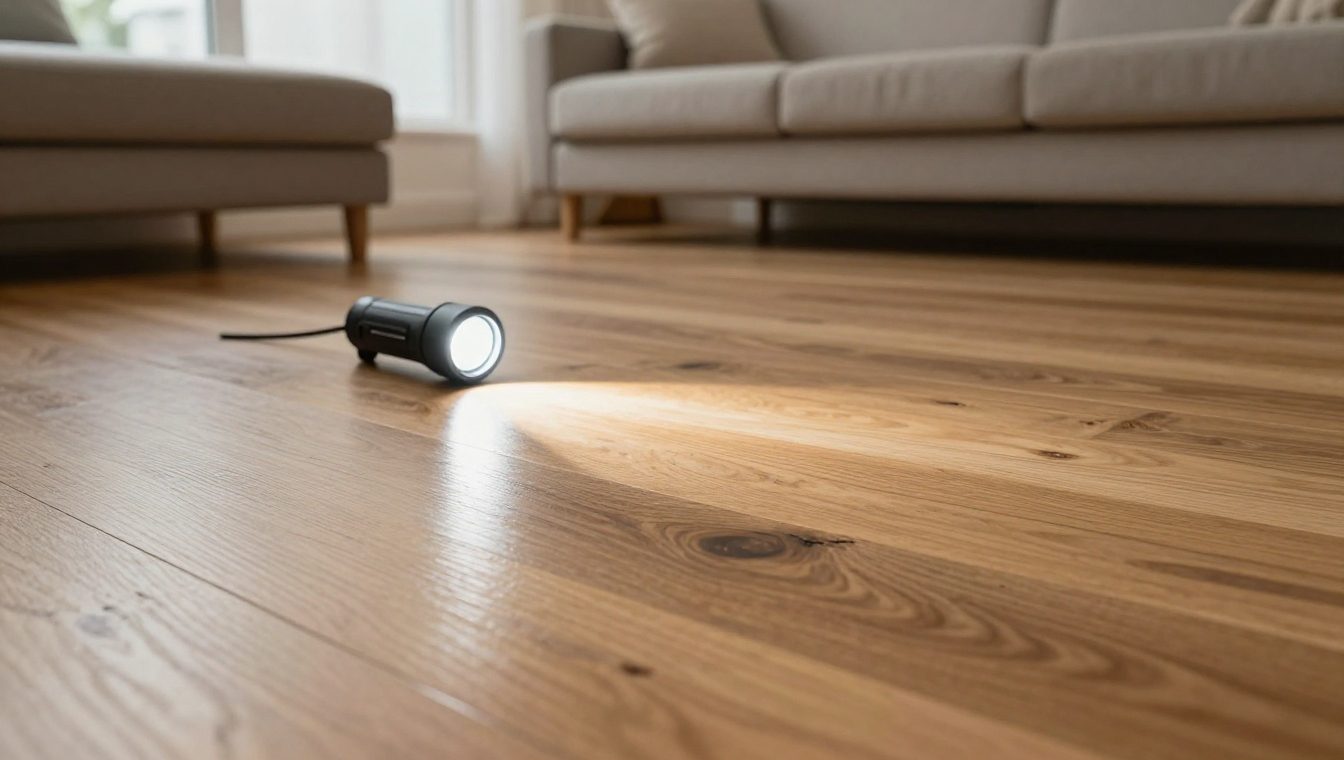
Photo: Bright living room, oak hardwood floor with a dull traffic lane near the sofa, a flashlight held low to the surface showing scratch lines, natural window light, photorealistic.
When screen-and-recoat makes sense (and when it does not)
A screen-and-recoat is like replacing the clear “topcoat” on your floor, not the wood itself. We lightly abrade the existing finish (the “screen” step), then apply a fresh coat of finish. This process works best when the floor’s problems are in the finish layer, not in the wood.
When we screen recoat hardwood floors, we are solving issues like:
Loss of shine and a hazy look that will not clean off
Light surface scratches that do not catch a fingernail
Early wear paths in hallways or in front of the sink
Small scuffs from pets and chair legs
A screen-and-recoat will not fix deep dents, dark stains, or uneven boards. It also cannot remove a color you no longer like, since we are not sanding to raw wood.
One critical limitation is adhesion. If the existing surface is contaminated (common culprits are waxes, polishes, or certain cleaners), a new coat may not bond well. That is why we test and confirm compatibility before we commit to coating the entire home.
If your floor still has a stable finish layer across most rooms, recoating can be the “change the clear coat, keep the car” option: faster, less mess, and it preserves wood thickness for the future.
The situations where a full refinish is the safer call
A full refinish means sanding down to bare wood, then staining (if desired) and building a new finish system. It is more work, but it resets the floor in a way recoating cannot.
We typically recommend a full refinish when we see any of these:
Bare wood showing in traffic lanes or near doorways
Gray or black discoloration, often from moisture getting past the finish
Deep scratches or gouges that catch a fingernail
Peeling or flaking finish, which suggests the coating system is failing
Cupping or unevenness (boards not sitting flat), which can point to moisture issues
Engineered hardwood adds another layer to the decision. Some engineered floors can be refinished, but only if the wear layer is thick enough. If we are not sure, we check a floor vent or a threshold edge to confirm what is realistic before we sand.
If you are comparing timelines, a screen-and-recoat is often a short disruption, while a full refinish can be a multi-day process due to sanding steps and cure times. For homeowners who want a color change, need repairs, or have worn-through areas, sanding is usually the honest answer.
For local homeowners looking for a hardwood floor sanding in Alpharetta, we schedule a walk-through first, because the right fix depends on what the floor is telling us, not just how it looks in a photo.
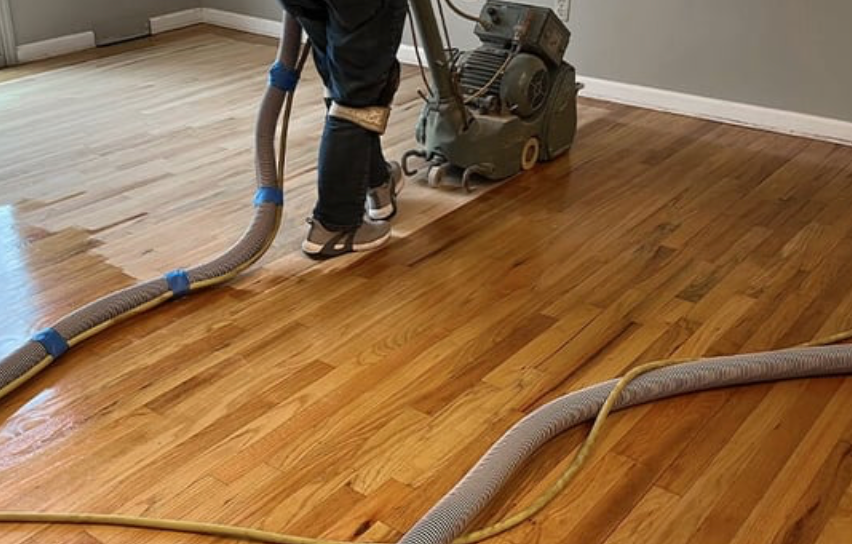
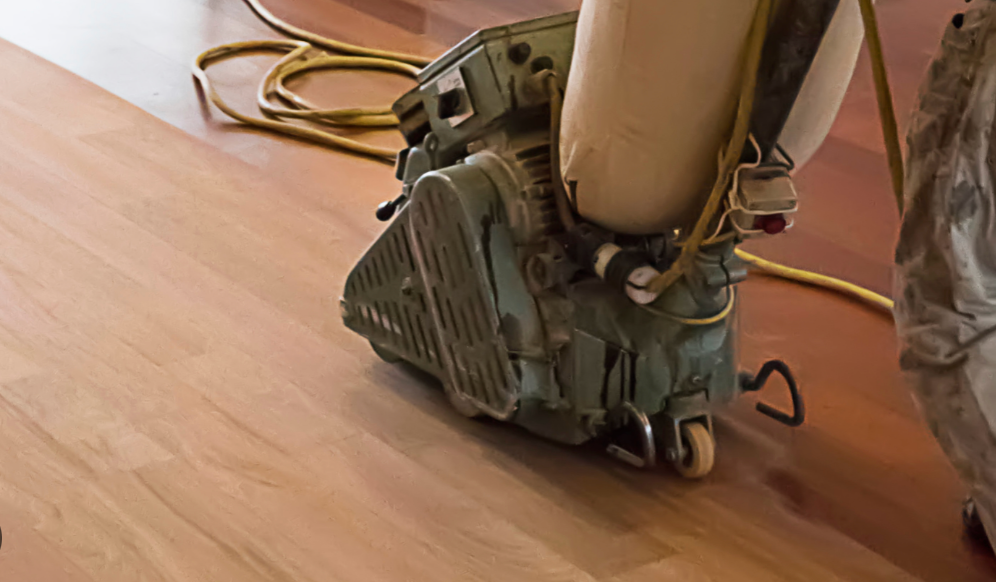
Sanding a red oak hardwood floor
We can do these checks in a corner or a closet first. The goal is not perfection, it is clarity.
Check 1: The flashlight test (find depth, not just shine)
Turn off overhead lights, then hold a flashlight low to the floor. Long shadows show the truth.
If you mainly see fine swirl marks and dullness, recoating may work.
If you see long, dark grooves or edges that look torn, plan for sanding.
Check 2: The fingernail test (surface scratch vs wood damage)
Drag a fingernail across a scratch.
If it does not catch, it is likely in the finish.
If it catches sharply, it is likely into the wood, which points toward refinishing.
Check 3: The water drop check (is the finish still protecting?)
Place a small drop of water on a worn area for about a minute, then wipe it.
If it beads and wipes clean, the finish is still doing its job.
If the spot darkens quickly or stays dark after wiping, moisture is reaching the wood, which often means it is past “just recoat.”
Check 4: The gentle scrape test (is the finish failing?)
Using a plastic putty knife (not metal), lightly scrape an inconspicuous spot.
If the finish stays intact, that supports a recoat.
If it flakes easily, a new coat may not bond well, sanding is safer.
Check 5: The humidity and moisture reality check
If your home has had repeated dampness (leaks, wet mopping, high indoor humidity), coatings can fail early. If you own a basic moisture meter, many pros treat readings over about 12 percent as a reason to pause and correct conditions before finishing.
Here is a quick way we summarize it:
| What we see | Screen-and-recoat | Full refinish |
| — | — | — |
| Dull finish, light scratches | Often a good fit | Usually not needed |
| Bare wood, dark stains | Not a fit | Usually required |
| Peeling finish, poor bonding | Risky | Better long-term fix |
| Color change request | Not possible | Yes, with sanding |
For a broader explanation of refinishing steps and protection goals, this wood floor refinishing guide lays out the basics in plain language.
Photo: Close-up of a hardwood plank edge near a floor vent, showing the top wear layer, a hand holding a coin for scale, sharp focus, photorealistic.
What to expect from cost, schedule, and who to hire in Alpharetta and Milton
In January 2026, many homeowners see recoating priced below full refinishing, often roughly half, because it avoids deep sanding and stain work. Full refinishing commonly lands in the mid-range cost bands of the flooring market because it is labor-heavy and includes more steps.
When people search for the best flooring contractor in alpharetta ga, the top hardwood floor sanding contractor in alpharetta, or the best flooring company alpharetta and milton, they are usually trying to avoid two headaches: paying for the wrong service, or living through a project that drags on. We keep the scope clear, and we protect the rest of the home while we work.
Floors rarely live alone in a remodel. Many clients also ask us about stair work and wet-area upgrades, including finding a Stair company Alpharetta, a stair contractor alpharetta, or a tile installation company Alpharetta for bathrooms and entries. For stair updates, we often coordinate floor finishes with a stair remodeling service in Alpharetta so the steps do not look like a separate project.
If the floor update is part of a larger home plan, we also handle kitchens and baths through our home remodeling services. Homeowners often reach out as a bathroom remodeling contractor in alpharetta and Milton, the best local kitchen remodeling contractor in alpharetta, or the best kitchen contractor alpharetta, because they want one schedule and one accountable team.
For a free estimate, call us at 470-352-1156. If you show us any written quote from another contractor, we beat it by 5 percent when the scope is comparable.
## Conclusion
If your floor looks dull but still has a continuous protective layer, a screen-and-recoat can be the smart, low-disruption fix. If the wood is exposed, stained, or deeply scratched, a full refinish is usually the only way to get a true reset. The simple checks above help us make the call with confidence before we spend money.
When you want a direct answer for your home in Alpharetta or Milton, call us at 470-352-1156 for a free estimate. Bring any existing quote, and we will beat it by 5 percent.
 ## Conclusion