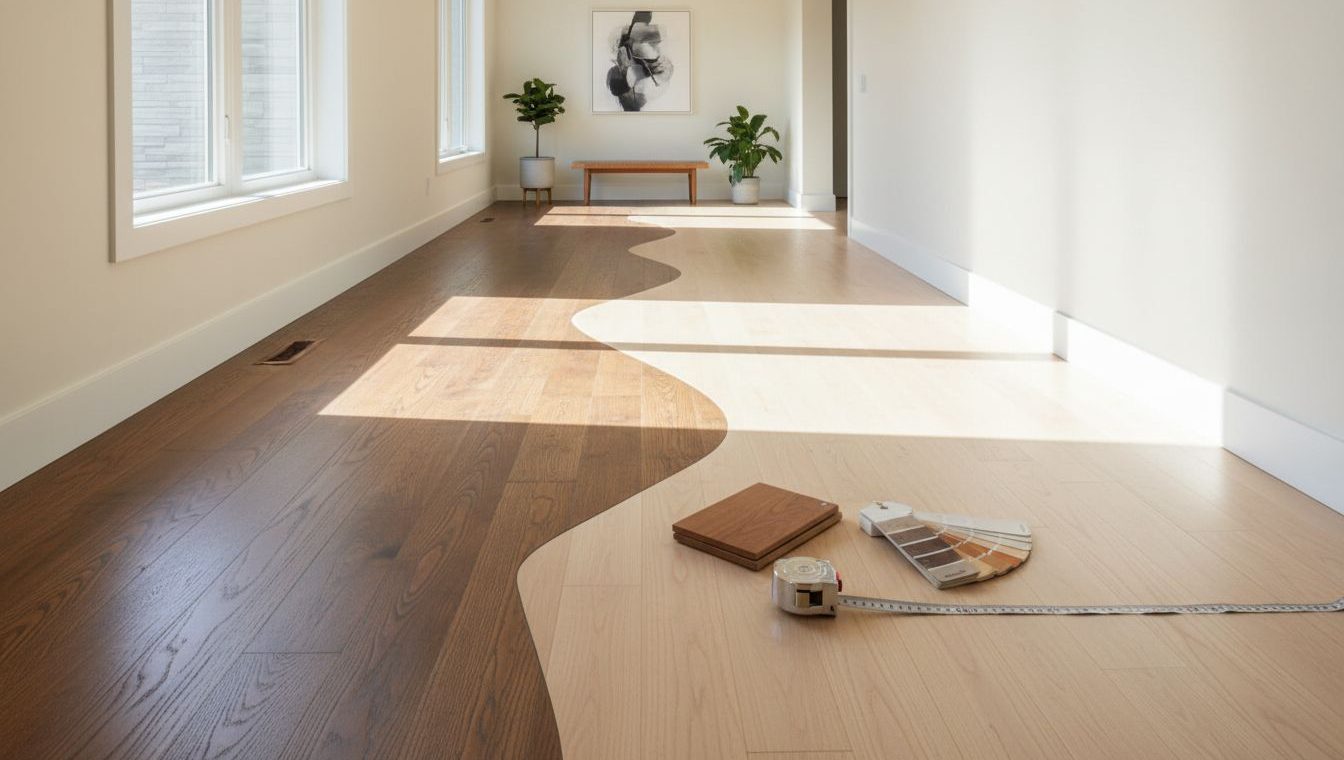
A new hardwood floor can be beautiful on its own, yet still feel “off” next to an older floor. The human eye is sharp when it comes to patterns and reflection, so even small differences in grain, sheen, stain, or plank width can stand out, especially in open spaces and hallways.
The good news is that matching hardwood flooring is usually possible without sanding and refinishing every room. It takes a careful plan, the right samples, and a smart approach to transitions. Below, we’ll walk through how we match new hardwood to existing rooms so your home feels consistent, not pieced together.
Start with “floor forensics” before you buy anything
Before we choose new material, we identify what’s already in the house. Guessing is where most mismatches start.
Here’s what we document on-site:
- Species: Red oak and white oak can look similar until stain hits them. Maple, hickory, and birch behave even more differently.
- Cut and grain: Plain-sawn (cathedral grain) vs rift-sawn (straight grain) changes the whole look.
- Grade and character: Select grade looks calm and uniform; #1 Common shows more mineral streaks and knots.
- Thickness and profile: Solid 3/4-inch vs engineered affects transitions and stair nosing options.
- Existing finish type: Oil-based finishes often amber with age; many water-based finishes stay clearer.
If you want a deeper overview of installation planning, we like this guide on what to expect during a new floor installation, because preparation choices affect how well the match turns out.
Grain match: get the “wood personality” right, not just the color
Color gets all the attention, but grain is what makes a floor feel believable from room to room. Think of grain like handwriting. You can copy the ink color, but if the style changes, you still notice it.
Species and cut come first
If the existing floor is oak, we usually stay with oak. Even within oak, red oak and white oak take stain differently and reflect light differently. If we can’t confirm species from an attic leftover or floor vent cutout, we test with samples.
Board length mix and grain direction matter
Many older floors use shorter boards and more variation. Some newer products skew long and uniform. When we blend rooms, we aim to match:
- Average board length distribution
- Grain direction (especially in hallways)
- Character level (calm vs rustic)
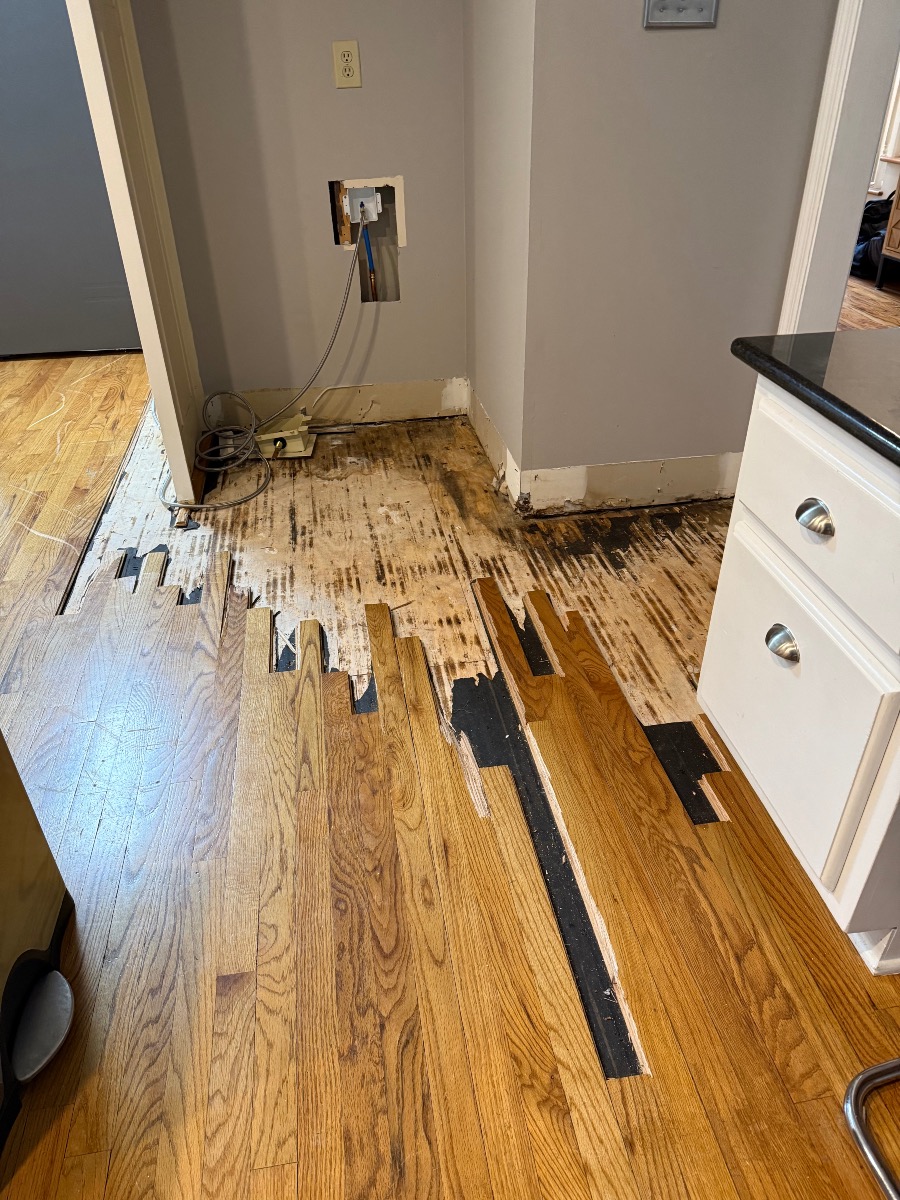 Wood floor boards removed because of water damage
Sheen matching: the detail that shows up at night
Sheen is the “light signature” of the floor. Two floors can be the same color, but if one is glossy and the other is satin, the seam reads like a mirror next to a chalkboard.
We match sheen by confirming what’s on the existing floor:
- Matte: hides scratches well, can look softer
- Satin: common in busy homes, balanced reflection
- Semi-gloss or gloss: brighter reflection, shows more wear
If the existing floor has been spot-polished or cleaned with shine boosters, we account for that too. Sometimes the floor is not truly semi-gloss, it’s satin with polish buildup.
Stain matching: focus on undertones, not the name on the can
Stain names are not reliable. “Special Walnut” on one species and one finish system can look very different on another. We match stain by checking undertones, because undertones are what clash across doorways.
Common undertone conflicts we watch for:
| What you see at the doorway | Likely cause | Best fix without refinishing everything |
|---|---|---|
| New floor looks “pink” next to old | Red oak reaction, warm stain, oil ambering nearby | Shift stain cooler, consider water-based finish to reduce amber |
| New floor looks “gray-green” | Cool stain meets warm existing floor | Add warmth with a custom blend, test under the same lighting |
| New floor looks darker even with same stain | Tighter grain, different cut, different topcoat | Adjust stain dilution, match sheen, or lighten with a wash coat |
We always recommend doing stain samples in the home, not in a warehouse. Sunlight, bulbs, wall paint, and cabinetry all change perception. For a practical overview of the matching process, Bruce Flooring has a helpful reference on how to match hardwood floors.
Plank width: when it won’t match perfectly, make it look intentional
Plank width is a common issue in Alpharetta and Milton homes. Many older floors are 2-1/4-inch, while many new products are 3-1/4-inch, 4-inch, or wider.
If we can’t get the exact width, we aim for a design that looks planned:
- Change widths at a natural break: a doorway, cased opening, or short hall.
- Use a clean transition: flush reducer, T-molding, or a wood threshold that fits the trim style.
- Keep the layout logic consistent: same direction through main sightlines, unless the home already changes direction.
Seam strategies that avoid the “patch” look
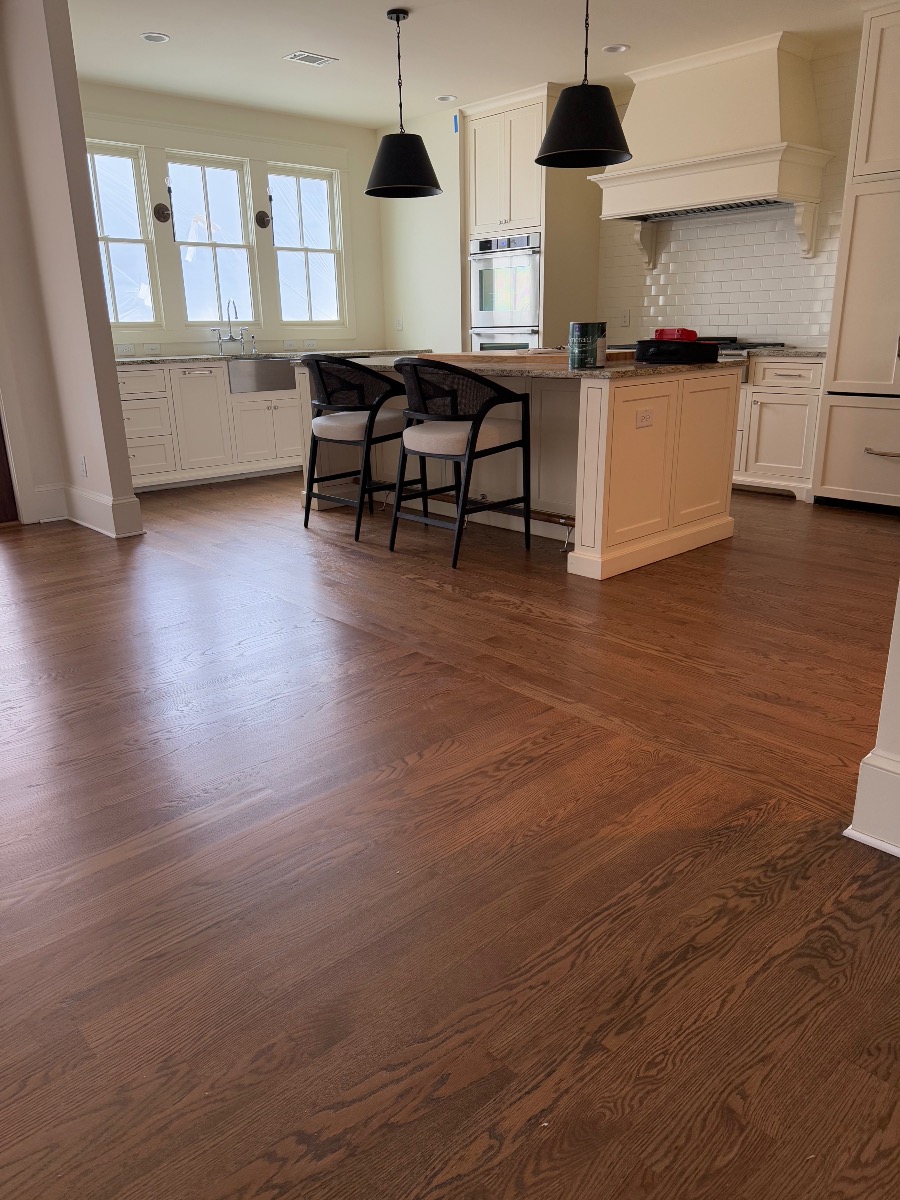
When homeowners ask if we can extend hardwood into one room without redoing the whole house, our answer depends on where the seam will land and how we can hide it.
Lace-in (feathering) for the most seamless match
A lace-in blends new boards into existing boards by weaving them together. It is slower, but it hides the boundary better than a straight line cut.
This works best when:
- We have room to stagger joints naturally
- The existing floor is stable and not heavily crowned or cupped
- The stain and sheen plan is already tested
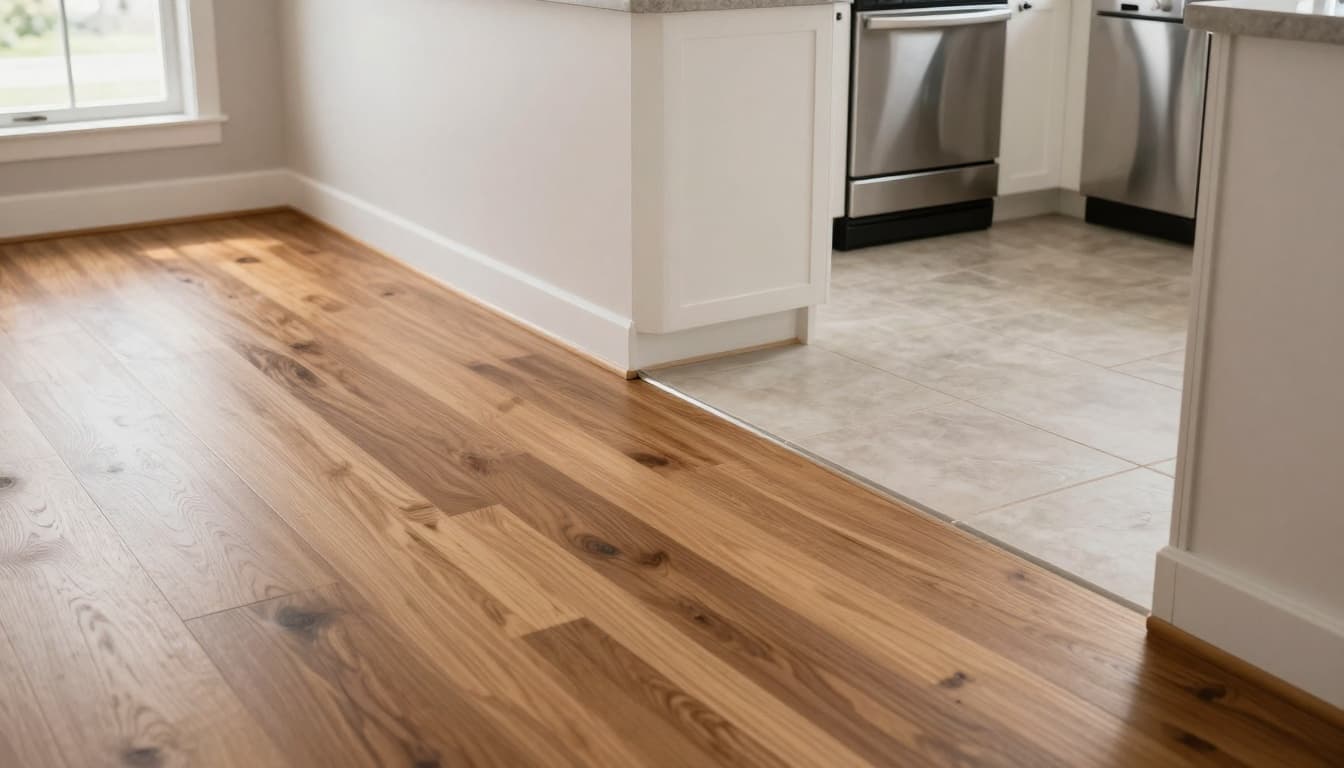
Thresholds and transition strips when movement or height differs
If the subfloor height changes, or one space needs a different product (tile, LVP, or engineered), a well-chosen transition is the honest solution. Done right, it reads as intentional trim work, not a mistake.
Sometimes a small refinish zone saves the whole plan
There are cases where a perfect match is unrealistic, especially if the existing floor has deep oxidation from sun exposure or was finished decades ago with an older oil system.
In those homes, we can often refinish a limited area (like a hallway plus the new room) to create a controlled “match zone,” instead of refinishing the entire house. If you’re weighing that decision, our team follows the same practical checkpoints outlined in this step-by-step guide to refinish hardwood floors.
Don’t forget stairs, kitchens, and baths (they make the match feel complete)
A floor match falls apart quickly when stairs, tile edges, and wet areas look like separate projects. When we plan matching hardwood flooring, we also plan the connecting spaces.
In many homes, the right move is hardwood in main areas, tile in baths, and a clean transition that respects moisture risk. If you’re also updating wet spaces, we often coordinate with a bathroom remodeling contractor in alpharetta and Milton so the floor height, thresholds, and trim lines stay consistent. For homeowners thinking about resale value, this overview on the hidden value of a master bathroom renovation is a solid reference.
We also get calls from clients who are comparing multiple trades at once, flooring, tile, stairs, and remodeling. If you are searching for the best flooring contractor in alpharetta ga, or the best flooring company alpharetta and milton, we can scope the full picture and keep the transitions clean. The same applies if you need a tile installation company Alpharetta, a Stair company Alpharetta, or a stair contractor alpharetta, because stair parts and floor parts must fit together precisely. When sanding is part of the solution, many homeowners specifically ask for a top hardwood floor sanding contractor in alpharetta, since sanding quality affects sheen and color match more than most people expect. If the project expands into cabinetry and layout, we often coordinate with clients who are looking for the best local kitchen remodeling contractor in alpharetta or the best kitchen contractor alpharetta.
For a clear plan and a free estimate, call us at 470-352-1156. If you show us any existing quote from another contractor, we beat it by 5%.
A good match is calm, quiet, and confident
The goal of matching hardwood flooring is not perfection under a microscope. It’s a home that feels continuous, where the eye moves through rooms without stopping at the floor line. When we align grain character, control sheen, test stain undertones, and choose smart transitions, we can usually avoid a full-house refinish and still get a result that looks right.
If you want us to evaluate your rooms and recommend the best match strategy, call 470-352-1156 for a free estimate. Bring any competitor quote, and we’ll beat it by 5%.