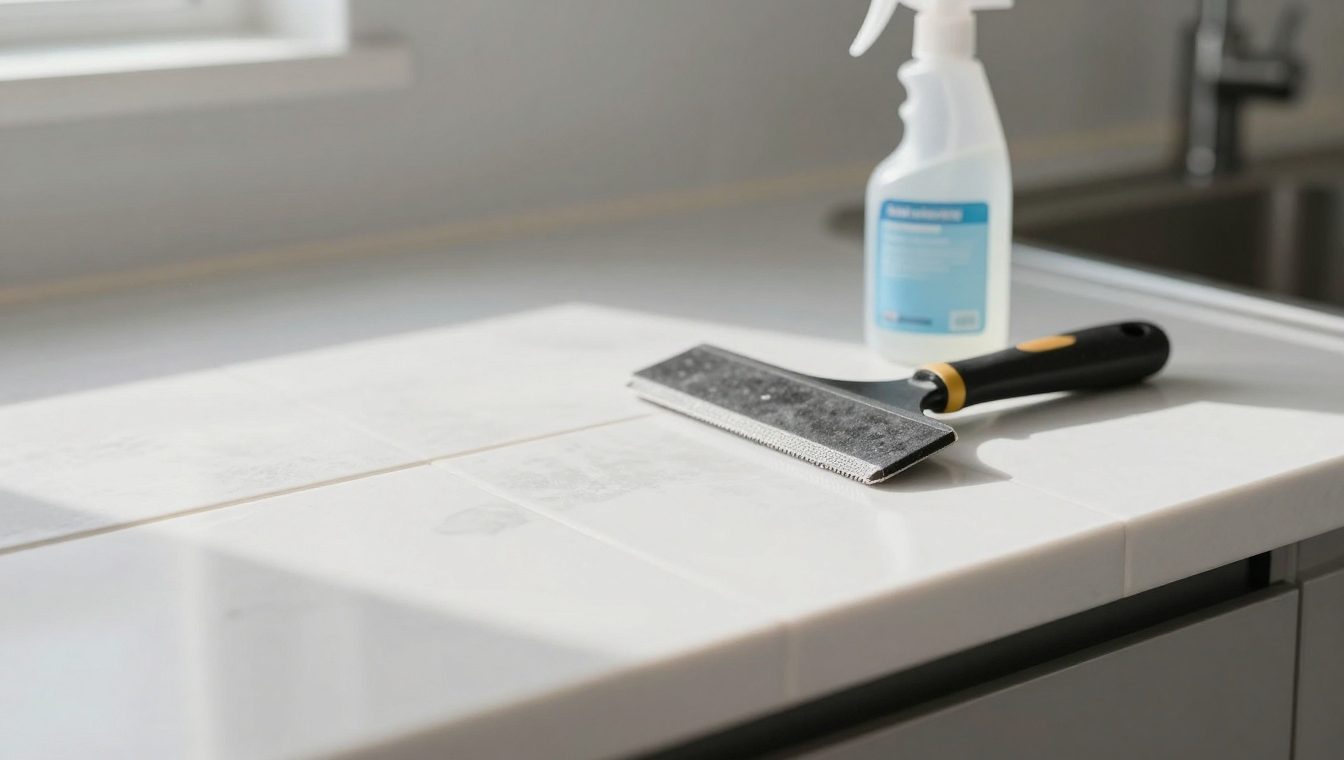
New kitchen tile should look crisp, bright, and finished. When a cloudy film shows up after grouting, it can feel like someone draped a thin veil over your hard work. That film is grout haze, and the good news is that most grout haze removal is simple when we use the right tools and the right order of steps.
We are going to focus on fast, practical fixes you can complete the same day, without guessing or over-scrubbing. A few smart moves early can save the tile surface and protect the grout joints.
What grout haze is (and why it shows up so fast)
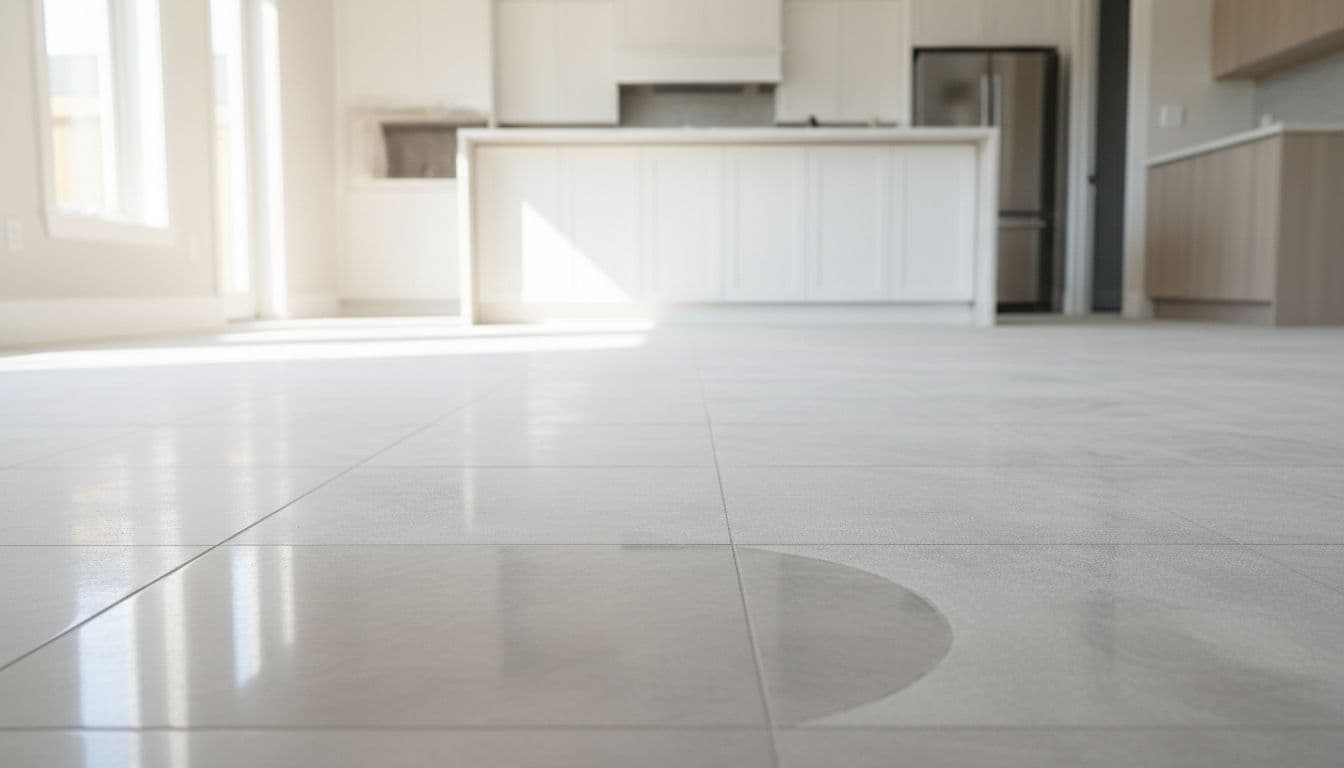
Grout haze is leftover grout residue that dries on the tile face as a dull, cloudy film. It often appears after the first wipe-down because grout contains fine cement and pigments that can re-deposit as moisture evaporates.
Timing matters. Fresh haze can wipe off quickly. Older haze can bond tighter and may need a cleaner and agitation. The tile type also matters. Dense porcelain usually cleans up easier than textured tile or porous stone. For a helpful overview of how surface type affects cleanup, we often reference these practical notes from Jon-Don on removing adhered grout haze.
Two quick checks before we start scrubbing
A fast fix still needs a quick setup. These two checks prevent damage.
Confirm the tile material. Avoid acidic cleaners on natural stone (marble, travertine, limestone). If you are not sure, start with water-only methods first.
Let grout cure enough. If grout is still soft, aggressive scrubbing can pull material from joints. Many installers wait at least 24 hours before using stronger cleaners, but we still recommend checking the grout product instructions when possible.
The fast tool kit for grout haze removal (what we actually reach for)
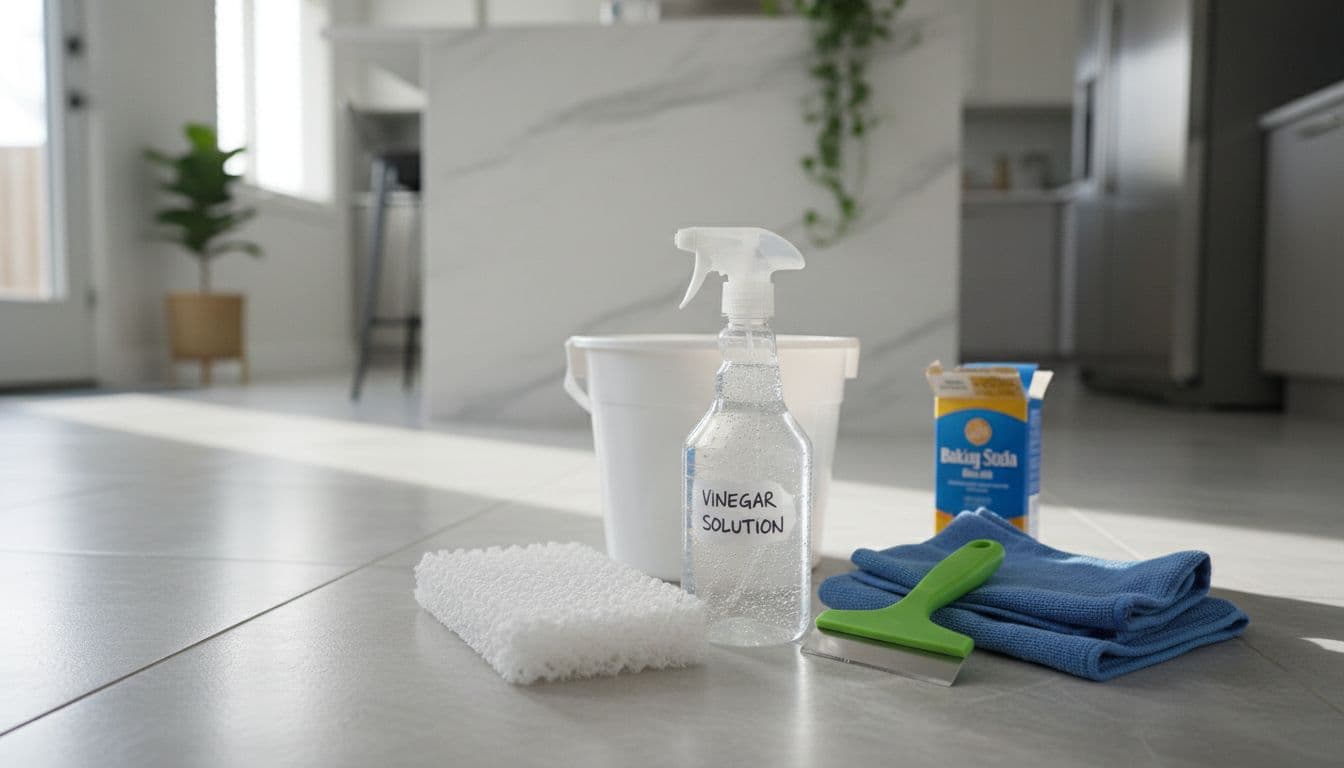
For quick fixes, we keep the kit simple. Most of these items are inexpensive and reusable.
- Microfiber cloths: One for cleaning, one for drying and buffing.
- White nylon scrub pad: Strong enough to lift haze, gentle enough for many tile surfaces.
- Neutral cleaner and clean water: A mild first step.
- Plastic putty knife or plastic scraper: For small ridges, never metal.
- Spray bottle: Helps control cleaner and dwell time.
- Wet/dry vacuum (optional): Speeds up rinse water removal on floors.
- Commercial grout haze remover (as needed): Best for stubborn cement haze on ceramic or porcelain.
If you prefer a quick refresher on common methods and what to try first, this guide on how to clean grout haze lays out the basics in plain language.
Quick fixes that work fast (use this order)
Speed comes from sequence. We start gentle, then increase strength only if needed. Think of grout haze like dried milk on glass. Rubbing harder is not the only answer, we need the right liquid and timing.
1) Dry-buff first (yes, before water)
If haze is light, dry microfiber buffing can remove a surprising amount. Use a clean, dry cloth and work in small sections. This prevents turning powdery residue into slurry.
Best for: very fresh, thin haze.
2) Warm water, microfiber, then a full dry
Dampen a microfiber cloth with warm water, wipe a small area, then immediately dry with a second cloth. Drying is not optional. If we leave rinse water to air-dry, residue can re-settle.
Best for: fresh haze that looks worse when the sun hits it.
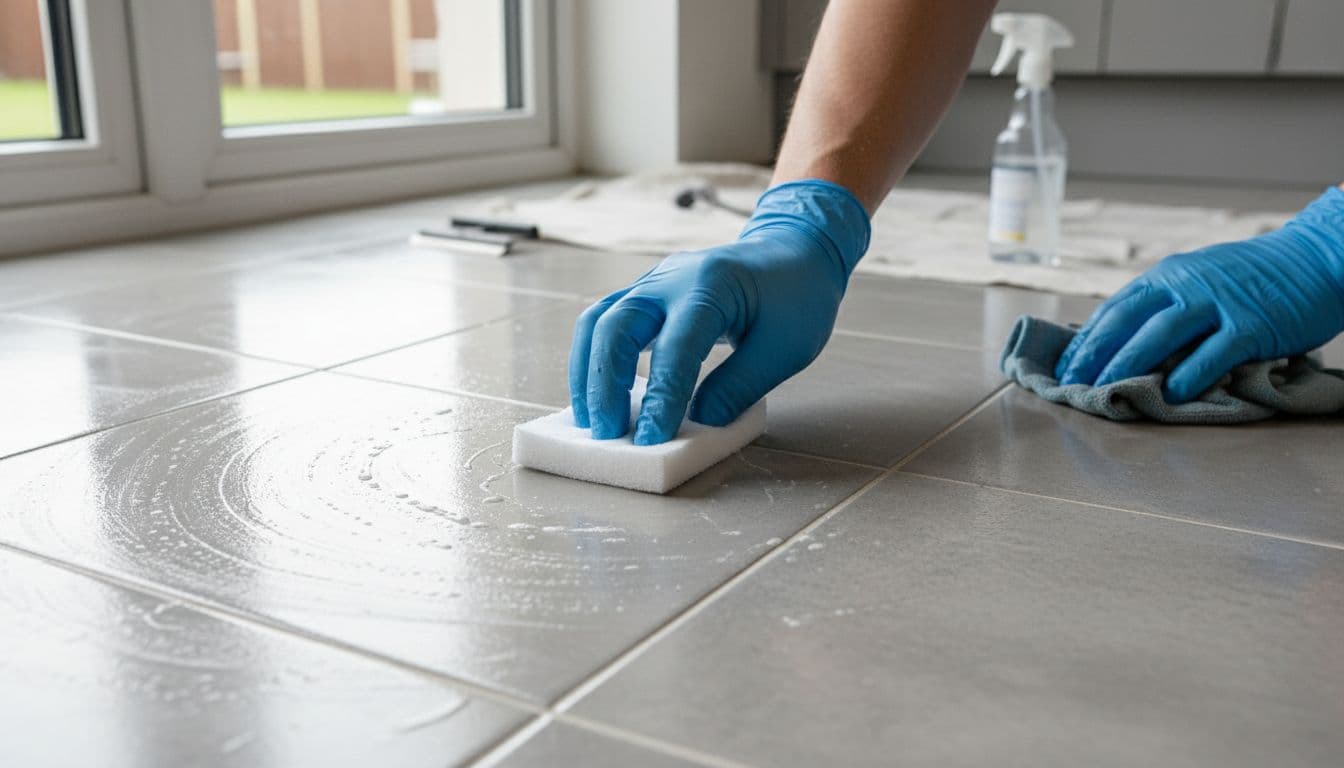
3) Nylon pad with controlled moisture (fast and safe on many tiles)
Use a white nylon pad with a lightly dampened surface, not a soaked floor. Scrub in small circles, then wipe and dry. Keep joints from flooding, since excess water can weaken uncured grout at the edges.
Best for: moderate haze on porcelain and ceramic.
4) Vinegar solution for cement grout haze (not for stone)
For many cement-based grouts on porcelain or ceramic, a diluted vinegar solution can help break the film quickly. Test first in a corner. Rinse well and dry right away.
A simple explanation of vinegar-based cleanup (and why haze returns if you do not buff dry) is covered in this homeowner-friendly post on removing grout haze from cloudy tiles.
Best for: stubborn film after water-only attempts.
Avoid for: natural stone, and always test on polished finishes.
5) Commercial grout haze remover (the “fast when it counts” option)
When haze has cured or the grout is polymer-modified, a commercial haze remover is often the shortest path. Follow label directions, keep good ventilation, and do not let product dry on the tile. Work in small sections, scrub with a white pad, then rinse twice.
Best for: heavier haze, older haze, large kitchens.
6) Plastic scrape for isolated spots (not the whole floor)
If you have little “dots” or ridges, use a plastic scraper at a low angle. Do not gouge the grout joints. Follow with a wipe, rinse, and dry.
Best for: hardened flecks and edge buildup.
Mistakes that make haze worse (and waste time)
Most grout haze problems get worse from one of these habits.
Skipping the final buff. The rinse looks clean, then the haze reappears as it dries. Always do a dry microfiber pass.
Using a green pad or metal blade. These can scratch glazed tile and many polished surfaces.
Flooding the floor. Too much water spreads residue and can weaken fresh grout lines.
Mixing random chemicals. Stick with one approach at a time, rinse thoroughly, then change tactics.
When it’s smarter to call a pro (and protect the finish)
If haze is widespread, if the tile is textured, or if the surface is natural stone, professional cleanup can prevent permanent dulling. We also see haze hide inside grout texture, then show up weeks later when a floor is mopped.
As a local kitchen remodeling contractor in alpharetta, we handle tile installation and post-install cleanup so the floor looks finished, not “almost finished.” If the same project also includes adjacent work, like transitions into wood floors, we coordinate that too. Many homeowners call us first for tile, then realize they also need a hardwood floor sanding contractor in alpharetta to match sheen and color between spaces.
We are also a flooring contractor in alpharetta ga for full flooring projects, and a bathroom remodeling contractor in alpharetta and Milton when the tile work extends beyond the kitchen.
For a broader view of what we do, see our page on Professional tile installation in Alpharetta GA.
For fast help, call us at 470-352-1156 for a free estimate. If you show us any existing written quote from another contractor for the same scope and materials, we beat it by 5%.
A fast, clean finish is the goal
Grout haze removal does not need to turn into an all-weekend project. When we start with dry buffing, control moisture, and step up to stronger methods only as needed, the haze clears quickly and the tile’s finish stays intact. If the haze keeps returning, or if the surface is sensitive, professional cleanup is often the safest way to protect your investment. For a free estimate, call 470-352-1156, and remember, if you bring us a written quote, we will beat it by 5%.