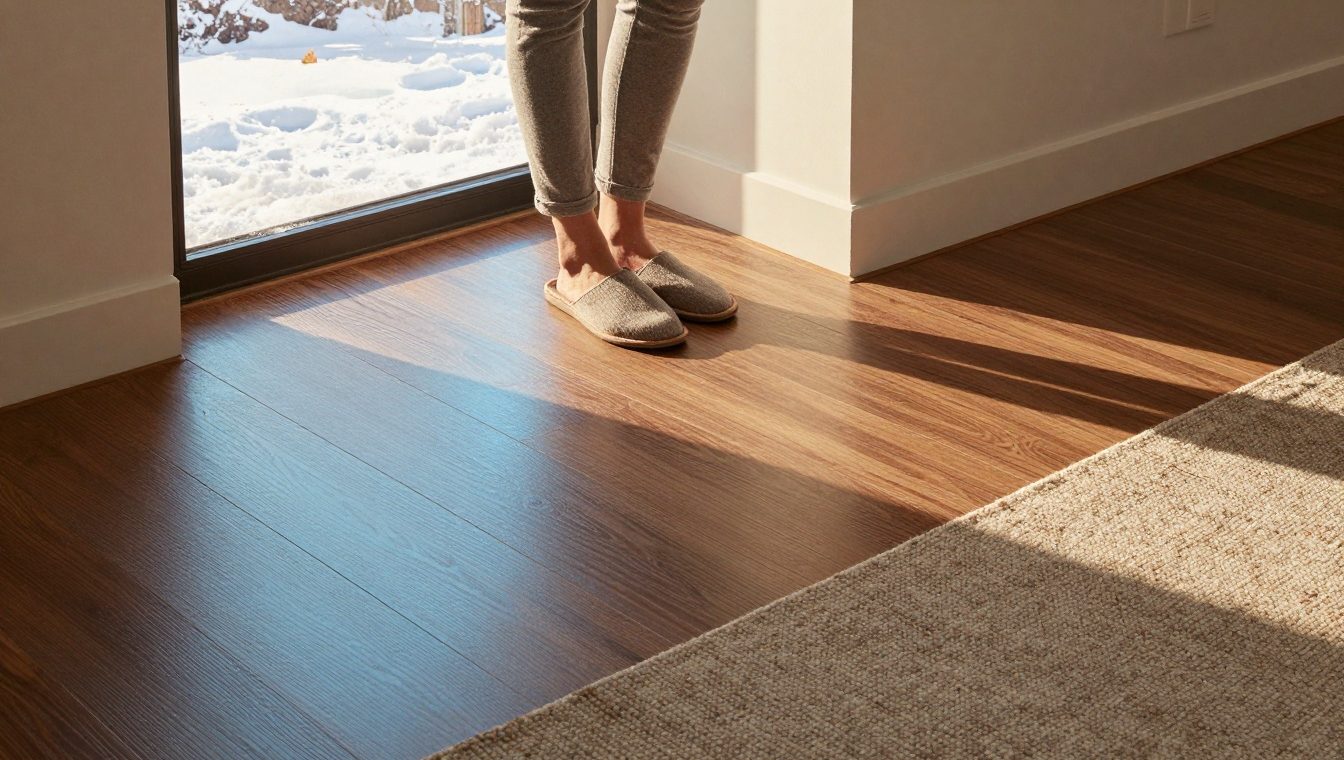
Stepping out of bed and landing on an icy floor can make the whole house feel colder. Even when the thermostat reads “comfortable,” our feet often disagree. That mismatch is the heart of cold floors winter complaints.
We see this every year in North Fulton homes, especially those with crawlspaces, older insulation, or floors installed without the right underlayment. The good news is that the cause is usually easy to pinpoint, and the best fixes are not always the most expensive.
Why floors feel colder than the air around them
Cold floors are not always “cold,” they are often just better at pulling heat from our skin. Air is a poor conductor. Many flooring materials are better conductors, so they draw warmth out of our feet faster than the room air does.
A few common drivers show up again and again:
1) Heat loss from below
If a crawlspace is vented, under-insulated, or drafty, the subfloor stays cold. That cold transfers upward through nail heads, fasteners, and the flooring itself.
2) Air leaks at the edges
Gaps at rim joists, plumbing penetrations, and around floor registers let cold air move in. That draft can chill the floor surface even when the HVAC is running. Guidance on diagnosing and fixing these issues lines up with home energy experts who focus on sealing and insulating the floor system, not just adjusting the thermostat, as described in Sealed’s overview of causes and remedies for cold floors: https://sealed.com/resources/fix-cold-floor/
3) Concrete slabs act like a heat sink
On slab homes, the earth below stays cool in winter. Bare slab areas, tile, and thin floating floors tend to feel colder because they stay closer to that ground temperature.
4) Humidity and comfort are linked
Dry winter air makes skin feel cooler. A floor can feel “colder” even if its surface temperature has not changed much, because our bodies lose heat faster in low humidity.
How flooring materials affect winter comfort
Not all surfaces feel the same at the same room temperature. “Warmth” is often about heat transfer and thickness, not just the color or style.
- Tile and stone: Durable and water-safe, but they conduct heat well, so they feel cold without radiant heat or a strong insulating layer beneath.
- LVP and laminate: Often warmer than tile underfoot, but quality depends on the underlayment and subfloor conditions.
- Engineered and solid hardwood: Can feel more comfortable than tile, yet it still reflects what is happening underneath. A cold subfloor means a cool hardwood surface.
- Carpet: The warmest feel underfoot because it traps air, but it is not always ideal for stairs, kitchens, or allergy-sensitive spaces.
If we are trying to solve cold floors, we do not start by blaming the top layer. We start by looking below it.
Quick ways to confirm what is making your floors cold
Before we recommend any upgrade, we like to narrow down the source.
Touch test by room: If bathrooms, foyers, and kitchen perimeters feel colder than interior rooms, edge air leaks or slab exposure is likely.
Time-of-day pattern: If floors feel coldest in the morning, crawlspace or basement temperatures are driving it.
Register and return check: If the floor near a register is still cold, it may be duct leakage or an uninsulated run below the floor.
For homeowners who want a deeper read on how below-grade spaces affect upstairs comfort, Lifehacker’s piece on warming floors by addressing basement conditions matches what we see in the field: https://lifehacker.com/the-key-to-warming-up-your-home-s-frigid-floors-is-in-t-1849904576
Upgrades that actually help (and what they solve)
Some upgrades feel helpful but barely change the floor temperature. Others make a real, measurable difference. Here is how we frame it when planning a project.
| Upgrade | What it helps most | Best for |
|---|---|---|
| Crawlspace or basement insulation | Raises subfloor temperature | Homes with vented or under-insulated crawlspaces |
| Air sealing at rim joists and penetrations | Stops cold drafts and cold edges | Rooms near exterior walls, older homes |
| Better underlayment | Reduces heat transfer, improves comfort and sound | Floating LVP or laminate installs |
| Radiant floor heat | Makes tile and stone comfortable | Bathrooms, kitchens, slab areas |
| Area rugs with quality pads | Adds insulation quickly | Living rooms, bedrooms, rentals |
For homeowners comparing insulation options, EDF’s floor insulation guide is a useful plain-language overview of where heat loss occurs and why sealing matters: https://www.edfenergy.com/heating/advice/complete-guide-floor-insulation
What usually does not move the needle by itself
A thicker sock, a small space heater, or turning up the thermostat can mask the problem, but it does not fix the cold surface. If the floor system is losing heat or pulling cold from below, the discomfort returns the moment the heat cycles off.
Flooring upgrades that improve warmth without sacrificing style
Once the “below” issues are handled, the right flooring system can keep comfort steady all winter.
Choose the right build-up, not just the right plank
When we install LVP or laminate, we focus on the full assembly: subfloor prep, moisture barrier where needed, and an underlayment that fits the product and the home. A thin pad on top of a cold slab rarely satisfies long term.
Refinish hardwood to reduce drafts and improve feel
Old hardwood floors often have gaps. Those gaps can leak air from below and create cold stripes across the boards. If we re-tighten problem areas and refinish properly, floors often feel more even. Homeowners researching a hardwood floor sanding contractor in alpharetta usually want a better finish, but many also want better winter comfort.
To see what well-finished floors look like in real homes, we keep examples in our flooring sample pictures gallery: https://alpharettafloors.com/Flooring_Sample_Pictures.html
Add warmth where feet land the most
In many homes, the coldest moments happen in small zones: next to the bed, in front of the kitchen sink, or at the base of stairs. Strategic runners and stair treads can make daily life easier, even before a full remodel.
Bathroom and kitchen remodels are the best time to fix cold floors
If we are already opening floors or changing layouts, we can solve winter comfort issues with less disruption.
Bathrooms: small rooms, big comfort gains
Bathrooms often have tile over a cold substrate. Adding electric radiant heat during tile replacement is one of the most noticeable upgrades homeowners feel immediately. If you are searching for a bathroom remodeling contractor alpharetta, it is worth planning warmth at the same time as waterproofing, tile layout, and shower work.
Kitchens: comfort matters at the sink line
Kitchens have long standing zones. Underlayment upgrades, better subfloor prep, and targeted radiant heat can prevent that “cold band” that shows up along exterior walls. Many homeowners who want a kitchen remodeling contractor in alpharetta are surprised how much floor comfort improves when we address both the assembly and the airflow below.
When it is time to call a local flooring professional
Cold floors are sometimes a symptom of a bigger installation problem: missing underlayment, uneven subfloors, moisture issues, or failed transitions that allow air movement. A quick on-site review can prevent spending money twice.
If you need a flooring contractor in alpharetta ga, we can inspect your floors, explain what is causing the cold feel, and recommend upgrades that fit your home and budget. You can also learn more about our background and services here: https://alpharettafloors.com/More_about_alpharetta_floors.html
Pricing, free estimates, and our quote policy
We provide free estimates by phone or on-site. Call us at 470-352-1156 to schedule a visit and get clear pricing. If you show us any existing written quote from another contractor for the same scope and comparable materials, we beat it by 5%.
Conclusion: Warm floors come from the right system, not one quick fix
Cold floors in winter usually trace back to heat loss below the surface, air leaks at the edges, or a flooring assembly that was not built for comfort. When we pair smart insulation and air sealing with the right underlayment or radiant heat, the change is immediate and lasting. If you are tired of planning your mornings around slippers, let us help you choose an upgrade that delivers real comfort all season. Call 470-352-1156 for a free estimate and a clear plan.