
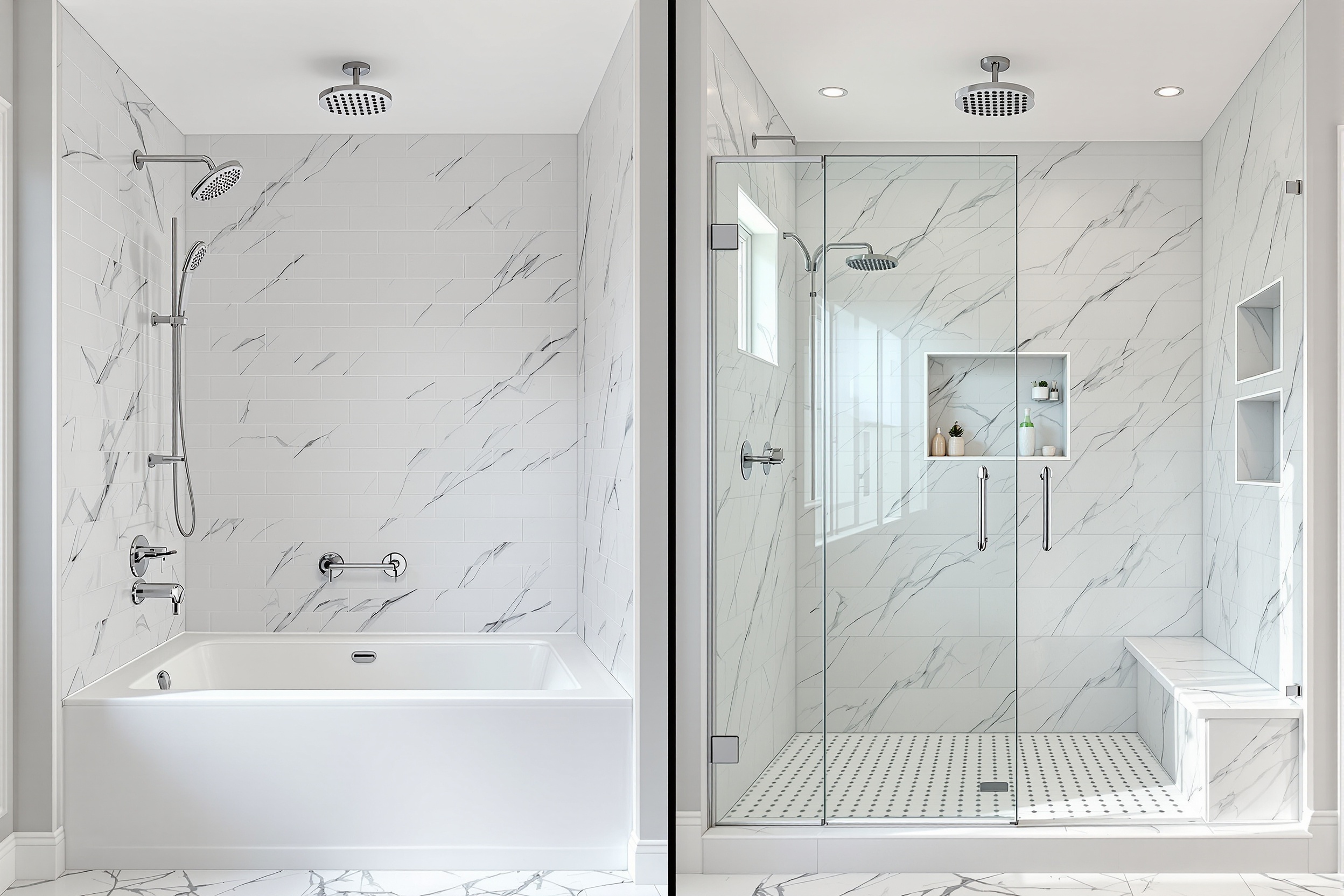
A walk-in shower is the better choice if you want a spa-like, low-maintenance bathroom and rarely bathe, while a tub-to-shower conversion makes sense if you have a small bathroom, want to keep resale value high in a family neighborhood, or need a budget-friendly upgrade. The right answer really depends on your household, your bathroom’s footprint, and whether you’re remodeling for yourself or for future buyers in Alpharetta, Milton, Roswell, Duluth, or Johns Creek. Both options can be done well or poorly, so the details matter more than the label.
What’s the Real Difference?
A walk-in shower is typically a curbless or low-curb enclosure built into a dedicated footprint, often larger than a standard tub alcove, with a tiled pan, glass panel or door, and built-in niches or benches. A tub-to-shower conversion removes an existing tub and replaces it with a shower system inside that same 60-inch alcove, usually reusing the existing plumbing rough-in and framing footprint. Converting is generally faster and less invasive; building a true walk-in shower from scratch (especially a curbless one) often means adjusting the subfloor, drain location, and sometimes the door frame.
Space and Layout
If your bathroom is small or you only have one full bath in the house, keeping at least one tub (even in a hall bath) is worth considering for resale, especially in family-oriented Alpharetta neighborhoods. Primary suites with two bathrooms are the ideal candidate for going full walk-in, since buyers still expect a tub somewhere in the home.
Cost Comparison
Every bathroom is different once we account for waterproofing, tile selection, glass, and any plumbing moves, so pricing should come from an itemized written proposal rather than a generic average. That said, here’s the general logic:
- Tub-to-shower conversion: Usually less demolition and no footprint change, which tends to keep labor and material costs lower than a full walk-in build-out.
- Walk-in shower: Costs more when it involves relocating a drain, enlarging the opening, or going curbless, but it can add long-term value in a primary suite.
- Flooring tie-ins: If your bath remodel connects to hallway or bedroom flooring, ask about matching materials — see our flooring cost guide for current hardwood, LVP, and refinishing price ranges in the Atlanta market.
Whichever direction you choose, get a written, itemized quote before signing anything. We provide free consultations and will beat any comparable written quote (same scope and materials) by 5%, so you can compare confidently.
Accessibility and Aging in Place
Curbless walk-in showers are the clear winner if accessibility is a priority — for aging parents, mobility concerns, or simply future-proofing the home. A zero-threshold entry, a built-in bench, and a handheld showerhead make daily use easier and safer than stepping over a tub wall. If accessibility is the driving reason for your remodel, a walk-in shower conversion is almost always worth the extra planning.
Resale Value in Alpharetta
Local buyer expectations matter. In move-up family neighborhoods across Alpharetta and Johns Creek, having at least one tub in the home (even a simple tub/shower combo in a secondary bath) is often a checklist item for buyers with young kids. In luxury primary suites, however, a well-built walk-in shower is now the expected upgrade, and an outdated tub can actually work against you. If you’re unsure which strategy fits your specific street or subdivision, a quick walk-through during a consultation can help you weigh resale against personal preference.
Maintenance and Long-Term Durability
Showers with proper slope, sealed grout, and quality glass require less scrubbing than an aging fiberglass tub surround, but they do need periodic grout and seal maintenance. Tub conversions with one-piece acrylic or solid-surface wall systems can actually reduce maintenance even further, since there’s no grout to seal. If low-maintenance living is your top priority, ask about non-grout wall panel systems during your bathroom consultation.
How This Fits Into a Larger Remodel
Bathroom work rarely happens in a vacuum. If you’re also refreshing bedroom or hallway flooring, replacing kitchen counters, or repainting adjoining rooms, it’s worth planning the whole project together. We run floors, kitchen, bath, and paint work under one crew and one contract, which keeps scheduling simple and avoids the finger-pointing that happens when multiple contractors touch the same house. Our bathroom and shower remodeling team handles both walk-in builds and tub conversions, and our whole-home remodeling service can bundle in kitchen or flooring work if you’re tackling more than one room this year.
If dust and mess are a concern — especially with hardwood floors nearby that you don’t want scratched or covered in debris — our sanding and refinishing work is also done with dust-contained equipment, which matters if your bathroom project is happening alongside a hallway floor refresh.
Questions to Ask Before You Decide
- Is this the only full bathroom in the house, or is there a tub elsewhere?
- Does anyone in the household need step-free access now or in the next 5-10 years?
- Are you remodeling to enjoy the space yourself, or primarily to prep for resale?
- Will the drain need to move, and does the subfloor allow for a curbless pan?
- Do you want to tie this project into flooring, kitchen, or paint work happening elsewhere in the home?
Answering these honestly will point you toward the right choice faster than any general rule of thumb. We serve homeowners throughout Alpharetta and the surrounding area — see our full service areas if you’re in Milton, Roswell, Duluth, or Johns Creek and want a local team familiar with the housing stock in your neighborhood.
FAQ
Is a walk-in shower always more expensive than a tub-to-shower conversion?
Not always, but it’s common. A simple conversion that reuses the existing footprint and drain is usually less expensive than a walk-in build that requires moving plumbing or enlarging the opening. Get an itemized proposal to compare your specific scope.
Should I keep at least one tub in my house?
If you have children, plan to sell within a few years, or live in a family-heavy neighborhood, keeping one tub somewhere in the home (even a secondary bath) is a reasonable resale safeguard, even if your primary suite goes full walk-in.
Can I combine a shower remodel with new bathroom flooring?
Yes, and it’s often more efficient. Coordinating shower waterproofing, tile, and flooring in one project avoids redoing work twice and lets one crew manage the entire timeline.
Ready to compare a walk-in shower and a tub-to-shower conversion for your specific bathroom? Book a free consultation or call 470-352-1156 for an itemized proposal.