
Black pet urine stains look like surface damage, but they usually run deeper. Our short answer is simple: sometimes, but not always.
When black urine stains hardwood, the finish is rarely the whole problem. The urine can soak into the wood fibers, react with the tannins, and leave dark marks that sanding may only lighten. Before we decide whether to sand, bleach, repair, or replace, we need to understand what caused the color in the first place.
Why black pet urine stains go deep
Fresh accidents can sit on top of a finish for a short time. Old accidents do not. Once moisture slips through seams, scratches, or worn finish, it reaches raw wood. That is when the stain turns from yellow or brown to black.
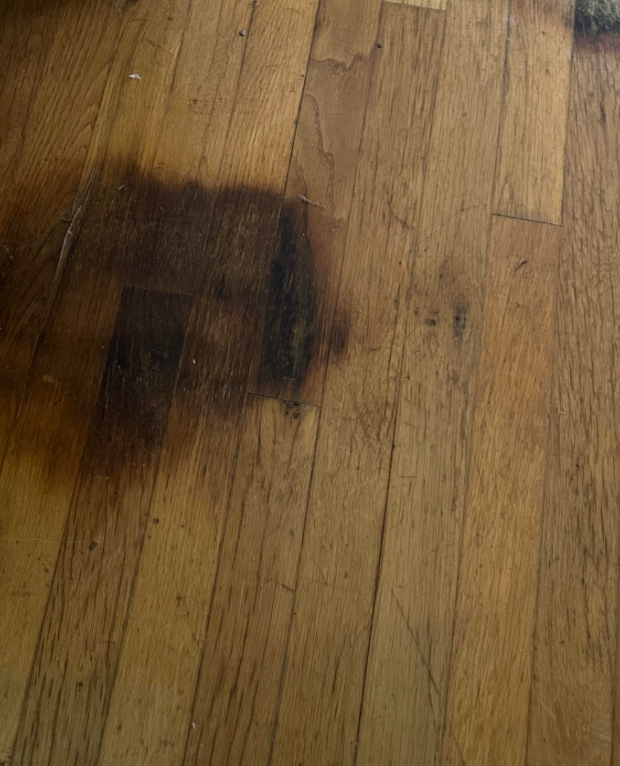
The dark color comes from a chemical reaction inside the board, not from dirt sitting on top. In oak, this can happen fast because tannins react strongly. That is why black urine stains hardwood floors develop often stay visible even after aggressive cleaning. For a deeper explanation of how pet stains behave in oak, we like Fine Homebuilding’s advice on pet stains in oak.
We watch a few clues during inspection. A black ring around board seams often means the liquid moved sideways through the joints. If the finish still looks intact while the wood is dark, the stain is under the finish, not on it. Soft wood is a worse sign because softness points to decay, and sanding cannot rescue rot.
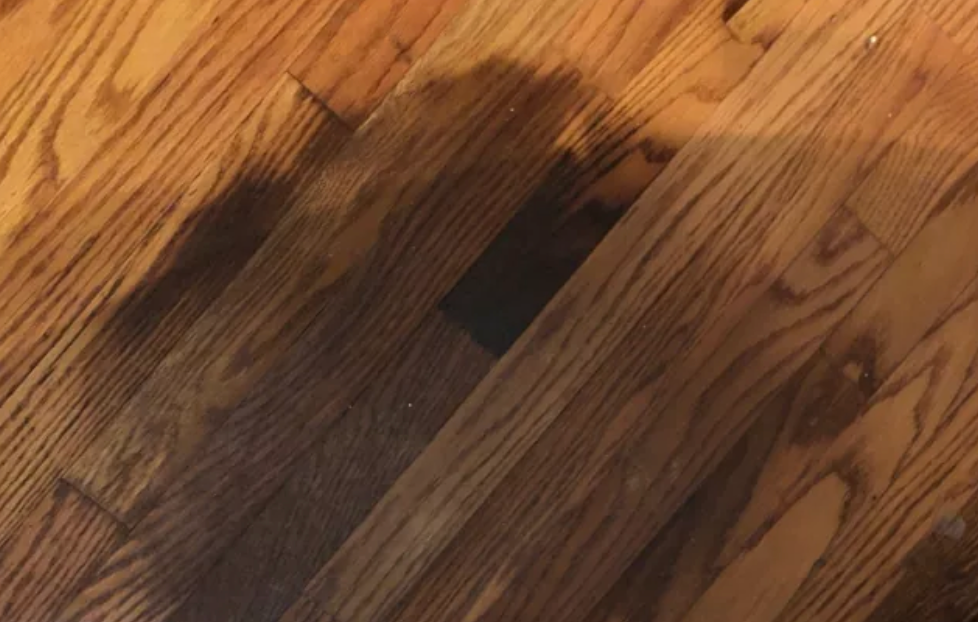
This is why sanding is not magic. A floor sander removes only a thin layer of wood. If the stain lives below that layer, the machine reveals cleaner wood around the spot while the black mark stays put. Odor is another clue. If the smell remains after cleaning, the moisture may have reached the board edges, subfloor, or both.
When sanding works, and when it stops helping
Sanding can work when the stain is shallow, the floor is solid hardwood, and the boards still have enough thickness. In those cases, we often sand the affected area, evaluate the color, and then decide whether bleaching or refinishing can finish the job. Our professional floor sanding service is built around that kind of step-by-step inspection, not guesswork.
>
If the stain stays black after the first sanding passes, the damage is usually inside the board, not on the finish.
Sometimes we can improve the look without erasing every trace. A stain may fade enough after sanding that a wood bleach treatment and a darker stain color can help it blend into the room. That works best when the damage is isolated and the surrounding floor already needs refinishing. If black marks appear across several boards, spot treatment can leave a patchwork look, and a full-room plan usually looks better.
That is the point where more sanding can become a bad plan. Too much sanding thins the boards, changes the floor profile, and still may not erase the mark. Engineered hardwood needs even more care because its real wood layer can be thin. One heavy pass can create a bigger problem than the stain itself.
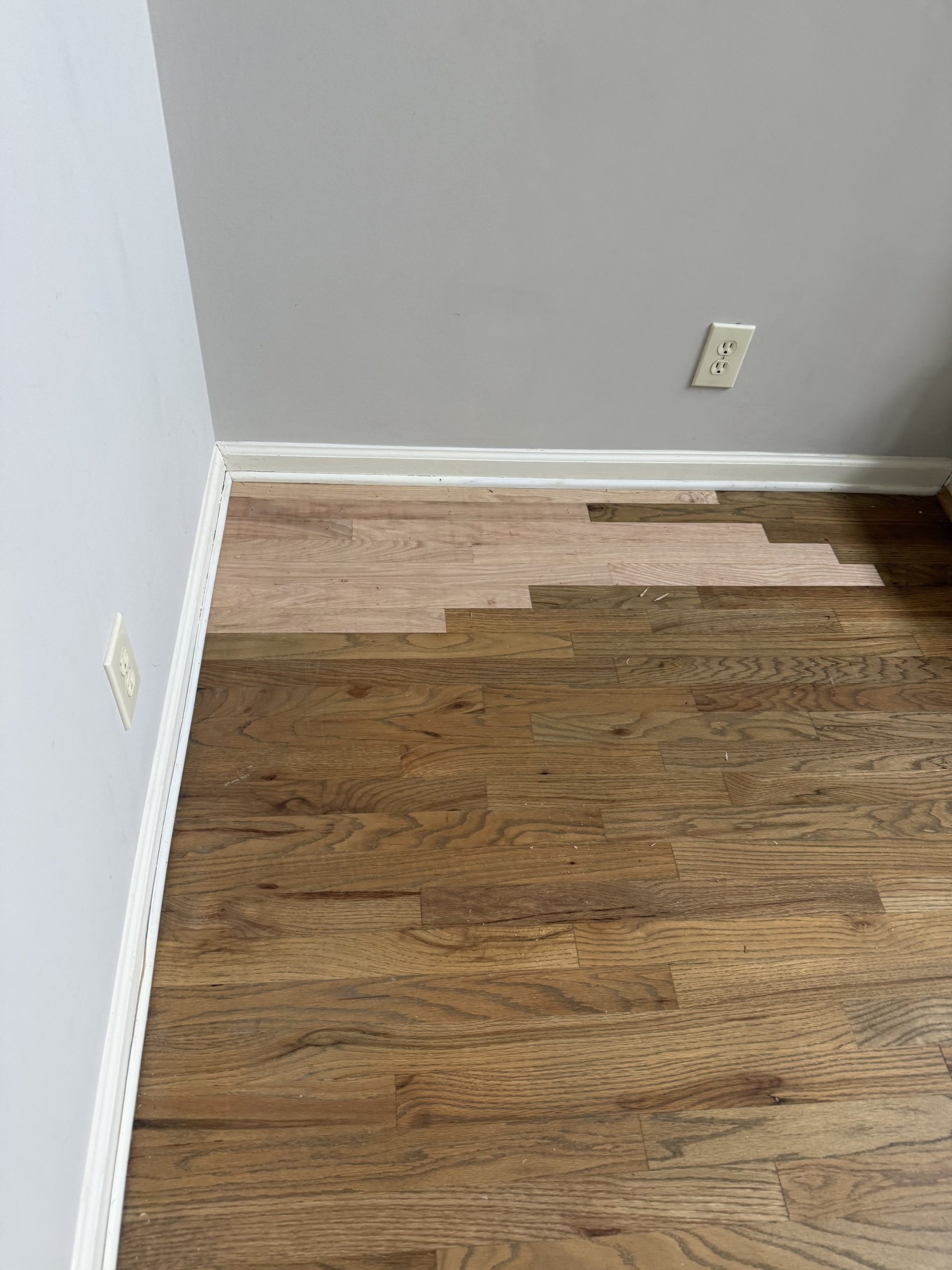
In many homes, the better fix is board replacement. If one pet-favorite corner has deep damage, we can remove the affected boards and blend the repair into the surrounding floor. Our guide to hardwood floor repair for pet damage explains when that route makes more sense than a full-room refinish. We also look beyond the stain. Black spots near baseboards, vents, or thresholds often signal repeated exposure, and sanding the surface alone will not solve the source.
The best repair depends on the room, not the hope
We start with the least destructive option. First, we test how deep the stain runs. Next, we confirm whether the floor is solid or engineered. Then, we decide whether sanding, bleaching, spot repair, or replacement gives the cleanest result with the least risk.
We also caution homeowners against quick internet fixes. Household bleach, vinegar, and repeated soaking can spread the stain or weaken the wood fibers. Renting a sander without checking board thickness can do the same. A good inspection saves material, time, and frustration because it tells us what the floor can safely handle before we cut into it.
That practical approach matters in real homes because pet damage rarely stays isolated. A stained hall may connect to a bath threshold, stair landing, or basement entry. When we need one plan across connected spaces, our Alpharetta home remodeling services help us coordinate flooring and finish work so the repair does not look patched in.
Many homeowners call us first as a local hardwood flooring contractor in Alpharetta Ga. Later, the same job can touch other rooms. We also help as a local bathroom remodeling contractor in Alpharetta and Milton, the best local kitchen remodeling contractor in Alpharetta, a tile installation company Alpharetta homeowners can rely on, a Stair remodeling company Alpharetta families trust, a local stair contractor alpharetta for worn treads, and a local basement finishing contractor in alpharetta and milton when damage ties into a lower level. Some clients also want one team that acts as a top hardwood floor sanding contractor in Alpharetta and a Local kitchen remodeling contractor in Alpharetta so finishes match from room to room.
For fresh accidents, fast cleanup still helps. This hardwood urine cleanup guide is a useful starting point for limiting future damage. Still, once a stain turns black, a site inspection is the safest next move. We offer free estimates at 470-352-1156, and if you show us any written quote from another contractor, we beat it by 5 percent for comparable scope and materials.
The bottom line
Sanding can remove some black pet urine stains, but it cannot erase chemistry that has sunk deep into the wood. The darker and older the stain, the more likely we need bleaching, board replacement, or a broader repair plan.
A hardwood floor should not be sanded on hope alone. When we inspect the stain first, we protect the floor, control the cost, and choose the fix that will still look right a year from now.