
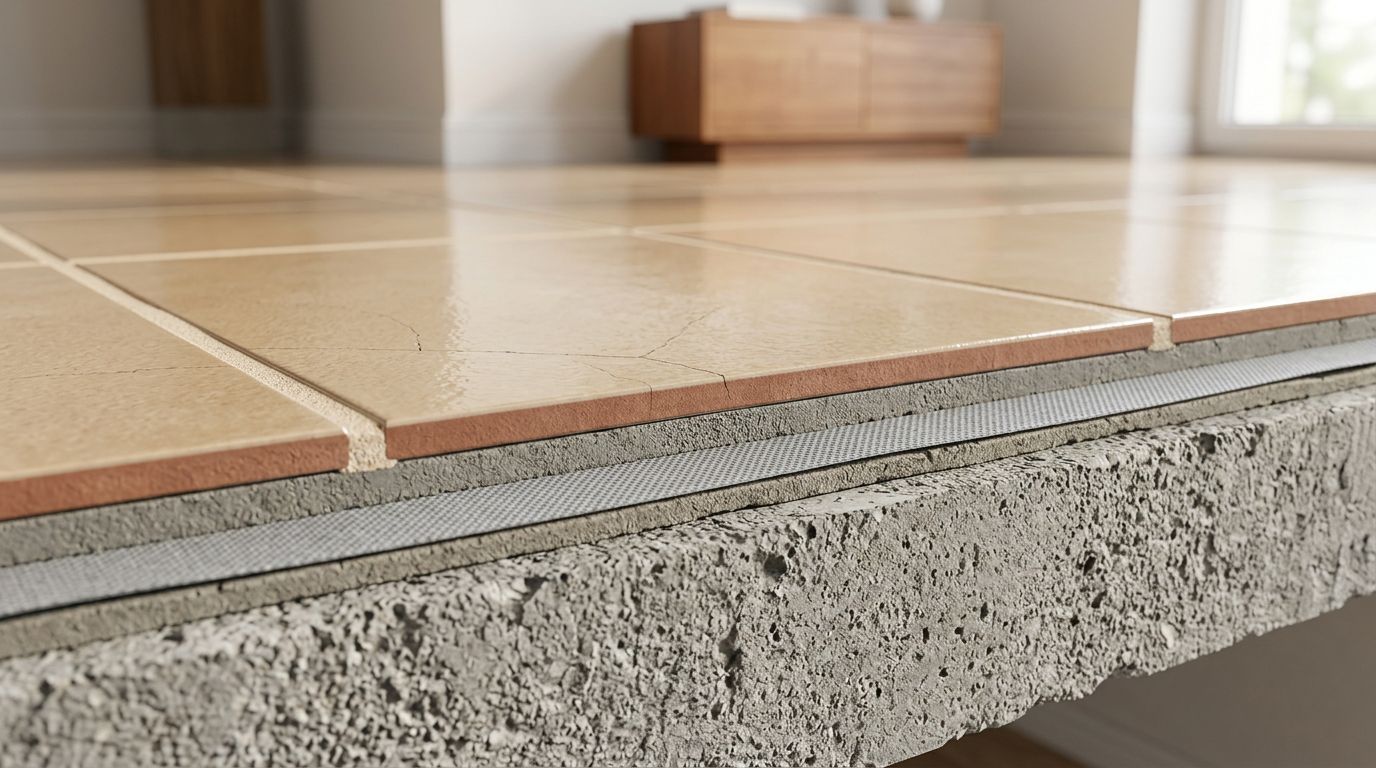
A tile floor can look like stone armor, yet it still depends on what lies beneath. When the subfloor shifts or a slab develops hairline cracks, tile and grout often show the damage first.
That is where a crack isolation membrane earns its keep. Still, not every tile job needs one, and using the wrong product (or skipping key prep) can waste money without solving the real problem. Below, we lay out when a membrane is a smart requirement, when it is optional, and when it will not help at all.
What a crack isolation membrane does (and what it does not)
A crack isolation membrane is a thin layer installed under tile to help separate minor in-plane substrate movement from the tile assembly. Think of it like a shock absorber between the hard tile and a moving base.
Most homeowners first notice the problem as a straight grout crack that returns after repairs. Sometimes a tile sounds hollow, then corners start to chip. Those are classic signs that the tile is being forced to follow movement below.
A membrane helps in these common ways:
- It bridges small cracks in concrete so they do not “telegraph” into tile.
- It adds limited flexibility within a system that is otherwise rigid.
- It can reduce risk where the slab or underlayment sees seasonal movement.
However, it is not magic, and it is not structural. A crack isolation membrane does not fix a moving foundation, a bouncy floor system, or a poorly fastened subfloor. It also does not replace movement joints. Tile still needs room to expand and contract at perimeters and in large areas.
For an industry definition tied to the ANSI standard (A118.12), we like the explanation in this crack isolation membrane overview, because it highlights the “minor” movement part that people often miss.
When we recommend a crack isolation membrane (the situations that justify it)
We treat membrane decisions like insurance. If the risk is low, the policy may not be worth it. If the risk is known, we would rather prevent the failure than repair it later.
Here are the situations where we most often recommend a crack isolation membrane for tile floors:
- Concrete slabs with hairline cracking: Shrinkage cracks are common, even in newer homes. Tile does not like surprise movement.
- New concrete: Slabs can continue to shrink and cure for a long time. A membrane can help, provided moisture conditions allow the installation.
- Large-format tile: Bigger tile can span more variation, then fail louder when stresses build. Flatness and coverage matter more, and membranes can add protection.
- High-traffic areas: Kitchens, entries, and hallways take repeated loading. Over time, small substrate issues become visible.
- Transitions and patchwork substrates: When we tile over areas that were patched, ground, or repaired, a membrane can reduce risk at those change points.
Before we decide, we check three fundamentals: substrate flatness, crack type, and movement control. That includes planning for soft joints per recognized guidance such as TCNA EJ171 (movement accommodation). It also means reading the membrane manufacturer’s requirements for mortar type, coverage, and cure times. For a straightforward primer from a major manufacturer, see Mapei’s crack-isolation basics.
To make the choice easier, here is a quick reference we use during estimates:
| Floor condition we see | Membrane a good idea? | Why it matters |
|---|---|---|
| Hairline slab cracks, stable | Yes | Helps prevent crack telegraphing |
| Multiple random cracks, unknown cause | Usually | Needs evaluation and movement plan |
| Structural crack with vertical displacement | No | Tile system needs structural repair first |
| Wood subfloor with bounce | Not until fixed | Deflection breaks tile and grout |
| Small bathroom on stable slab | Often optional | Risk can be low if prep is excellent |
If we are tearing out old floors first, we also plan for what the demo may reveal, because hidden cracks and thinset ridges change the plan fast. Our field notes on planning floor demolition for tile prep in Alpharetta explain what we commonly find under old tile and why it affects membranes.
When a membrane will not save the tile (and what does)
Some tile failures look like “cracking,” but the cause is not a simple slab hairline. In those cases, a membrane may only delay the problem.
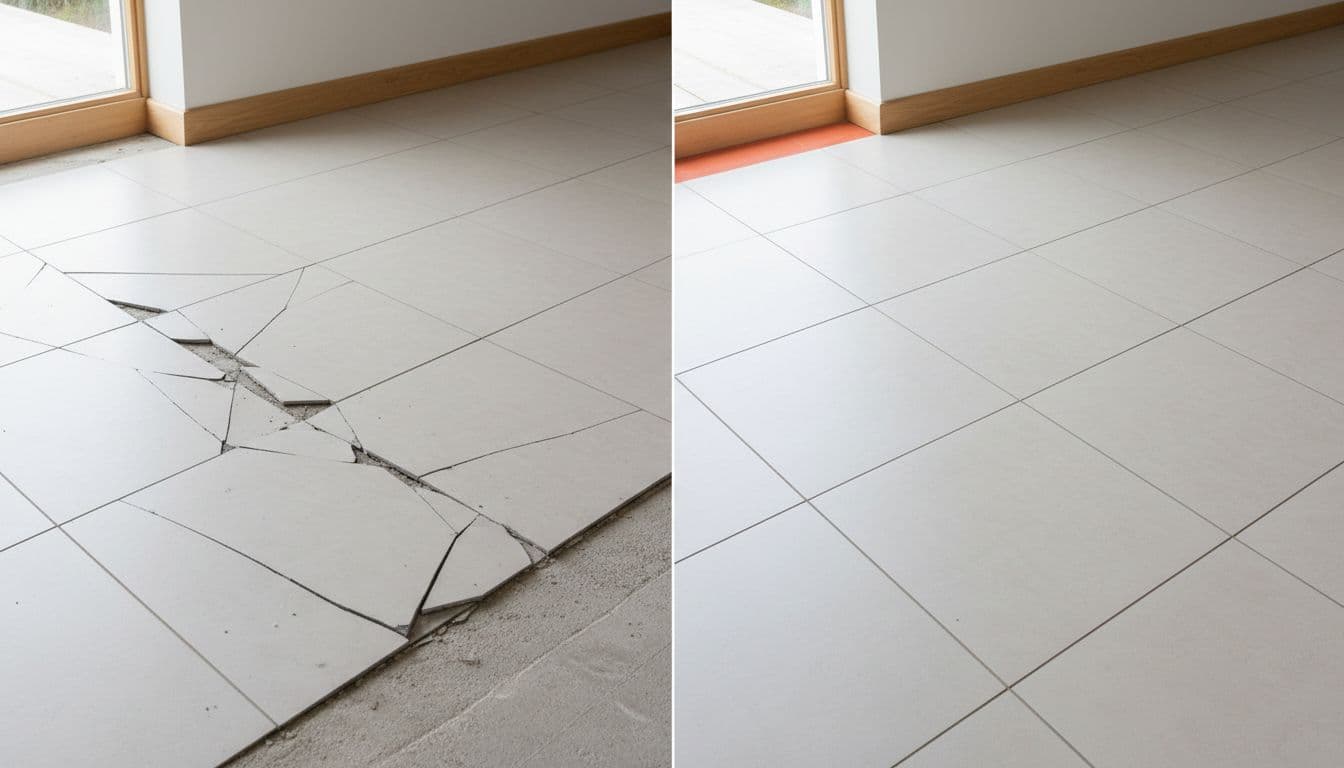
A membrane is not the right tool when:
The crack is structural or moving vertically. If one side of a crack sits higher than the other, tile will likely fail. The slab or structure needs repair guidance first.
The floor system flexes. Tile and grout do not tolerate bounce. On wood framing, we focus on stiffness, fastening, and proper underlayment before discussing membranes.
There are no movement joints. Tile expands, even indoors. Without perimeter gaps and planned soft joints, stress builds until grout or tile releases.
Coverage is poor. In 2026 best practice discussions, installers still point back to mortar coverage targets, with higher coverage expected in wet areas. In other words, a membrane cannot make up for voids under tile.
If we could summarize it in one line: membranes help with minor in-plane movement, while structure, prep, and movement joints prevent most avoidable failures.
Homeowners also ask about tiling directly over concrete. That can work, but it changes what we test for, including moisture, flatness, and crack history. For a homeowner-friendly walkthrough, see this guide to tiling over concrete floors.
Getting the system right: product choice, installation, and who to hire
A crack isolation membrane only performs when the full tile system works together. We match membrane type to the floor, then we follow the manufacturer’s mortar and trowel guidance. We also plan layouts that avoid tiny slivers, because small cuts crack sooner under stress.
This is where contractor selection matters. Many clients reach out while comparing the best flooring contractor in alpharetta ga options, and we encourage them to ask one direct question: “How will you handle existing slab cracks and movement joints?” Clear answers beat vague promises every time.
Because many projects overlap, we also coordinate tile work with adjacent scopes. For example, a bathroom remodeling contractor in alpharetta and Milton must align shower waterproofing details with floor movement planning. Kitchens matter too, because heavy appliances and long runs of tile raise risk. When clients want one team, they often ask for the best local kitchen remodeling contractor in alpharetta or the best kitchen contractor alpharetta homeowners rely on for consistent scheduling.
Flooring and stairs often connect as well. A tile entry that meets a stair remodel needs clean transitions and stable edges. In those cases, we coordinate with our Stair company Alpharetta crews so trim, nosings, and height changes do not create stress points. If you are searching for a stair contractor alpharetta homeowners trust, we recommend asking how stair structure and finished-floor height will be handled before work starts. For wood floors, we also see clients pair tile upgrades with refinishing plans, and they look for a top hardwood floor sanding contractor in alpharetta to keep sheen and height consistent across rooms.
Finally, if you are simply looking for a tile installation company Alpharetta residents can call for straightforward answers, we keep it simple: call us at 470-352-1156 for a free estimate. If you show us any existing written quote from another contractor for the same scope and material quality, we beat it by 5%. Many homeowners also tell us they chose us because we communicate clearly, which is why we are often mentioned among the best flooring company alpharetta and milton homeowners recommend.
Conclusion
Tile is durable, but it is not forgiving. When the substrate has minor cracking or predictable movement, a crack isolation membrane can be the difference between a long-lasting floor and a recurring repair. On the other hand, when the issue is structural, the right fix starts below the membrane.
If you want a clear plan for your tile, stairs, or full remodel, call 470-352-1156 for a free estimate. Bring any written quote, and we will beat it by 5% for comparable scope and materials.