
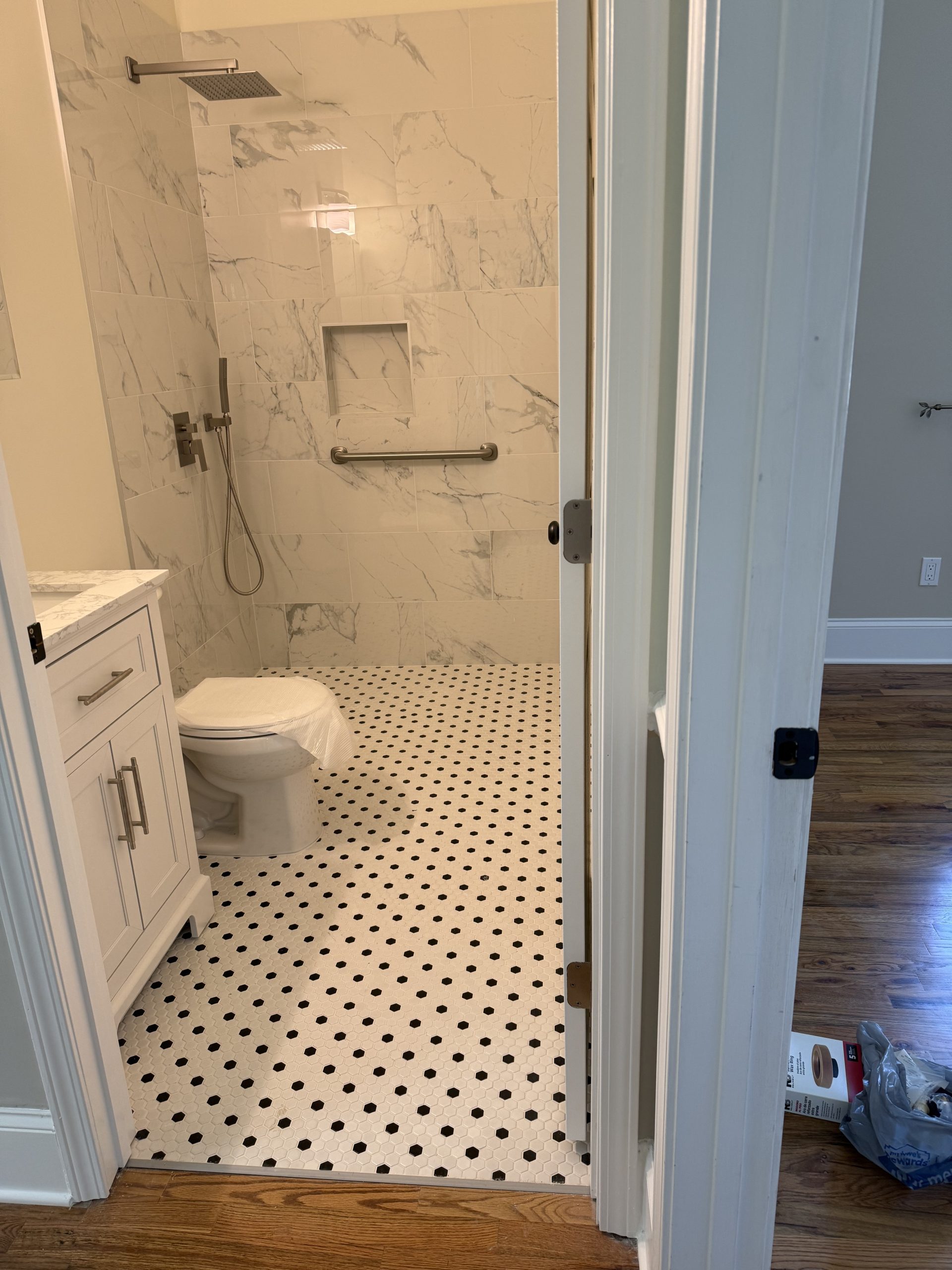
A curbless shower conversion looks simple when it’s finished, a clean tile floor that flows right into the shower. In an older home, it can also be one of the easiest ways to invite water into framing, subfloors, and ceilings if the hidden details are rushed.
We see the same pattern in many Alpharetta and Milton homes: the bathroom was built before today’s waterproofing systems were common, the floor isn’t as stiff as it needs to be for tile, and the drain location forces tight slope math. The good news is that most problems are predictable, which means they’re preventable.
Why older homes make curbless showers harder than they look
Older bathrooms often have framing and plumbing choices that were fine for a tub, but risky for a zero-threshold shower.
Common “old house” conditions we plan for:
Shallow floor depth: Many bathrooms don’t have enough room to recess a shower base without touching joists or plumbing.
Not-quite-flat floors: A wavy subfloor can hide low spots that hold water, even when the tile looks level.
Aging materials: Water-damaged subfloor patches, soft plywood at the toilet flange, or old mortar beds that have lost bond.
Cast iron drains: Great for longevity, not great for easy relocation, and they can complicate drain swaps.
Curbless also changes how water behaves. A curb is a speed bump. Without it, the floor outside the shower becomes part of the water-control plan.
Floor framing checks we do before we ever talk tile
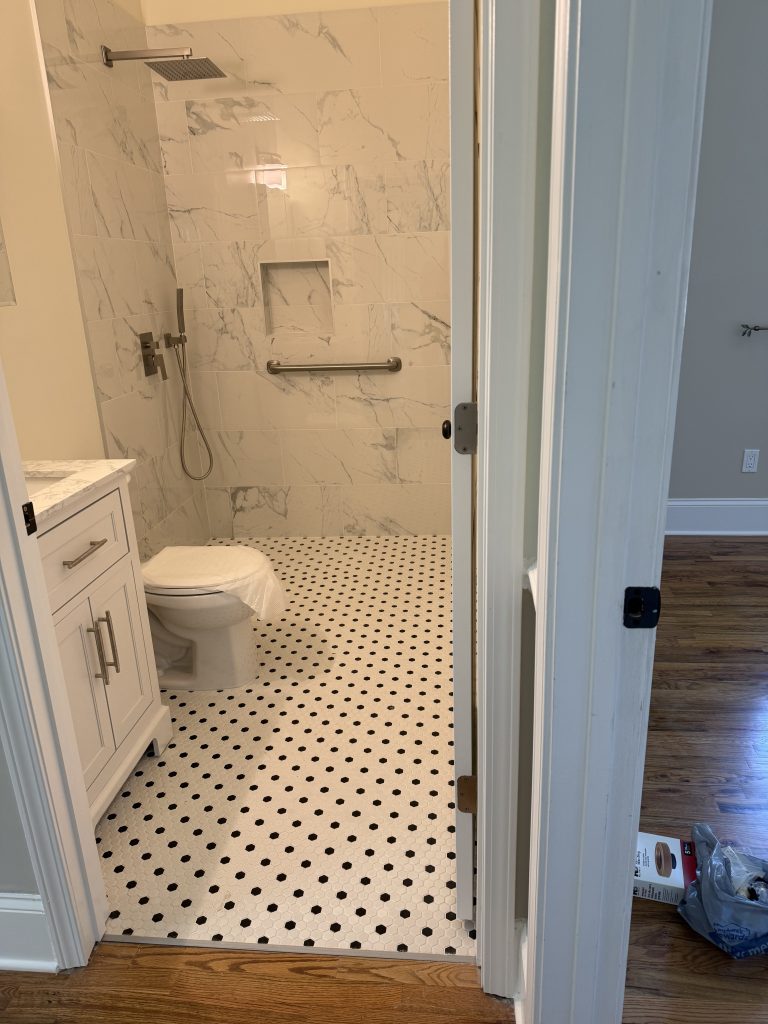
Tile is not forgiving. If the floor system flexes, grout cracks, tiles loosen, and water finds a path. That’s why our first step is a framing reality check, not a design board.
Key items we verify in older homes:
Joist size, spacing, and span: A 2×8 at a long span behaves very differently than a 2×10 at a shorter span. We check what’s actually there, not what we hope is there.
Deflection and bounce: If the floor feels springy now, it won’t improve after tile. Curbless showers add weight (mud bed, tile, glass), so the structure must handle it.
Notches and holes: Older plumbing repairs sometimes leave joists over-notched near the drain line. That area is already stressed, and a recessed shower can make it worse.
Subfloor thickness and condition: We look for swelling, delamination, and past leaks. Weak plywood around an old tub drain is a frequent surprise.
When we need to stiffen the floor, solutions can include added blocking, sistering joists, upgrading subfloor layers, or changing the shower base approach. The correct fix depends on what we find when things are open.
If you’re also updating surrounding finishes, it helps to plan tile choices and prep early. We often share this guide on how to prepare for shower tile installation so the jobsite stays clean and the work moves faster.
Slope math that prevents puddles (and panic)
A curbless shower works because gravity never takes a break. The standard target we build around is 1/4 inch of fall per foot toward the drain. That number sounds small until you measure it across a real bathroom.
A simple example: if the farthest corner of the shower is 3 feet from the drain, we need about 3/4 inch of drop from that corner to the drain. That drop must be consistent, not a dip near the entry and a hump at mid-span.
Two choices affect the math more than anything:
Drain placement: A centered drain usually needs a four-way slope. A linear drain can use a one-way slope, which is often easier for large tile.
How we create the recess: In older framed floors, the recess depth is limited. If we can’t go down enough, the bathroom floor may need to come up slightly outside the shower to keep a true zero-threshold transition.
For homeowners who like to verify the basics, this explanation of proper shower drain slope per foot is a helpful reference. We still confirm slope on site with levels, straightedges, and test water.
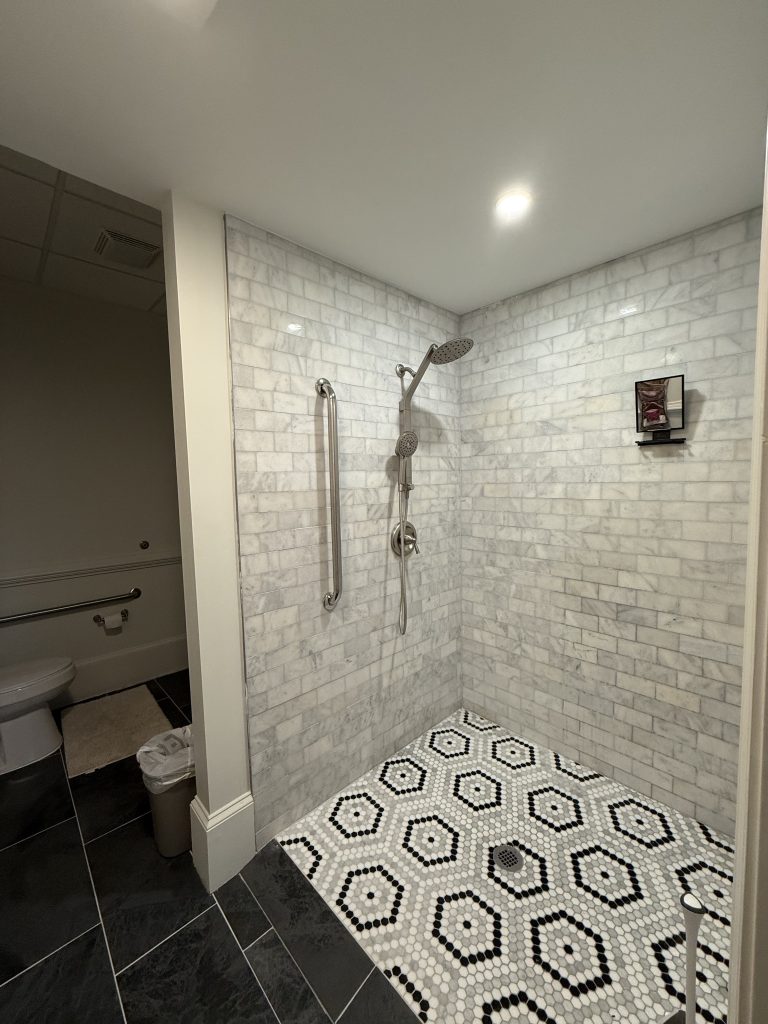
Waterproofing layers: where most “mystery leaks” really start
When people say, “The tile is leaking,” the tile is rarely the problem. Leaks usually start at transitions, penetrations, and corners.
The most common leak origins we watch for in curbless work:
Drain connection: The drain flange and membrane connection is a zero-tolerance area. A small void can become a steady drip.
Corners and seams: The wall-to-floor change of plane moves over time. If seams aren’t reinforced and detailed correctly, water finds the gap.
Shower entry: In a curbless shower, the entry is a “water shed” zone. The membrane must extend correctly beyond the wet area, and the slope can’t flatten at the doorway.
Fasteners through wet zones: Benches, curbs (if partial), or glass anchors can puncture waterproofing if planned poorly.
This is also why we care about installation standards, not just products. If you want a plain-language overview of what quality tile work should include, we like this write-up on quality tile installation standards. It aligns with what we see in the field: prep and waterproofing decide the life of the shower.
What a correct zero-threshold finish should look like
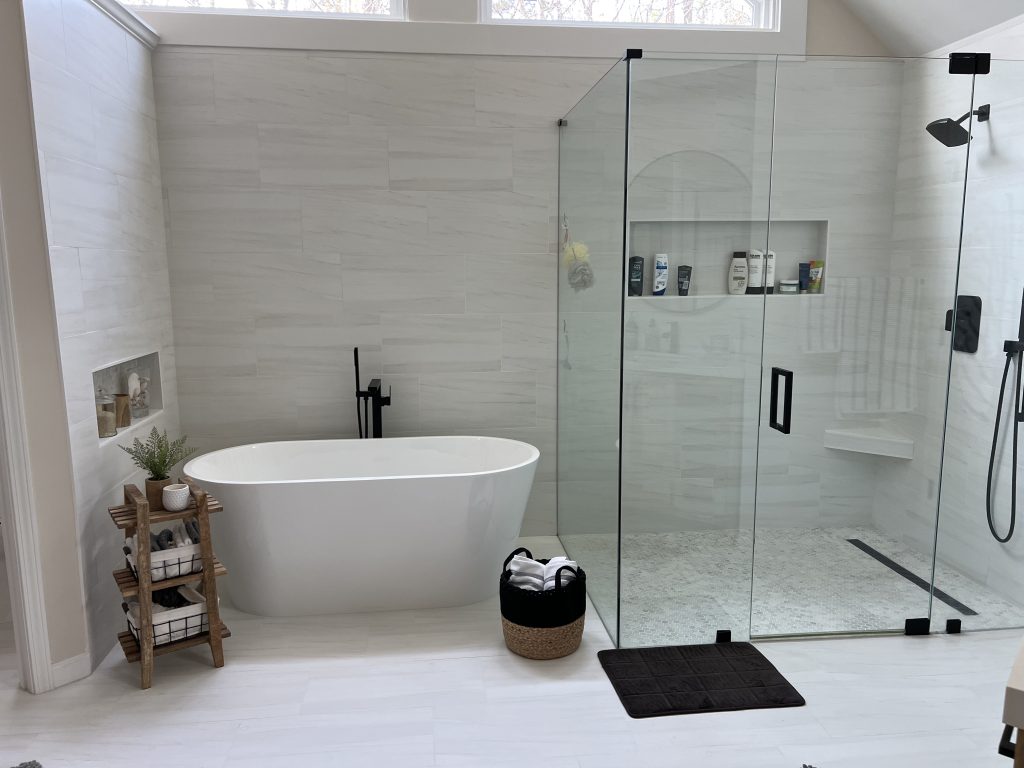
A finished curbless shower should feel like a gentle ramp you don’t notice. Water should move to the drain without racing toward the vanity.
We also plan the rest of the bathroom around the shower, because finishes connect. If you need a tile installation company Alpharetta homeowners trust for shower floors and bathroom tile, our bathroom tile team details what we do on our professional bathroom tiling services page.
Many homeowners pair a bathroom update with nearby upgrades. If you are also comparing a top hardwood floor sanding contractor in alpharetta or the best flooring company alpharetta and milton residents recommend for consistent transitions between rooms, we coordinate heights so new floors do not create trip points.
Stairs matter too. When wet bathrooms meet stair landings, safe, solid transitions are not optional. If you are evaluating a Stair company Alpharetta homeowners call for tread upgrades, or a stair contractor alpharetta families trust to tighten squeaks and improve safety, our stair remodeling services can be planned alongside the shower schedule.
Conclusion: a curbless shower should never be a gamble
A curbless shower conversion succeeds when the structure is stiff, the slope is measured, and the waterproofing is treated like the real shower pan, because it is. In older homes, most failures trace back to the same few areas: framing shortcuts, flat spots, and weak drain or seam details.
If you want a clear plan and pricing, call us at 470-352-1156 for a free estimate. If you show us any written quote from another contractor for the same scope and materials, we’ll beat it by 5%. Whether you’re hiring a bathroom remodeling contractor in alpharetta and Milton, the best local kitchen remodeling contractor in alpharetta, or the best kitchen contractor alpharetta homeowners rely on, we’ll help you choose details that protect your home, not just the tile.