
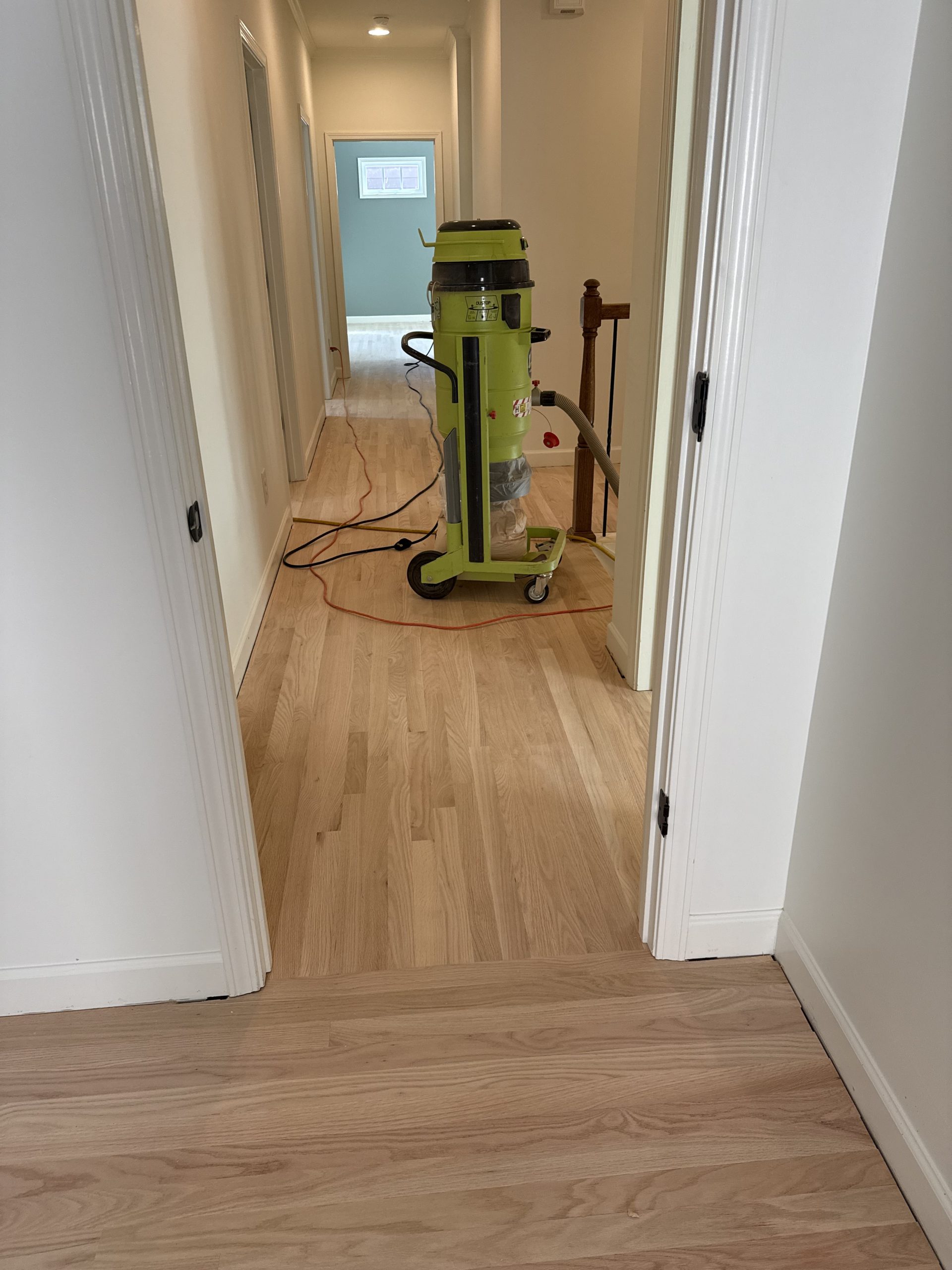
If you’re in Alpharetta looking into hardwood floor refinishing in Alpharetta, know that your hardwood floors can handle a lot, kids, pets, parties, and years of foot traffic. What they can’t handle forever is oversanded hardwood floors, where too much wood gets removed in the name of “making it perfect.”
Over-sanding usually doesn’t look dramatic on day one. It shows up later as uneven stain, weak boards, noisy movement, or a floor that seems to age overnight; hardwood floor restoration aims to repair these oversanded boards before the damage worsens.
In this guide, we’ll explain what over-sanding looks like in real homes, why it happens, and what we should do now so the next refinish doesn’t turn into a replacement project.
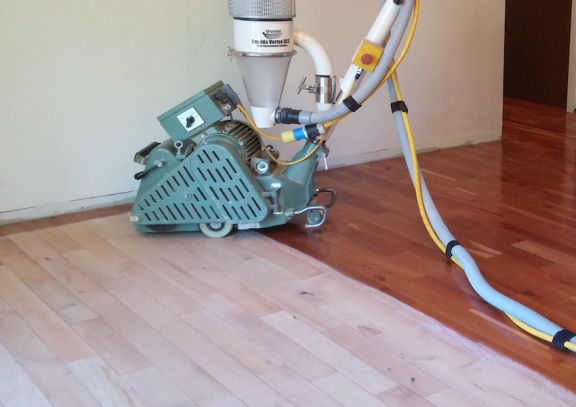
Fresh hardwood floor sanding can look clean, but the wrong approach can remove more wood than your floor can spare.
What “over-sanded” really means (and why it matters)
A proper refinishing process removes the old finish and smooths the surface. Over-sanding removes structure, not just scratches.
That matters because solid oak hardwood floors, like traditional flooring, only have so much “wear layer” available. Once that layer gets thin, problems spread fast: fasteners get close to the surface, boards flex more, edges chip easier, and future sanding options shrink.
A second over-sanding mistake is grit misuse. Sanding too fine for too long can burnish the surface and pack fine dust into the pores. The result is a floor that looks smooth but won’t take stain evenly.
If we’re unsure whether a floor can handle another sanding and refinishing, we treat it like a thickness question first, not a cosmetics question. This trade-focused overview is helpful context: How do you know if a wood floor can be sanded again?
The clearest signs your hardwood floors are over-sanded
Over-sanding leaves clues. Some are visual, some you feel underfoot, and some appear only after stain or finish goes down.
Visual warning signs professional technicians see during inspection
Hardwood floor sanding is meant to remove scratches and dents from the surface, but overdoing it produces these telltale signs.
Dished-out areas (low spots): These look like shallow bowls where the sander stayed too long. Light reflects differently across them.
Edges that look “flattened”: Many prefinished floors have micro-bevels. After too many sandings, those bevels disappear unevenly, and the floor can look oddly wide and washed out.
Fasteners telegraphing through: If we can see nail heads, staples, or dark pin points approaching the surface, the floor is getting thin.
Sudden color shifts board-to-board: A single over-sanded board often turns lighter than neighbors, even before stain.
Feel-and-sound signs homeowners notice
Waves or ripples: If it feels like gentle speed bumps, it may be chatter marks or uneven sanding.
Splintering at seams: Thin edges chip easier. You might feel roughness where boards meet.
More squeaks than before: Noise isn’t always sanding-related, but thin boards flex more and can exaggerate movement.
Stain and finish problems that point to over-sanding
Blotchy staining or pale “dead” patches: When pores clog with fine dust or the surface gets burnished, stain can sit on top instead of soaking in. This DIY explanation of pore-clogging is a useful reference point: What happens when you over-sand wood (and how to fix it)
Seal coat looks uneven: A floor that was sanded inconsistently can “drink” finish in some areas while repelling it in others.
Here’s a quick way we summarize the symptoms during walkthroughs:
What we noticeWhat it often indicatesWhat we do nextLow, scooped areasToo much hardwood floor sanding in one spotCheck thickness, discuss board repair or blend planNail/staple shadowsWear layer is getting thinInspect for remaining sanding lifeBlotchy stainBurnished surface or clogged poresAdjust prep plan, test stain, consider new color optionsRipples across boardsChatter marks or rushed grit sequenceCorrect sanding pattern if wood thickness allows
Quick checks we do before anyone sands again
During our in-home consultation before we recommend another refinish, we confirm the floor can safely take it. If we skip this step, we risk making a bad situation permanent.
Thickness check at vents and thresholds: Floor registers and doorway edges often reveal how much wood is left.
Engineered vs solid confirmation: Engineered hardwood like white oak may have a limited wear layer. A solid floor usually has more sanding life, but not unlimited.
Fastener proximity scan: If fasteners are close, aggressive sanding can expose them.
Flatness and movement: Over-sanding sometimes masks deeper issues like subfloor bounce that may require hardwood floor repairs. If the floor moves, sanding won’t fix it.
When we do recommend refinishing, we explain the sanding plan in plain terms, including grit sequence and edge work. For homeowners comparing options in hardwood floor refinishing Alpharetta, our overview of professional hardwood floor sanding services helps clarify what a controlled, careful refinish should include.
What to do now if you suspect over-sanding
If you think your hardwood flooring project is over-sanded, the goal is to stop losing wood and stabilize what’s left.
If the issue is mostly cosmetic: We may be able to blend with a light screen and recoat using a protective finish, or a controlled re-sand of the full field (only if thickness allows). Spot fixes alone often show, so we set expectations upfront.
If boards are thin or damaged: Select board replacement through targeted hardwood floor installation can be the smarter move. After the repair, we refinish so the patch disappears instead of standing out.
If stain already failed: We don’t rush to sand again. First, we identify whether the problem is pore-clogging, uneven sanding, or incompatible products. Then we test a small area before committing to the full floor.
Stairs deserve special caution. They wear faster, get sanded harder at the noses, and show damage sooner. If your steps look washed out or feel sharp at the edges, we may recommend a remodel rather than another heavy sand. Our stair remodeling and refinishing services page explains common stair upgrade paths.
Homeowners often search phrases like Stair company Alpharetta, stair contractor alpharetta, or even stair contractor alpharetta when the real need is safer, thicker treads and clean transitions, not another round of aggressive sanding.
How we prevent over-sanding before the next refinish
Over-sanding is usually a process problem, not bad luck. Here’s how your trusted hardwood floor sanding company Alpharetta depends on keeps the next refinish from becoming the last refinish.
Start with a “least removal” mindset: The goal is a flat, clean surface, not a floor sanded down to fresh lumber.
Use the right grit progression, then stop: Extra-fine sanding for bragging rights can backfire. We choose a sequence that smooths without sealing the grain shut, ensuring optimal results with water-based polyurethane, oil-based polyurethane, or eco-friendly products.
Treat stains like a test, not a guess: We test high-quality finish options like Rubio Monocoat and Bona Craft Oil in your lighting, on your wood, after the final sanding pass.
Match sanding strategy to your remodel plans: If you are planning new cabinets, tile, or stair changes, we coordinate the order of work to avoid redoing finish edges. This is where homeowners looking for a tile installation company Alpharetta can save time by bundling scheduling with flooring and trim details. For tile standards that affect long-term results, this guide is worth skimming: requirements for quality tile installation
Many clients also combine residential flooring or commercial flooring with kitchen and bath work. If you’re comparing scope across trades, our full service list is here: Alpharetta home remodeling services. We often hear search terms like bathroom remodeling contractor in alpharetta and Milton, best local kitchen remodeling contractor in alpharetta, best kitchen contractor alpharetta, and best flooring contractor in alpharetta ga, usually from homeowners trying to keep one schedule and one standard of workmanship.
If your priority is a clean sanding plan with clear limits, we encourage you to ask any bidder how they avoid thinning the floor. That question alone helps separate a top hardwood floor sanding contractor in alpharetta from a crew that relies on “one more pass” to solve everything. It also supports long-term value with durable finishes for homeowners seeking the best flooring company alpharetta and milton.
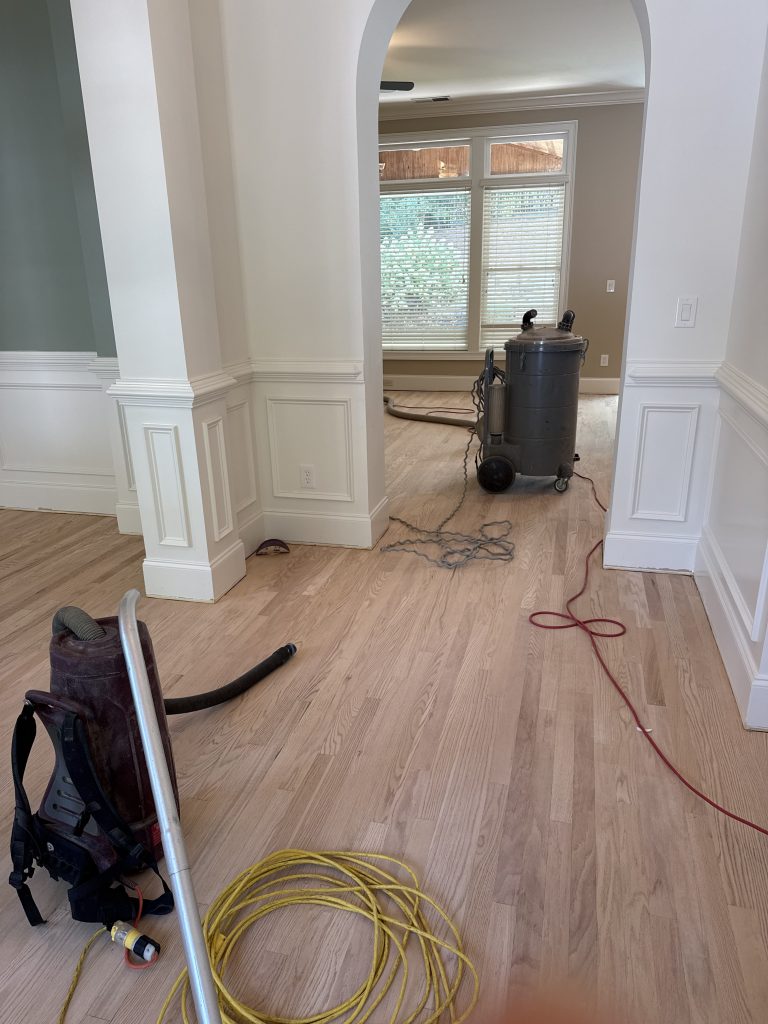
When replacement is the responsible choice
Refinishing is not always the answer. Choosing hardwood floor installation for replacement often wins when the floor is too thin to safely sand, fasteners are near the surface across large areas, or repeated sanding has weakened edges and joints. A successful project like this can increase home value.
In those cases, we can still keep the home cohesive by matching new hardwood to existing areas, or by pairing hardwood with tile in entries and wet zones to reduce future wear through proper cleaning and maintenance.
Over-sanding is like taking too much off a haircut, it doesn’t grow back. Once we confirm the signs of oversanded hardwood floors, the best next step is a calm assessment, then a plan that protects what’s left.
For a fast, free estimate in Alpharetta GA, we can be reached at 470-352-1156. Proudly serving Alpharetta GA with a customer satisfaction guarantee and five-star reviews, if you show us any existing written quote from another contractor, we beat it by 5% with a comparable scope.