
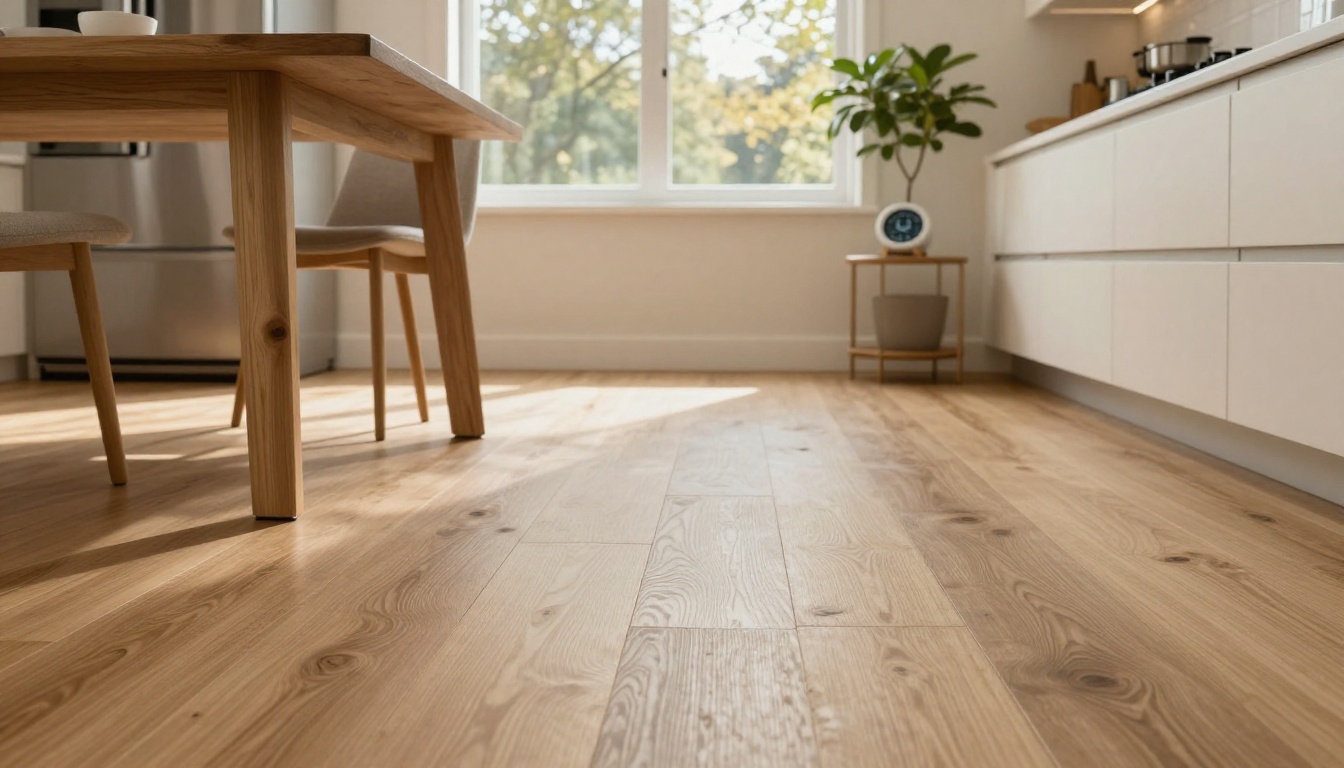
When Alpharetta’s humid season finally breaks, we often notice small changes inside our homes. One of the most frustrating is wide plank oak floor cupping, when board edges rise and the center looks slightly lower.
Cupping is not just a cosmetic issue. It is a sign that moisture moved through the wood unevenly. The good news is that many cases improve with the right humidity plan, and future seasons become far less stressful once we set the home up correctly.
What “cupping” really means on wide plank oak floors
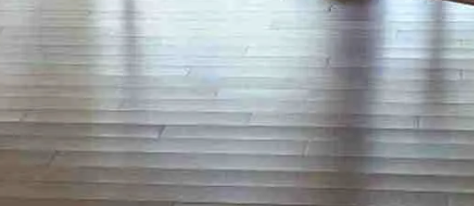
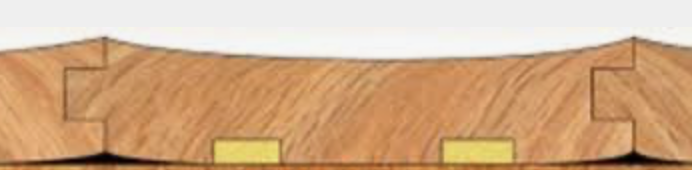
Cupping happens when the bottom of the board holds more moisture than the top. Wood swells across its width, so the edges rise first. With wide plank oak, there is simply more width to move, so even small moisture differences can show up as a visible wave.
In Alpharetta, the common pattern is seasonal. Outdoor humidity rises, crawl spaces and slabs hold moisture longer, and indoor air drifts higher in relative humidity (RH). Once the season ends and we run more air conditioning (or heating), the top surface can dry faster than the underside, and the floor bends.
Confirm it’s cupping (and not a different moisture problem)
Before we fix anything, we verify what we are seeing:
- Cupping: edges higher than the center, often across many boards in the same area.
- Crowning: center higher than edges, sometimes after an overcorrection (the top took on more moisture than the bottom, or the bottom dried faster).
- Buckling: boards lift off the subfloor, often severe and localized, usually tied to a major water event or zero expansion space.
A quick check we use is a straightedge across the board width. If the edges touch first and the center shows daylight, it is cupping.
Reset indoor humidity after the humid season (the step that matters most)
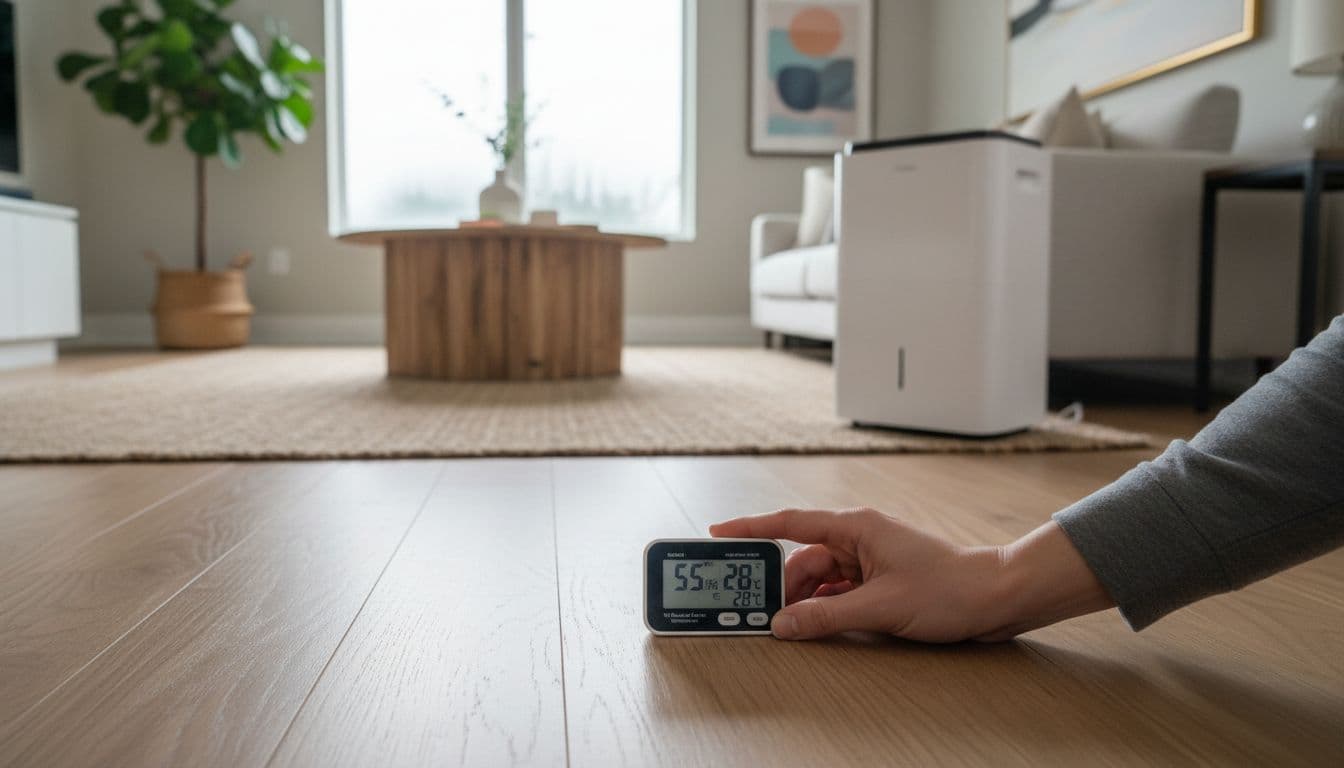
We prevent repeat cupping by stabilizing RH, not by chasing the floor with quick fixes. Most wood flooring guidance targets 30% to 50% RH for long-term performance, and it matches what many homeowners learn when reading about how humidity affects hardwood floors.
What we do in real homes is practical:
Measure first: Put a basic thermo-hygrometer in the affected room and one near the return air grille. We also check the crawl space if the home has one.
Aim for steady RH: In many Alpharetta homes, keeping the living space near 40% to 50% RH reduces movement without making the home feel dry.
Use equipment that fits the problem:
Dehumidifier: best when indoor RH stays high even with AC running.
HVAC fan and runtime tuning: helps mix air and reduce damp pockets.
Bathroom exhaust use: prevents spikes that hit nearby wood.
A simple way to think about it is this: wood behaves like a sponge with a slow response time. Fast RH swings create stress, steady conditions allow it to relax.
| What we see | Common cause | What we do next |
|---|---|---|
| Light cupping across a room | Seasonal humidity rise | Stabilize RH for 2 to 6 weeks |
| Cupping near an exterior wall | Air leaks or damp crawl space edge | Seal and control below-floor moisture |
| Cupping near a sink or dishwasher | Slow leak or repeated wet mopping | Fix source, dry, then re-check moisture |
Stop moisture from below (crawl space and slab checks)
Cupping often starts underneath. If the underside of the boards or subfloor stays damp, the floor cannot flatten reliably.
For crawl spaces: We look for standing water, wet soil, torn vapor barrier, and duct sweating. A sealed ground vapor barrier and controlled humidity below the home can make a dramatic difference.
We also stay careful about “quick insulation fixes” that can trap moisture in the wrong place. This is explained clearly in discussions like Crawl Space Ninja’s take on spray foam on a crawl space sub-floor. The key point is simple: if wood is wet, trapping moisture can prolong the problem.
For concrete slabs: Moisture vapor can move through concrete. If cupping is near grade-level rooms, we check for slab moisture conditions and whether the floor system includes the right moisture barrier.
Watch humidity hot spots: bathrooms, kitchens, and stair landings
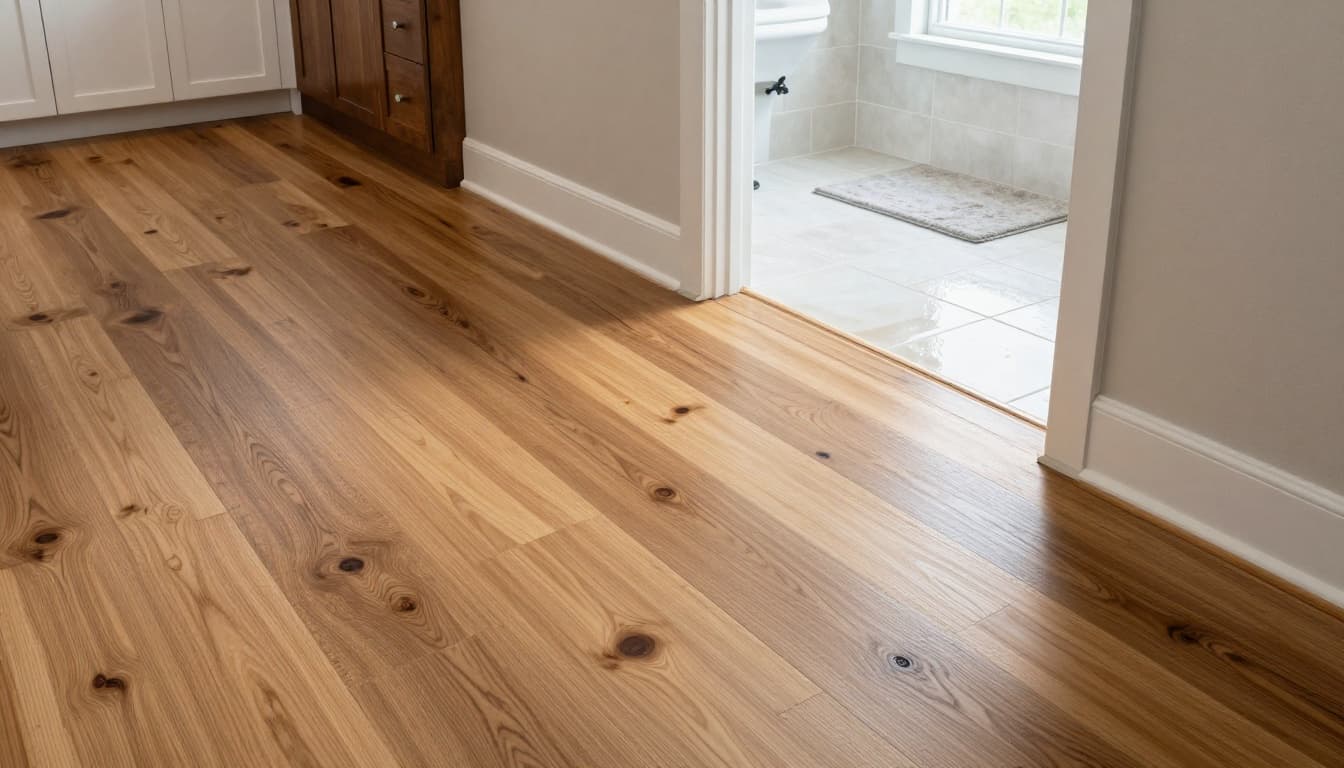
Even when the whole house measures “fine,” certain areas behave like humidity traps. Bathrooms, laundry rooms, and kitchens create short, intense moisture events that wide plank oak remembers.
We reduce those spikes with habits that protect the floor finish and the wood itself:
Bath routines: Run the exhaust fan during showers and for 20 minutes after. Keep wet towels off the wood. Use mats that breathe, and lift them to dry.
Kitchen reality: Dishwasher leaks, ice maker lines, and sink sprayers cause repeat dampness. We wipe spills quickly, and we avoid wet mopping. A damp microfiber is enough for routine cleaning.
Stairs and landings: Stairwells often have odd airflow and temperature layering. If a landing cups, it can be an HVAC balance issue, not a “bad board.”
Refinishing and repairs: when they help, and when they make it worse
If we sand or refinish while moisture is still out of balance, we can lock in stress. The floor may later shift again and show new texture.
When the home is stable, refinishing can help protect the surface and make cleaning safer. Our guidance for coatings often starts with choosing the right finish system for the home’s use, and we like the straightforward comparison in oil-based vs water-based hardwood floor finishes.
If cupping left permanent distortion, selective repairs and a controlled sanding plan may be needed. For homeowners comparing options, we also share what to expect from professional floor sanding and restoration services before committing to a full tear-out.
Prevent the next season: acclimation, HVAC control, and smart installation details
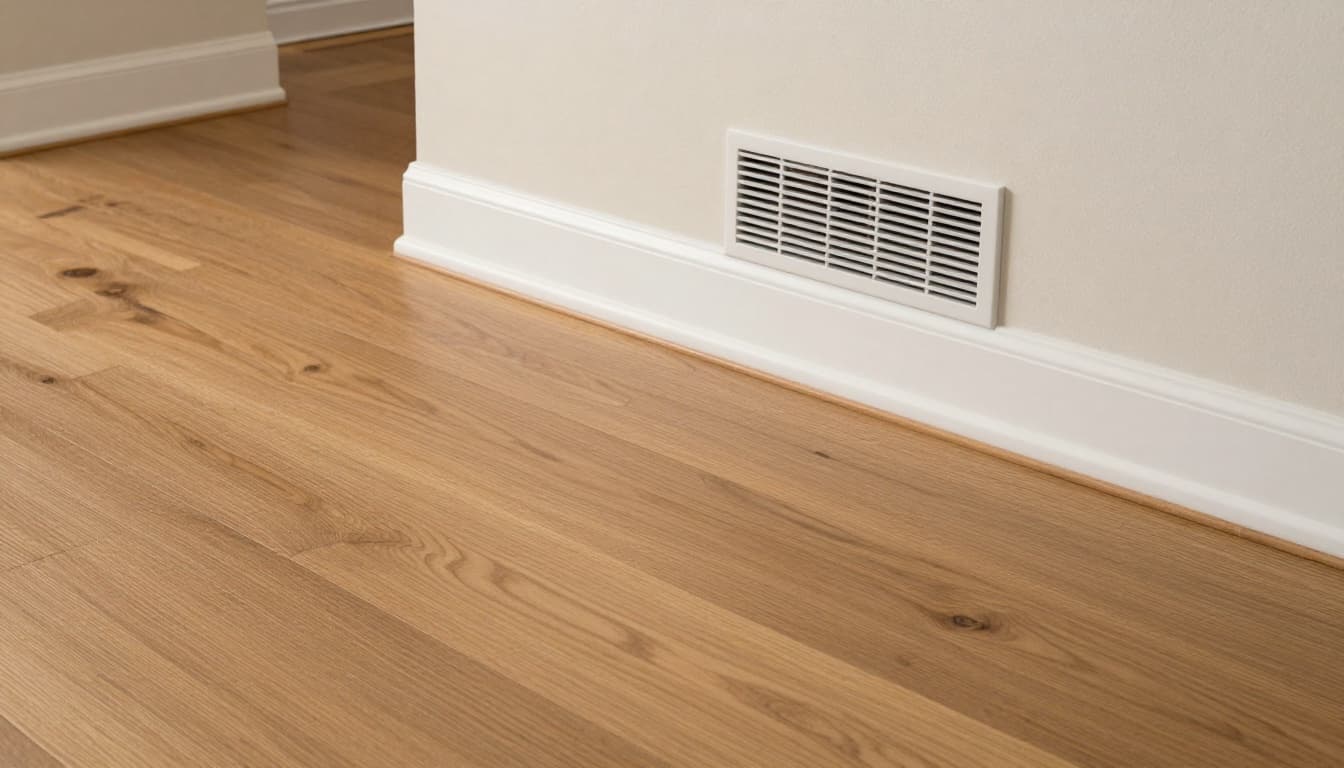
Long-term prevention comes down to building a stable environment around wood. We focus on three areas:
1) Correct acclimation and moisture checks
Acclimation is not just “letting the boxes sit.” It is matching the wood to the home’s conditions and confirming with measurements. Fine Homebuilding gives a solid overview of how to acclimate a wood floor correctly, which aligns with what we do on wide plank installs.
2) HVAC and ventilation
We keep filters clean, confirm supply and return balance, and avoid shutting vents in rooms with wood floors. Uneven airflow creates uneven RH, which invites movement.
3) Installation choices that reduce stress
Wide planks need proper expansion space, correct fastening and adhesive strategy, and the right underlayment or vapor control for the subfloor type. For homeowners planning new flooring, we recommend reviewing how to install wide plank flooring so expectations are clear before work begins.
When to call a flooring contractor in Alpharetta (and what to ask for)
If cupping is spreading, if boards feel soft, or if the issue is concentrated near plumbing, we should not wait. Moisture problems tend to get more expensive when they are ignored.
When we come out, we document RH, check likely moisture paths, and recommend the least disruptive fix first. For a free estimate, we invite homeowners to call us at 470-352-1156. If you show us any existing quote from another contractor, we beat it by 5%.
Many clients find us while searching for the best flooring contractor in alpharetta ga, the best flooring company alpharetta and milton, or a top hardwood floor sanding contractor in alpharetta. We also help beyond floors when projects overlap, including a tile installation company Alpharetta, a Stair company Alpharetta, and a stair contractor alpharetta. If a remodel is part of the plan, we coordinate work as a bathroom remodeling contractor in alpharetta and Milton, the best local kitchen remodeling contractor in alpharetta, and the best kitchen contractor alpharetta, so humidity-prone areas are built with the flooring in mind.
Conclusion
Wide plank oak floors are stable when the home is stable. After a humid season in Alpharetta, we prevent cupping by measuring RH, correcting moisture from below, and removing humidity spikes in kitchens and baths. We also avoid sanding until conditions are consistent. With a clear plan, wide plank oak floor cupping becomes manageable, and the floor can look flat and calm again.