
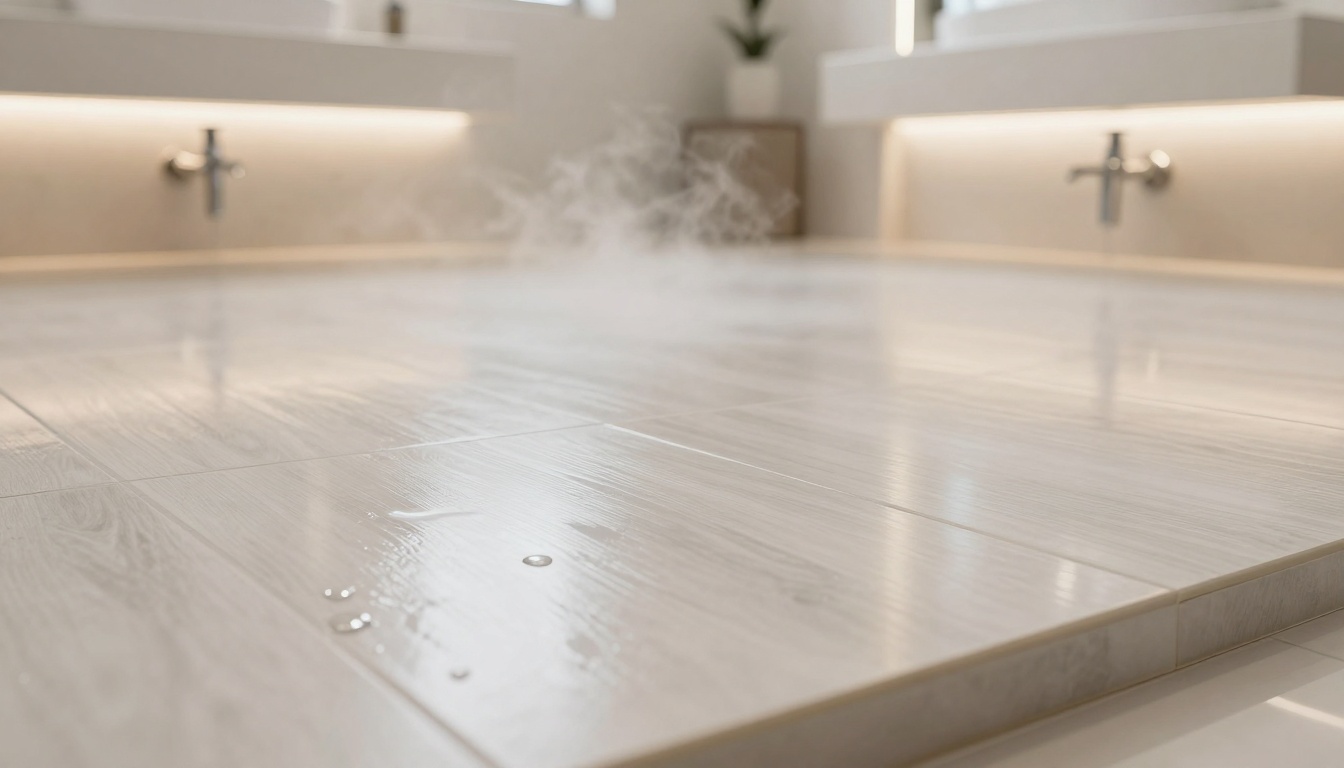
A humid bathroom tests every surface. Steam rises, towels drip, and water finds the smallest gaps. When a floor is not built for that routine, it swells, stains, or loosens, often from the edges first.
Choosing moisture resistant flooring is like choosing a raincoat, the material matters, but the seams matter just as much. In this guide, we lay out flooring options that perform well in humid bathrooms and powder rooms, plus the installation details that keep them stable for years.
What “moisture resistant” really means in a bathroom
Bathrooms create two kinds of moisture stress: direct water (splashes, puddles) and airborne humidity (daily steam). Some floors handle spills but fail with long-term humidity because moisture slowly moves through seams and into the subfloor.
When we evaluate bathroom floors, we look for:
- Low water absorption in the top layer and core
- Tight seams and stable locking systems (or welded seams for sheet goods)
- Compatible underlayment and a dry, flat subfloor
- Slip resistance that still cleans easily
For a broad overview of what homeowners choose most often, we reference guides like The Best Flooring for Bathrooms (2026) as a starting point, then we match materials to the actual room conditions.
Porcelain and ceramic tile (the classic that still wins humid rooms)
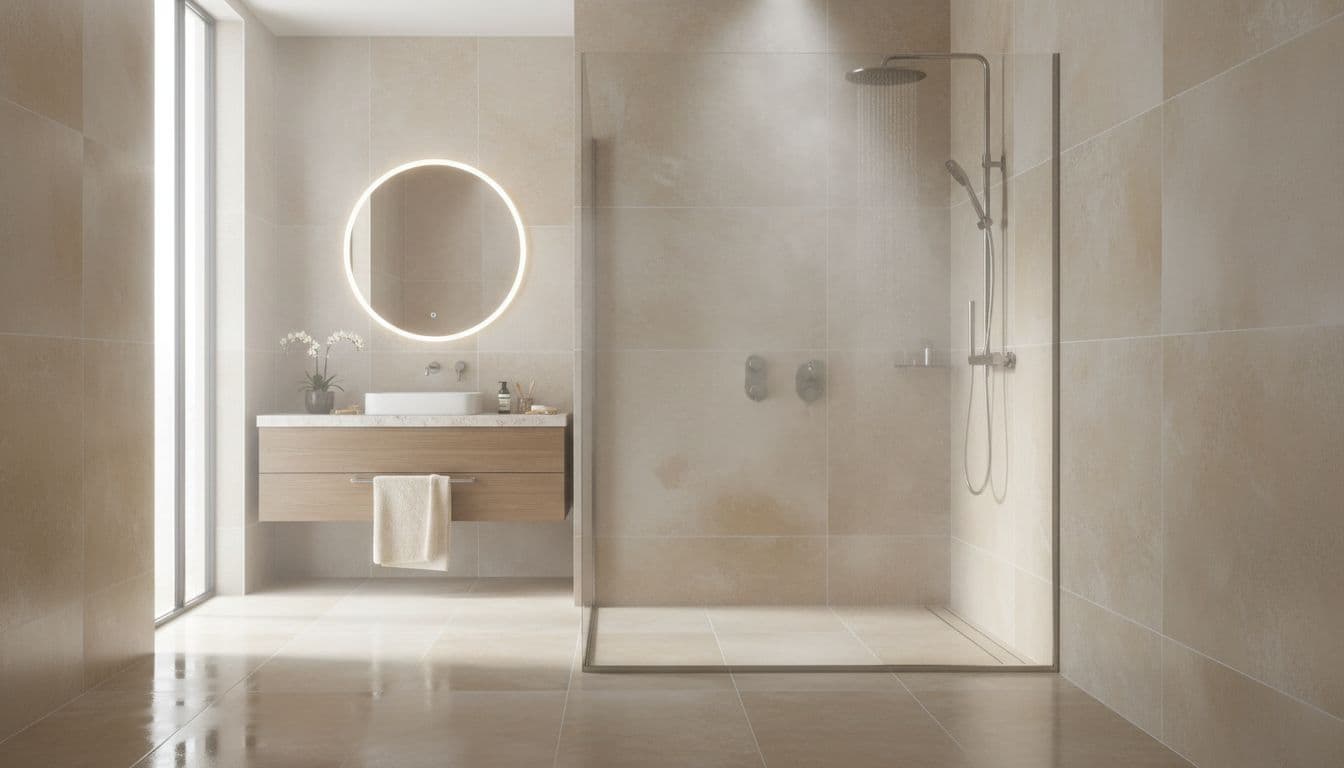
Porcelain tile is one of the strongest choices for a full bath that sees daily showers. It has very low water absorption and stays dimensionally stable in humidity, which is the silent problem behind many “mystery” floor failures.
We often recommend matte or textured finishes for better traction, especially near tubs and showers. Large-format tile can also reduce grout joints, which means fewer lines to keep clean.
Key details that matter:
- Grout and movement joints: grout is not waterproof, and tile needs room to expand and contract.
- Waterproofing under tile: in wet zones, waterproof membranes protect the subfloor if water gets past grout.
- Drainage mindset: think about where water goes when someone steps out of the shower.
For more general context on common bathroom flooring pros and cons, What Are the Best Bathroom Flooring Options? outlines popular materials and why some do not belong in wet rooms.
Luxury vinyl plank (LVP) and luxury vinyl tile (LVT) (great for powder rooms and many full baths)

LVP has earned its place in bathrooms because many products are waterproof at the plank level and do not swell the way wood-based cores can. It is also quieter and warmer underfoot than tile, which is a daily comfort you notice.
We like LVP for powder rooms because it handles handwashing splashes well, and it installs cleanly around pedestal sinks. In full bathrooms, LVP can work well too, but only when we address edges, transitions, and the toilet flange area with care. Water usually enters from the perimeter, not the middle.
What we look for before installing LVP in humid rooms:
- A stable, waterproof core (product specs matter)
- A flat subfloor, since small dips telegraph through
- A tight perimeter seal strategy, especially at tubs and vanities
Sheet vinyl (the “single-piece roof” approach)
Sheet vinyl is easy to underestimate until you see it installed properly. Because it comes in large sheets, it can create a near-seamless surface. Fewer seams mean fewer entry points for water, which is why sheet vinyl remains a smart option for kids’ bathrooms, guest baths, and laundry-adjacent powder rooms.
It can also be one of the most budget-friendly moisture resistant flooring paths when the subfloor is in good shape. The catch is prep, sheet goods show every bump and ridge, so the floor beneath must be smooth.
We often suggest sheet vinyl when:
- The bathroom is small and seam-free coverage is possible
- The home needs a practical, easy-clean surface
- The budget is tight, but performance still matters
Waterproof laminate (only when the room and details fit)
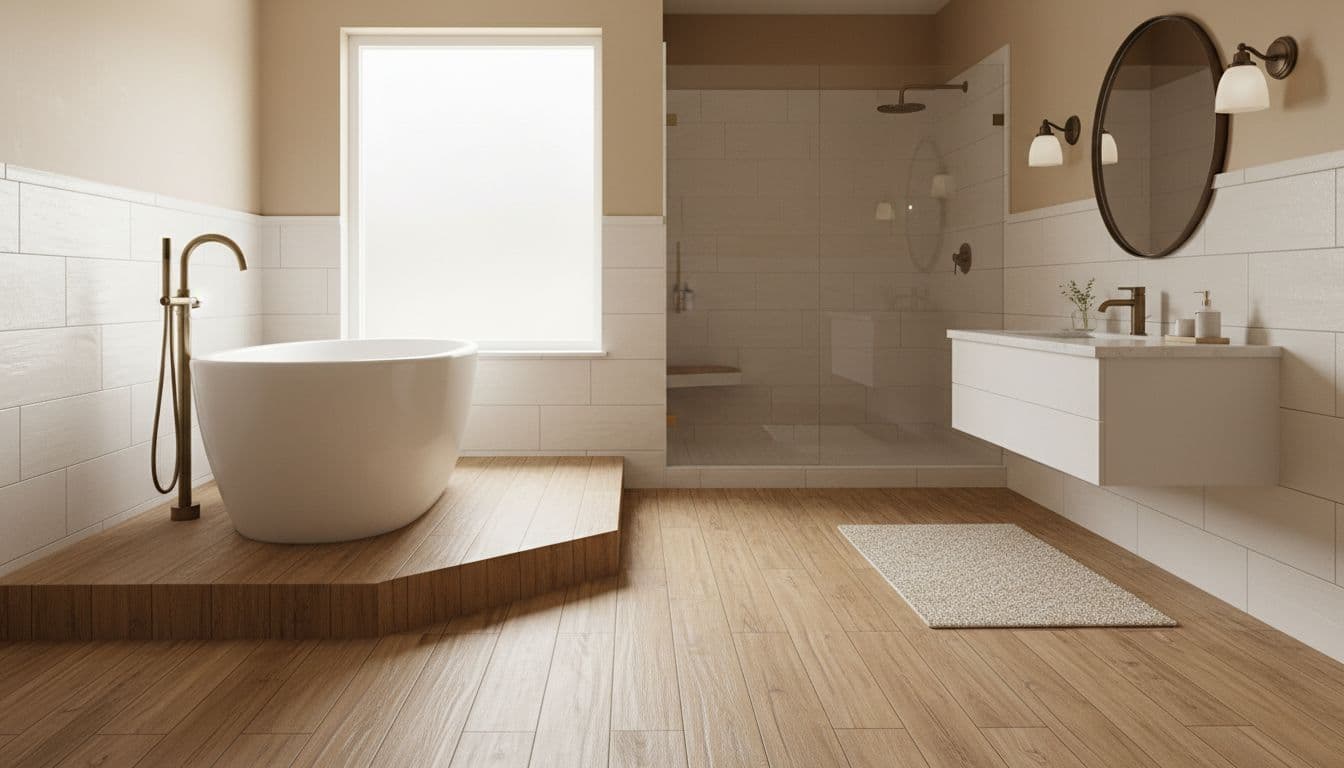
Waterproof laminate has improved a lot in recent years, but it still requires disciplined installation. Some products have water-resistant surface coatings and treated cores, yet standing water at seams can still cause damage if it sits too long.
We treat waterproof laminate as a strong fit for powder rooms and light-use bathrooms, and a cautious fit for heavily used full baths. If the household runs long hot showers daily, we usually steer toward porcelain tile, LVP, or sheet vinyl instead.
The deciding factors are simple:
- How often water hits the floor
- How fast the room dries
- Whether the perimeter can be sealed correctly
Quick comparison: which bathroom floor matches your room?
| Flooring type | Humidity performance | Seam risk | Comfort | Best fit |
|---|---|---|---|---|
| Porcelain tile | Excellent | Low | Cool underfoot | Full baths, wet zones |
| LVP/LVT | Very good | Medium | Warm, quiet | Powder rooms, many full baths |
| Sheet vinyl | Very good | Low | Moderate | Small baths, family homes |
| Waterproof laminate | Good (room-dependent) | Medium to high | Warm | Powder rooms, light-use baths |
Installation choices that protect the floor (more than the material does)
Bathrooms punish shortcuts. The right product can still fail on a bad subfloor or poor edge detailing. We focus on a few fundamentals.
Subfloor moisture and flatness: If the subfloor is damp or uneven, locks separate and tiles crack. We correct the base before the finish floor goes down.
Perimeter and penetration sealing: Toilets, vanities, and tubs create edges where water sneaks in. We plan these details early so the finish work looks clean and performs well.
Ventilation: A strong bath fan and consistent use reduce long-term humidity. Without it, even “waterproof” surfaces face more stress over time.
Selecting the right contractor for bathroom flooring and remodeling
Bathroom floors are not isolated projects. They tie into baseboards, toilets, vanities, and sometimes shower updates. Hiring the right team keeps the work coordinated and avoids rework.
As a flooring contractor in alpharetta ga, we install bathroom-ready surfaces with a focus on prep and clean edges. When a project grows beyond the floor, we also work as a bathroom remodeling contractor in alpharetta and Milton, coordinating demolition, tile work, and finish details so the room functions as a whole.
Many homeowners update kitchens and baths together to keep the home’s finishes consistent. If that is your plan, we can also act as a local kitchen remodeling contractor in alpharetta and help match durable flooring across connected spaces.
If your home has wood outside the bath that needs attention, we also provide refinishing support as a hardwood floor sanding contractor in alpharetta, so the transition from bathroom to hallway feels intentional, not patched together.
You can learn more about our team and services here: Alpharetta bathroom remodeling services.
Practical next steps (and how we price)
If you want a bathroom floor that stays stable in humidity, start with a simple plan: pick a material that fits your room’s moisture level, then install it with details that block water at seams and edges.
For a free estimate, call us at 470-352-1156. If you show us any existing written quote from another contractor for the same scope, we will beat it by 5%. The goal is a bathroom floor that looks right on day one and still looks right after years of hot showers.