
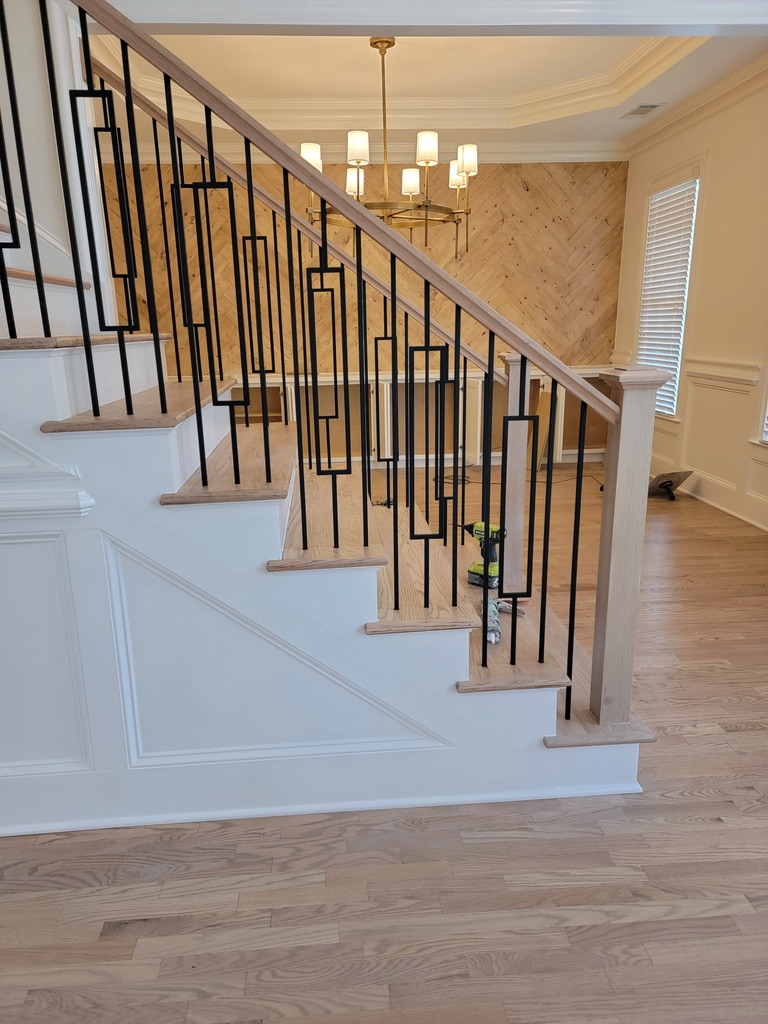
Stairs are one of the first interior features buyers notice because they connect floors and sit in key sight lines, like the foyer, hallway, or main living area. They work like a home’s handshake: if they feel solid and look cared for, the rest of the house earns trust faster. That is why Stair remodeling can lift perceived value by improving first impressions, safety, and style, especially when we install new stair newel posts and handrails.
We often see the same “dated stair” clues during estimates: wobbly rails, scratched newels, worn stain, mismatched balusters, and treads that look tired next to newer floors.
In this guide, we cover the value signals buyers respond to, which updates matter most (with a focus on newels), and how to plan a smart project. Call us at 470-352-1156 for a free estimate. If you show us any existing written quote from another contractor, we beat it by 5%.
Why stair remodeling can raise home value
(and why buyers notice it fast)
Home value is not just the final sale price. It is also how quickly the home attracts offers, how many objections come up during showings, and how hard an agent has to work to “explain away” visible flaws.
A well-executed stair update helps in four practical ways:
Stronger listing photos: Stairs often appear in wide shots of entryways and open-concept spaces. Fresh rails, clean lines, and consistent stain read as “move-in ready.”
Fewer buyer objections: Loose handrails and beat-up newels trigger doubts. Buyers start to wonder what else was neglected.
Faster, cleaner offers: When the staircase looks safe and current, buyers feel less need to negotiate for “repairs we’ll have to do right away.”
Better perceived build quality: Stairs are touched every day. When they feel solid, the entire home feels better built.
It is easy to overlook stairs because they are “just there.” Buyers do not overlook them. Stairs sit at eye level, they create vertical lines in a space, and they connect finishes across floors. If the staircase looks dated, the home can feel fragmented, even if the kitchen and bathrooms are updated.
On return-on-investment, we keep expectations realistic. Reliable stair-specific ROI studies are limited, and 2026 data still does not break out stair remodels as its own category. Some industry sources cite roughly 70 to 80% ROI for well-planned interior upgrades that improve fit-and-finish, but results vary by home, neighborhood, and the scope of work. Stairs often influence value indirectly through buyer confidence and first impressions.
We see stair projects boost three clear “buyer signals”:
- The home feels well maintained: Tight rails, solid newels, and consistent finish show routine care.
- The layout feels more open: Cleaner baluster spacing and updated profiles can reduce visual clutter.
- The finishes feel consistent across floors: A staircase that matches the surrounding flooring makes the house feel intentional, not patched together.
For a broader view of which upgrades buyers tend to reward, we like the way HomeLight summarizes high-ROI improvements in its guide to home upgrades that increase value. Stairs may not top every list, but they often shape the emotional “yes” or “no” within minutes of walking in.
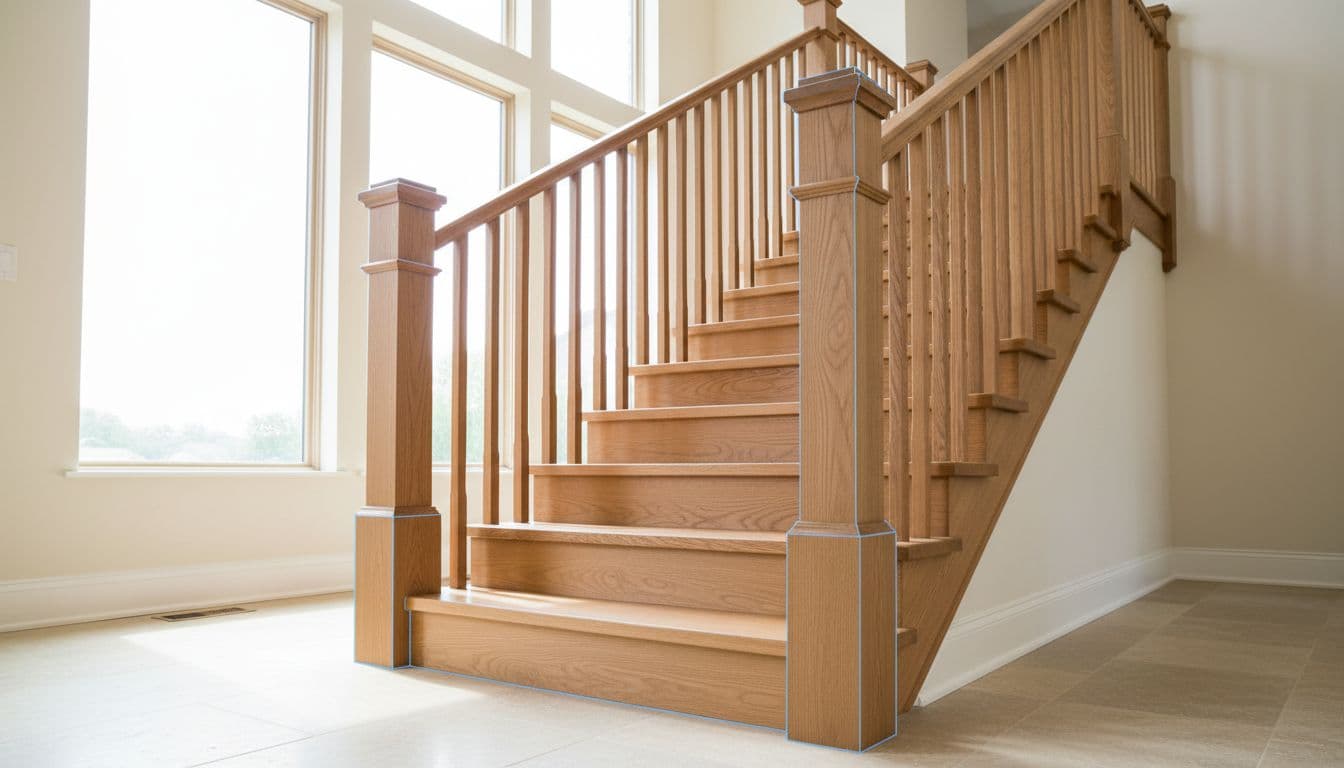
The real value driver: when we install new stair newel posts and handrails
If we had to pick one stair upgrade that changes a home’s feel the fastest, it is the railing system. Newels and handrails are both visual anchors and safety parts. Buyers notice them the way they notice a front door handle: they touch it, and they judge it.
When we install new stair newel posts and handrails, we are improving:
Structural confidence: A sturdy newel post removes the “loose rail” feeling that makes people cautious on the stairs.
Style clarity: Newels set the design language. Traditional square newels, craftsman styles, and clean modern profiles each tell a different story.
Finish coordination: Matching stain or paint to adjacent floors and trim helps the staircase belong to the home, instead of looking like an add-on.
Common value-focused changes include swapping outdated balusters, updating the handrail profile, replacing damaged treads, and refinishing for a clean, consistent sheen. Even small adjustments, like correcting rail height and tightening connections, reduce buyer anxiety during showings.
Safety, code, and comfort: value you can feel in one trip upstairs
Buyers might not quote building codes during a tour, but they react to safety instantly. If a rail flexes, if a tread feels slick, or if lighting is poor, the staircase becomes a liability in their mind.
A smart stair remodel aims for comfort and predictability:
- Secure handrails that feel solid under normal grip pressure
- Consistent tread surfaces that reduce slips, especially in socks
- Even finish and smoother transitions at landings and nosings
- Better lighting for shadowy stair runs (a frequent complaint in older homes)
These details matter even more for families with children, seniors, and multi-generational households. A staircase that feels safe reduces the mental “to-do list” that drags down offers.
Matching stairs to floors: how consistency raises perceived quality
Stairs do not live alone. They sit between floors, and that is why mismatched tones and sheen levels stand out so sharply.
When we plan Stair remodeling, we often evaluate the surrounding surfaces first. If the home needs refinishing, working with a top hardwood floor sanding contractor in alpharetta can help align color and sheen from the main level into the stair run. In other cases, a full flooring update with the best flooring company alpharetta and milton creates a clean, consistent look that reads as premium.
Tile and stair transitions also matter in foyers and split-level entries. If you are updating nearby floors, partnering with a tile installation company Alpharetta can keep edges, heights, and trim details clean, which helps the staircase look planned instead of patched.
Planning a value-smart project (without overbuilding for the neighborhood)
The goal is not to build a museum staircase. The goal is to remove objections and raise confidence.
We suggest a practical planning checklist:
Set the priority: If rails are loose, fix structure first. Style comes second.
Choose durable finishes: High-touch parts, like handrails, should resist wear and stay easy to clean.
Keep design consistent: Match the home’s architecture. A modern rail in a traditional home can feel off, even if it is expensive.
Coordinate nearby remodels: If you are also working with a bathroom remodeling contractor in alpharetta and Milton or the best local kitchen remodeling contractor in alpharetta, align stain tones, hardware finishes, and trim colors so the home feels unified. Many owners who ask for the best kitchen contractor alpharetta are surprised how much a stair update improves the “whole house” impression after the kitchen is done.
If you are comparing bids, ask who is responsible for tightening newels, rail connections, and finish touch-ups. A Stair company Alpharetta should be able to explain those details in plain language, and a reliable stair contractor alpharetta should be transparent about what is included.
For homeowners who want one team for floors and stairs, working with the best flooring contractor in alpharetta ga can simplify scheduling and keep materials consistent.
Conclusion: the staircase is a daily touchpoint that buyers remember
Stairs are not background scenery. They are a high-visibility, high-touch feature that shapes first impressions, safety comfort, and finish quality across floors. With the right scope, Stair remodeling can reduce buyer objections and strengthen perceived value, especially when we install new stair newel posts and handrails that look right and feel solid.
If you want a clear plan and a firm price, call us at 470-352-1156 for a free estimate. If you show us any written quote from another contractor, we beat it by 5%.