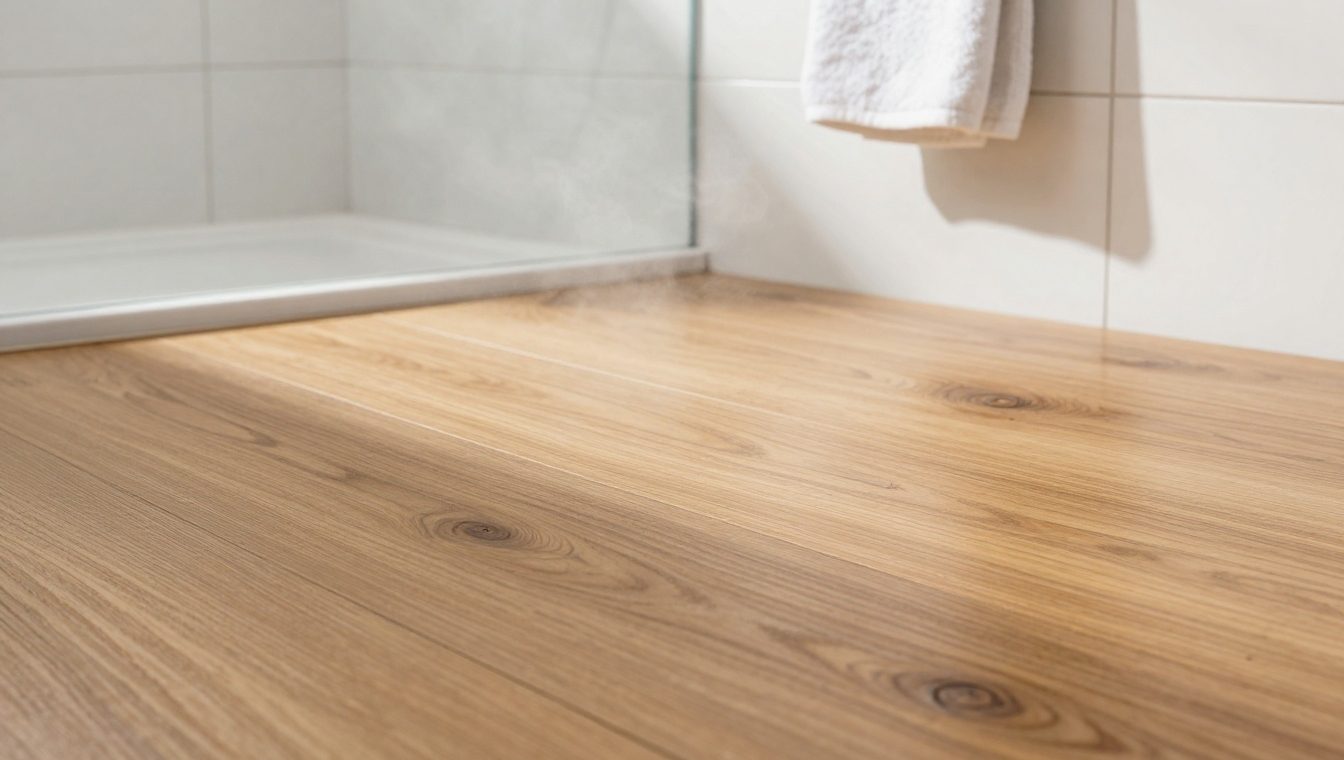
A bathroom can look dry and still behave like a greenhouse. Steam from showers, damp towels, and wet bath mats raise humidity, and wood reacts quietly at first. That is why engineered hardwood moisture stains often start as subtle changes you only notice in certain light.
We work with homeowners across Alpharetta and Milton who love the warmth of wood in bathrooms, but do not want surprises later. Below, we share what early moisture stains look like, where they tend to appear, and what to do when you spot them.
Why humid bathrooms trigger moisture stains on engineered hardwood
Engineered hardwood is built in layers, which helps it handle normal seasonal changes better than solid wood. Still, bathrooms create a different kind of stress. Humidity does not always arrive as a puddle. It can be a steady, invisible film of moisture in the air that keeps the surface and seams damp longer than they should be.
A helpful analogy is a sponge near a sink. It might not drip, but if it never fully dries, it starts to discolor and smell. Wood floors behave the same way when the bathroom stays humid for hours every day.
To understand the role humidity plays in wood movement and performance, we recommend reading Wagner Meters’ overview of moisture and humidity measurement in engineered flooring. It explains why even “small” moisture shifts can show up as visible changes over time.
What early engineered hardwood moisture stains actually look like
Early stains are rarely dramatic. In many bathrooms, the first clues are small, uneven, and easy to dismiss as “grain variation” until they repeat in the same spot.

Common early signs we look for on site
- Seam darkening: A thin shadow line at plank edges, often near the tub, shower, or vanity.
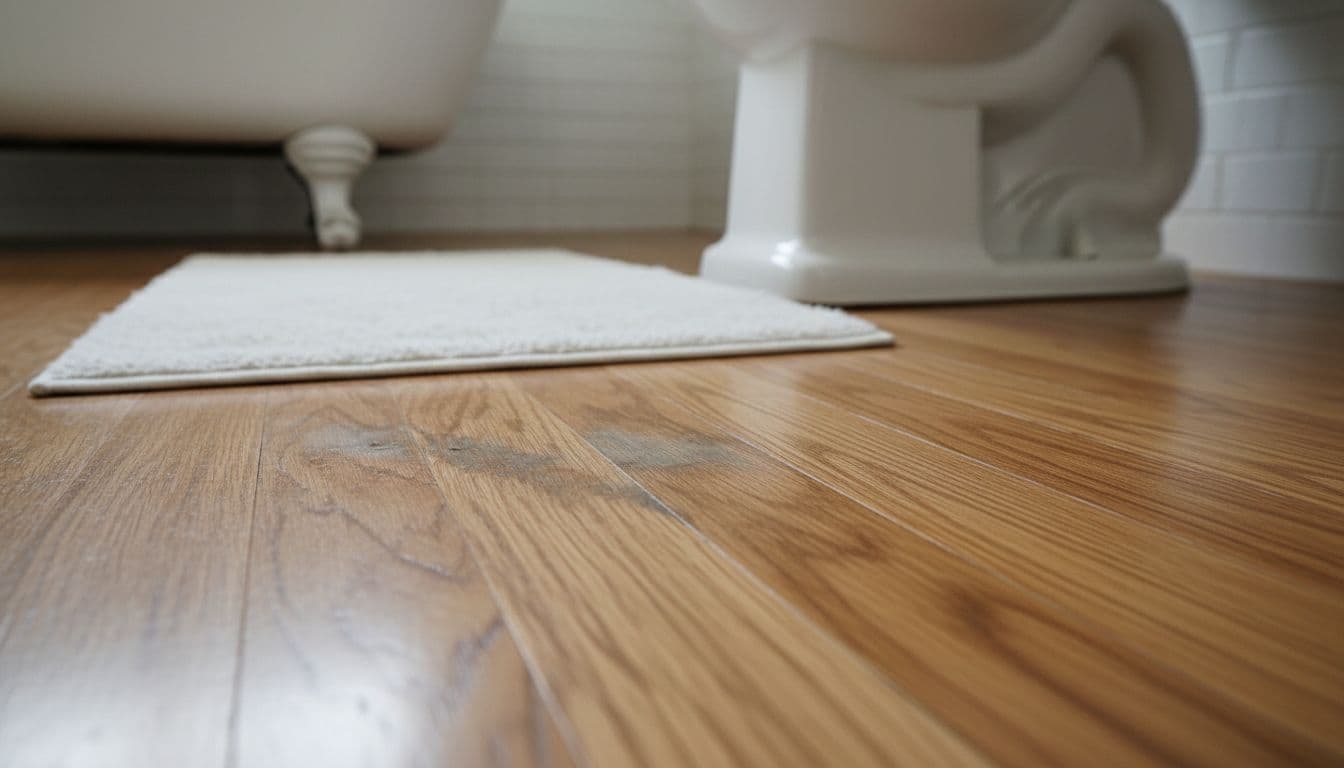
- Cloudy gray or dull patches: A haze in the finish that looks like a soft watermark.
- Slight edge lift: Plank edges feel a bit higher than the center when you run a socked foot across them.
- Texture change: The finish may feel less slick in one area, like it has a mild “drag.”
If you catch these signs early, the fix is often simple. If you ignore them, the stain can set deeper, and the surrounding planks may begin to cup.
Where moisture stains usually start in a bathroom
Moisture has favorite hiding places. We focus our inspection on “edges and transitions” because that is where water and vapor linger.

High-risk zones
Near the shower or tub threshold: People step out dripping, and small splashes repeat in the same spot.
In front of the vanity: Water drips from hands, or a slow faucet leak keeps the floor slightly damp.
Around the toilet base: A minor seal issue can wick moisture into seams long before you smell it.
Under bath mats: Mats trap moisture. The floor beneath can stay damp for hours.
The most common pattern we see is a stain that “maps” the outline of a mat or the path from shower to towel hook.
A simple 3-minute check for moisture stains (without tools)
We recommend a quick routine once a week, especially in summer.
1) Check the floor in angled light. Turn off overhead lights, then use a phone flashlight at a low angle. Haze and dull patches show up faster.
2) Feel for edges. Slide your palm across seams near the shower and vanity. A slight ridge can mean early swelling.
3) Smell test near the baseboards. A musty odor near trim can signal moisture trapped below the surface.
If you want to go deeper, Onset offers a clear explanation of why tracking indoor humidity helps prevent floor problems, including monitoring humidity for flooring installations. Even basic awareness of bathroom humidity trends can prevent repeat staining.
Moisture stain vs. finish problem: how we tell the difference
Not every mark is a stain inside the wood. Sometimes the finish is reacting to moisture or cleaners.
Clues it is mostly a finish issue
- The spot looks milky or cloudy, but the wood tone beneath does not darken.
- The edges are soft and feathered, not tied to seams.
- The mark changes slightly after the room dries out.
Clues it is moisture moving through seams
- The discoloration follows plank edges or end joints.
- You can feel a tiny lip at the seam.
- The area keeps returning after cleaning and drying.
If you are uncertain, do not scrub aggressively. Some cleaners and abrasive pads can dull the finish, which makes the “stain” look worse.
What to do the moment you notice engineered hardwood moisture stains
Fast action matters, but it should be careful action.
Dry the area completely. Use a fan and run the bathroom exhaust. If you have HVAC nearby, keep air moving.
Remove bath mats after use. Let the floor breathe, and let mats dry outside the bathroom.
Confirm the exhaust fan is doing its job. A weak fan lets steam settle onto floors and seams.
Stop repeat wetting. If the stain sits where you step out of the shower, consider a different towel placement or a more absorbent mat that dries quickly.
If the stain spreads, feels raised, or keeps returning, it is time for a professional assessment.
When repairs require a pro (and what we can handle)
Some early engineered hardwood moisture stains can be corrected with targeted work. Others point to a moisture source that must be fixed first. We often find the real issue is not the wood, but the bathroom conditions and transitions that keep feeding moisture.
As a flooring contractor in alpharetta ga, we inspect the floor surface and also the room’s moisture habits, including wet-zone layout and ventilation. When sanding and refinishing is appropriate, we can scope it carefully so the repair matches the surrounding sheen and color expectations (many homeowners call us a hardwood floor sanding contractor in alpharetta for this reason).
If the moisture source is tied to the room itself, we can help there too. Many clients prefer one team for both trades, especially when a shower curb, toilet reset, or vanity change is part of the solution. We also work as a bathroom remodeling contractor in alpharetta and Milton, and we can coordinate flooring protection and sequencing during the remodel.
If your moisture problems are not limited to the bath, it often helps to look at the entire home’s wet zones. We also serve as a local kitchen remodeling contractor in alpharetta, and we see similar early staining near sinks and dishwashers.
To see examples of our flooring and remodel work, you can browse our Hardwood flooring sample gallery and learn more about our Alpharetta hardwood floor installation & remodeling services.
Conclusion
Early engineered hardwood moisture stains are your warning light. They usually start small, then spread when humidity and repeat wetting stay in place. If you spot seam darkening, haze, or slight edge lift, we recommend acting quickly and fixing the moisture source first. For a free estimate, call us at 470-352-1156; if you show us any existing written quote from another contractor, we beat it by 5%.