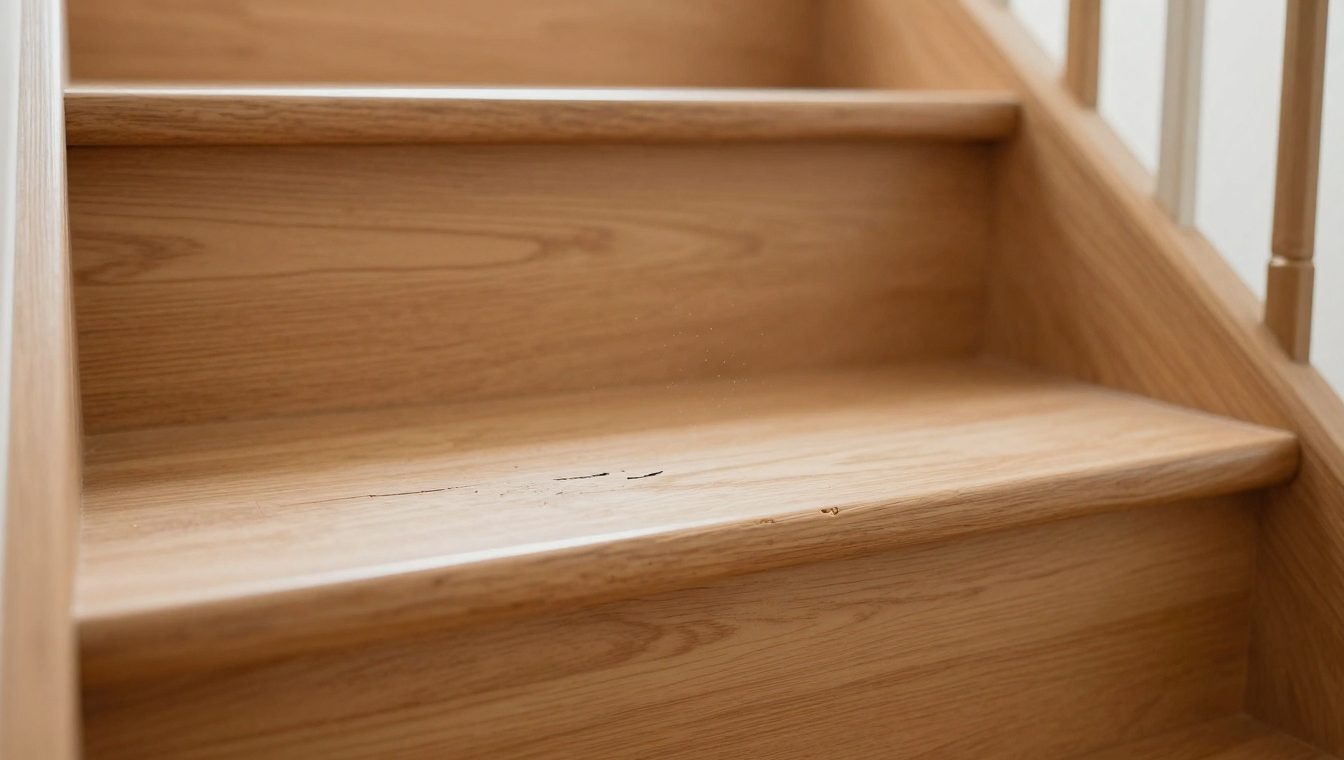
Stairs should feel boring. When every step feels the same, we move through the house without thinking, which is exactly the point.
But wood stair treads do not fail all at once. They usually give small warnings first, like a paperback spine that starts to crease long before it snaps. If we catch those warnings early, we can plan a safe, clean stair tread replacement instead of reacting to splinters, sharp edges, or a sudden soft spot underfoot.
Below are five signs we watch for in homes across Alpharetta and Milton, especially on high-traffic staircases where wear shows up sooner than homeowners expect.
Why small tread damage becomes a big safety problem
A stair tread takes direct impact, twisting force, and grit from shoes every day. Once the finish wears through, raw wood absorbs moisture and dirt, which speeds up cracking and fiber lift (the start of splintering).
Safety is the real concern. Stairs already carry a higher fall risk than most parts of a home, and poor traction or loose parts can turn one missed step into an injury. For general stair and railing safety context, this overview on stair and railing accident prevention is a useful read.
Sign 1: Hairline cracks and splintering along the nosing edge
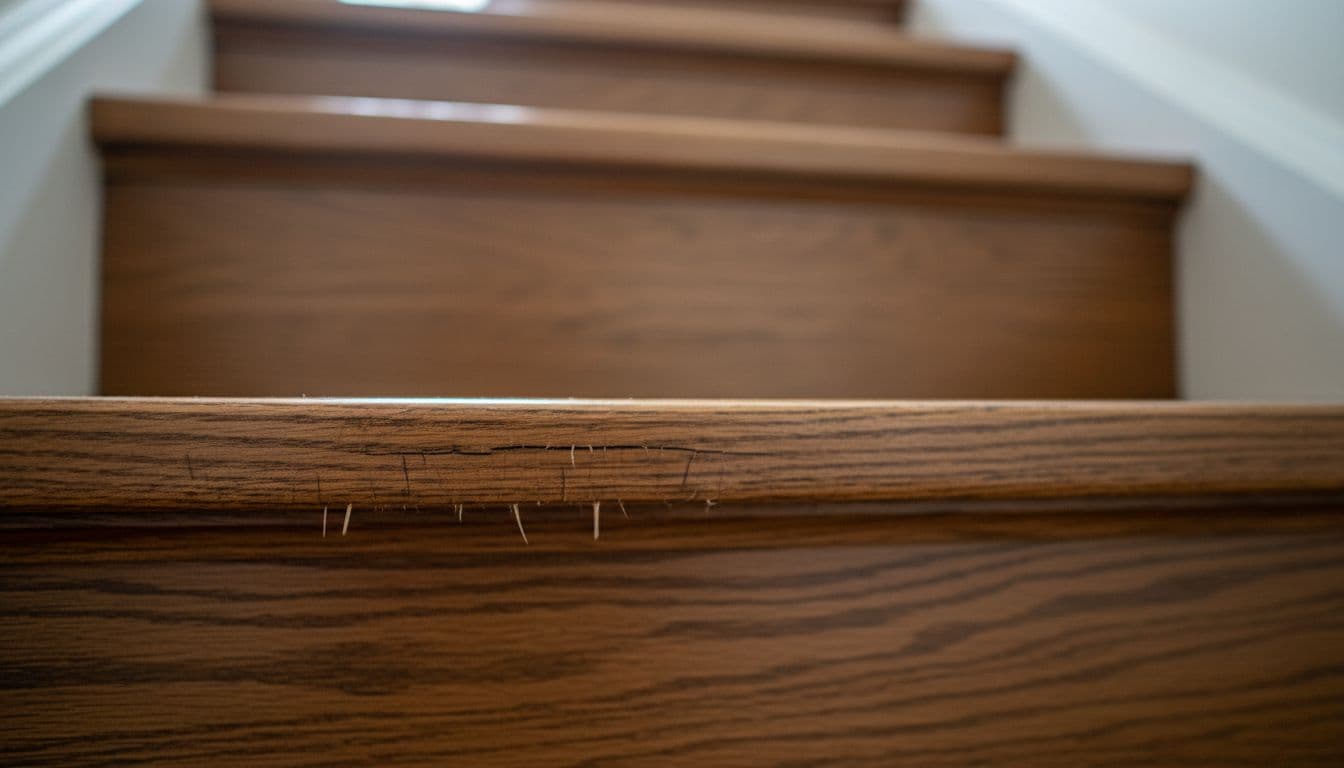
The nosing (front edge of the tread) is the most abused part of the stair. It gets kicked, clipped by shoes, and hit by vacuums. When we see fine cracks running with the grain, or small splinters lifting at the edge, we treat it as an early warning.
Cracks often start small, then spread with seasonal wood movement and foot traffic. Once splinters appear, sanding alone may not be enough. Sanding can smooth a surface, but it cannot restore missing wood fibers or rebuild a weakened edge.
What we suggest checking:
- Run a hand lightly along the nosing (carefully). If fibers catch, the tread is already starting to splinter.
- Look for cracks that “open” slightly when weight is on the step.
Sign 2: Worn-through finish (raw wood showing in the center path)
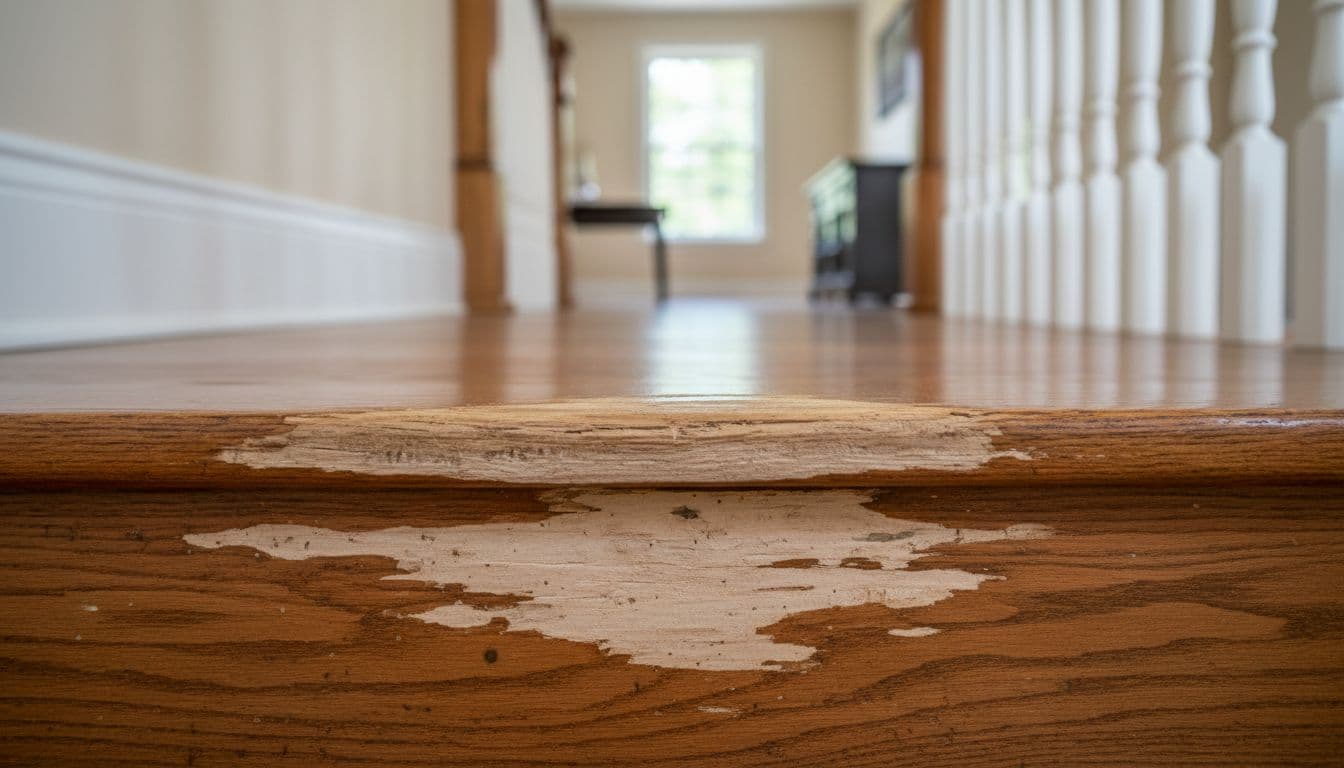
Most people step in the same line going up and down. That repeated path slowly erases the protective finish until bare wood shows through. The tread may look dull, gray, or blotchy, with a slightly rough feel.
This is where many homeowners get surprised. A tread can look “fine” from across the room, but be worn down to raw wood right where a foot lands. Raw wood absorbs moisture from wet shoes and even routine cleaning, which can lead to raised grain, checking, and eventually splintering.
A simple test:
- Shine a flashlight across the tread at a low angle. If you see a flat, matte “lane” down the middle, the finish is likely gone.
If the wear is only in the coating, refinishing may help. If the wood is cupped, cracked, or thinned from repeated sanding over the years, replacement is usually the safer call.
Sign 3: Movement, gaps, or a tread pulling away from the riser
A tread should feel solid, with no flex and no shifting. When a tread starts separating from the riser or stringer, it can create a shadow line (a thin dark gap), and that gap often grows over time.
This is not only annoying (squeaks), it can become structural. Movement can break adhesive bonds, loosen fasteners, and turn a minor repair into a larger stair tread replacement.
What we listen and look for:
- A squeak that is new, sharp, and tied to one specific step.
- A visible gap where the tread meets the riser.
- A tread that feels “spongy” at the front edge.
If you want a general overview of common tread repair approaches, this guide on how to repair stair treads explains typical fixes and when they are used.
Sign 4: Warping, cupping, or an uneven surface that changes how your foot lands
Not all damage looks dramatic. Some of the most dangerous treads are the ones that are subtly uneven. If a tread is cupped (edges higher than the center) or crowned (center higher than the edges), your foot does not land flat. That can feel like stepping on a shallow hill.
We also see warping after repeated wet mopping, pet accidents, or humidity swings. Even a small change in flatness can create a trip point, especially on stairs with darker stain where shadows hide the contour.
Clues you can spot without tools:
- The tread reflects light unevenly, like ripples on water.
- A runner or tread cover will not sit flat and keeps shifting.
- Family members start stepping closer to one side without realizing it.
In many cases, sanding cannot correct meaningful warping without removing too much material. Replacement is often cleaner and safer.
Sign 5: Deep dents, soft spots, or “crumbly” wood at the edges
Wood that is still healthy resists a fingernail. Wood that is failing feels soft, compressible, or flaky at damaged edges. This is common on older pine treads, treads that have been refinished many times, or any step exposed to repeated moisture.
We also watch for deep dents and divots. A few dents are cosmetic, but a field of deep impacts can mean the wood fibers have been crushed. When fibers crush, they can start lifting into splinters, especially at the front edge where shoes scrape.
A practical check:
- Press near the nosing and in the center path. If the surface feels soft or flexes, the tread may be compromised.
Repair or replace: how we decide (and how you can too)
The goal is not to replace treads that can be safely restored. The goal is to avoid waiting until the staircase becomes a hazard.
Here is a straightforward way we weigh the options:
| What we see on the tread | Most common result |
|---|---|
| Finish is dull but wood is flat and solid | Recoat or refinish may work |
| Hairline cracks at the nosing with early splinters | Replace the affected treads |
| Repeated squeaks plus visible gaps | Re-secure or replace, depending on movement |
| Warping or uneven tread surface | Replacement is often best |
| Soft spots or crumbling edges | Replace (wood strength is failing) |
For homeowners comparing DIY and professional work, this overview of how to replace stair treads helps explain the basic process and why precise fit matters.
Planning your stair project (and pairing it with other upgrades)
Stairs connect spaces, so stair work often touches nearby floors, trim, and paint lines. When we plan stair tread replacement, we also look at the landing floor and the hallway so the stain and sheen do not clash.
Many households bundle projects for a single disruption window. We often coordinate stair work with services you may already be considering, including a hardwood floor sanding contractor in alpharetta, or broader remodels with a kitchen remodeling contractor in alpharetta and a bathroom remodeling contractor alpharetta. As a flooring contractor in alpharetta ga, we see how one well-timed project can prevent patchwork results later.
For pricing, we keep it simple. Call us at 470-352-1156 for a free estimate. If you show us any existing quote from another contractor, we beat it by 5%.
Call us for stair installation or renovation
Stair treads rarely fail without warning, they whisper first through cracks, wear, gaps, and uneven footing. When we address those signs early, we protect the staircase, the floors around it, and the people who use it every day. If you are seeing any of the five signs above, it is time to plan a stair tread replacement before splinters make the decision for you. Call us at 470-352-1156 for a free estimate, and bring any written quote so we can beat it by 5%.